Sheet metal and roofing
What layers make up tile-effect metal roofing and what does each one do?
In brief
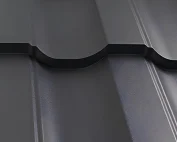
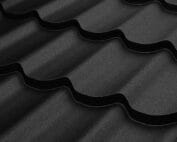
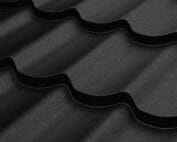
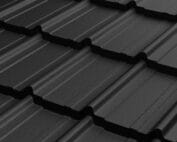
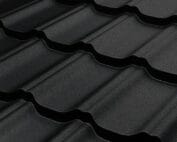
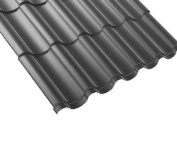
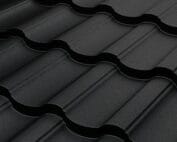
Tile-effect metal roofing is a profiled sheet whose shape echoes rows of roof tiles. Stiffness comes from the steel and the geometry of the pressings. Appropriate protective layers guard against corrosion. The sheet alone does not make up the whole roof, however. It needs support, fixings and correctly made connections. The basis is a thin steel core. On it sit protective layers, including metallic protection and coatings that prepare the surface and finish it. The build-up depends on the specific product. The coating on the underside may differ from the decorative outer layer.
What lies beneath the visible colour?
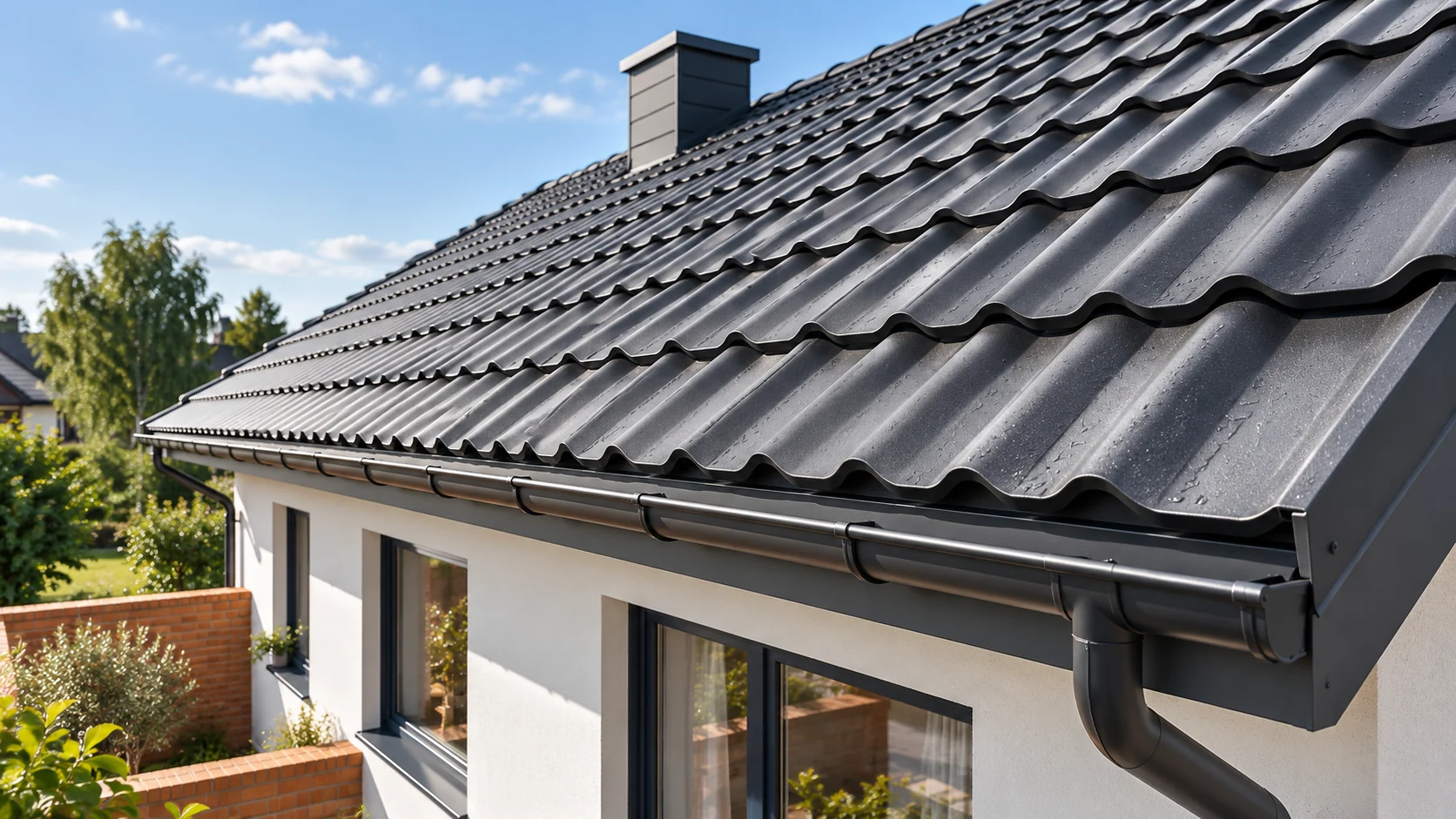
Colour does not indicate how thick the steel is or what protection lies beneath it. Two sheets in the same shade may have different properties. When comparing offers, ask about the core thickness and the type of coating. Do not treat a marketing colour name as a technical specification. The conditions of use in the building environment and the rules for surface maintenance are also important.
Why does steel sheet have pressings?
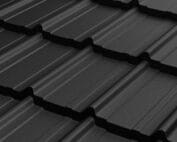
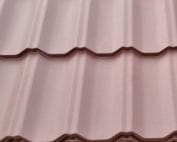
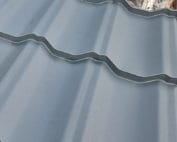
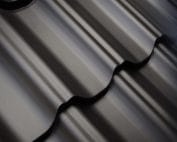
The profile gives the sheet its shape and influences its rigidity. Transverse steps create a rhythm reminiscent of rows of roof tiles. Longitudinal waves carry the pattern from the eaves towards the ridge. Their height, spacing and terminations are defined for the selected product.
An example variant has a module of 350 mm, a profile height of 27 mm and a transverse embossment of 30 mm. These dimensions describe different parts of the geometry. They should not be freely interchanged or collectively called the covering thickness. A similar drawing in a sheet along the length may have a different step detail. Therefore, matching elements is based on the exact profile, not on the general term “classic wave”.
How do module, width and coverage differ?
The longitudinal module defines the repeating section of the pattern in the direction of the slope. The overall width covers the entire sheet. The covering width is smaller because part of the material forms the side overlap. With short panels, the overlap along the length must also be taken into account.
For example, 1192 mm of overall width may give 1105 mm of effective covering. Ten such strips will not cover 11.92 m of roof slope. Nominally, this gives 11.05 m before taking edge termination details into account. These data are needed for quantity calculations and price comparisons. The overlap is not subtracted a second time from a dimension already described as effective.
How does the sheet work with battens and screws?
Tile-effect metal roofing requires support that matches the profile. The batten spacing is related to the module and the eaves detail. A single distance should not be assumed for all products. An even substructure helps maintain the correct arrangement of rows and reduces undesirable deformation.
Screws fix the sheet to the substrate, while other connections may join the sheets to one another. The type, layout and tightening method follow from the system. Excessive pressure can deform the washer and the sheet. Insufficient pressure will not provide a proper connection. It is not worth relying solely on the number of screws per metre. The position of each fixing and the material of the structure are also important.

What does the sheet itself not provide?
Tile-effect metal roofing is not standalone thermal insulation for rooms. It does not replace the layers required beneath the covering or the airtightness from the interior side. The roof must have moisture drainage and ventilation suited to the adopted cross-section.
- Flashings close the edges and connections with obstacles.
- Gutters and eaves collect the water flowing off the roof slope.
- The layers beneath the covering perform their own protective functions.
- Insulation and the ceiling affect the comfort of the attic.
Therefore, determining the price of a “tile-effect metal roof” requires defining the scope. The price of the sheets alone does not describe the cost of the finished assembly above the room.
How should the layers be protected during delivery and installation?
The coating is thin, so how the material is handled matters. Do not drag sheets over one another. Do not leave swarf from drilling and cutting. The tool should be intended for coated sheets and must not damage the protection through high temperature.
Damage must be assessed according to its depth and location. A minor decorative defect does not mean the same as a cut through the protection at the lap. Do not paint over large areas with random paint. It may differ in colour and properties. Before ordering, check the repair and care rules. This way, the choice of coating will be linked to the actual way the roof is used.
It is also worth checking the storage conditions of the pack. Even good surface protection requires protection against prolonged dampness between tightly stacked sheets.
Questions before ordering
Does the wave height of tile-effect metal roofing mean the thickness of the steel core?
No. The wave is usually given in millimetres or centimetres, and the steel is considerably thinner. These are two separate parameters describing shape and material.
Does the same colour guarantee the same properties of two sheets?
No. The steel, metallic protection, organic coating, gloss and texture may differ. A full specification is needed for comparison.
7 branches. Materials closer to your project.