Choice of roof covering
What are the advantages of small modular roof sheets?
In brief
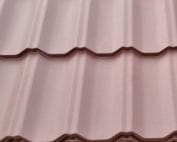
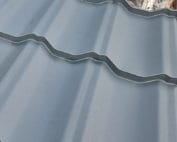
Small modules of tile-effect metal roofing make it easier to transport to site, to pass up onto the roof and to plan work on a complex roof slope. In some layouts they help to reduce waste. This does not, however, mean that there are no cuts or that the whole roof is automatically cheaper. The benefit depends on the geometry, the method of laying and the organisation of installation. It is worth comparing small sheets with a format cut to size for the specific project. A module is a repeating section of the profile, and a sheet may comprise one or more such sections. Trade names are sometimes used inconsistently, so actual dimensions should be checked. The overall length of the sheet differs from the cover length, because part of the material forms the joint.
What does small module mean?
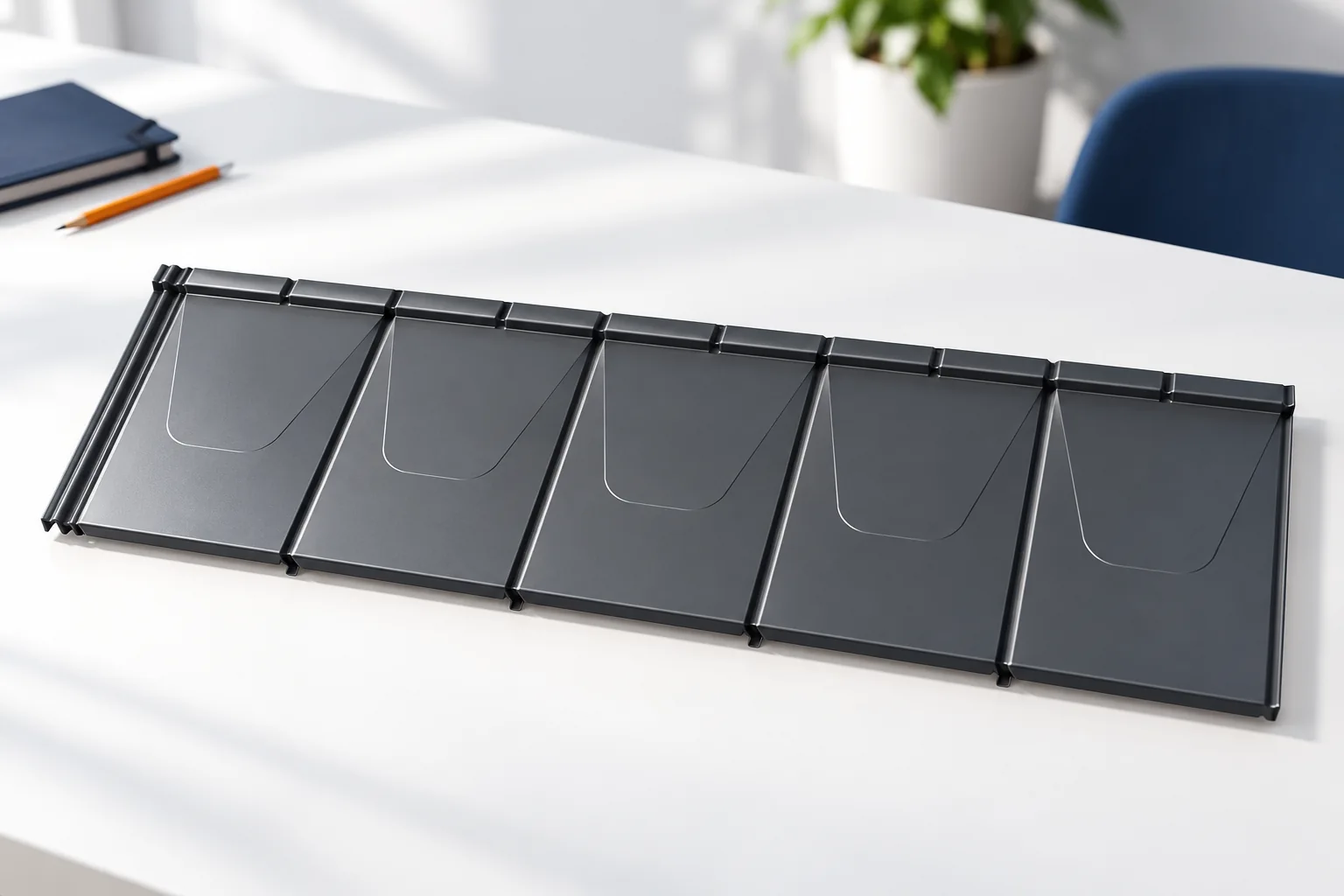
A module is a repeatable section of the profile, and a sheet may comprise one or more such sections. Trade names are sometimes used inconsistently, so actual dimensions should be verified. The overall sheet length differs from the cover length because part of the material forms the joint. A similar difference applies to the width.
The most useful information is the effective area and the method of joining. A small element does not necessarily match another sheet of similar appearance. The locks, ribs and edges are part of the system. Before ordering, also check whether the available accessories correspond to the selected profile. The name ‘modular tile’ alone does not define a complete solution.
How do small sheets help with logistics?
Shorter elements take up less space during handling and can make work organisation easier on sites with difficult access. A very long sheet does not have to be manoeuvred through a narrow passage. Proper lifting, edge protection and securing against slipping are still required. A smaller format does not exempt anyone from safe work organisation at height.
The pallet of modules must also be unloaded and stored correctly. The material should not remain in wet, closed packaging. The protective film has a limited time for remaining on the surface. Before installation, check the condition of the sheets and batch consistency. Good logistics means not only easy bringing in of the product but also preserving its geometry and coating.
Do modules really reduce waste?
On a roof slope with valleys, corners and dormers, a long sheet may leave large offcuts. A smaller format offers different laying options and use of material portions. However, the result depends on the installation direction and the permitted method of offsetting rows. Not every cut piece can be rotated and installed on the other side of the roof.
Therefore, it is worth preparing a cutting plan for two variants. Compare the quantity of material ordered, the number of joints and the cutting work. On a simple rectangle, a made-to-measure format may perform very well. There is no single waste percentage for all modular roofs. The actual result is shown by the laying plan, not the sheet size alone.

How does the format affect installation?
A small element is easier to position on a small section of the roof slope and to control its position. However, subsequent sheets must maintain the line and proper connections. Some systems use formed edges or factory holes. These aids work when the substrate and installation sequence correspond to the instructions. Even a well-designed lock will not fix an uneven substructure.
A greater number of elements means more assembly operations. Some fasteners fix the covering to the substrate, while others join the sheets together. These functions must be distinguished. In the first row, the eaves detail and batten spacing are particularly important. A correct start allows you to maintain the rhythm across the rest of the roof slope without forcing joints and unnecessary stressing of the sheet.
Is replacing a damaged section easier?
A small sheet may facilitate a local repair, but access depends on the method of joining and the location of the damage. Sometimes adjacent elements must also be removed. One should not promise replacement of a single piece without disturbing the surroundings in every system. It is worth knowing the repair instructions and keeping documentation of the profile used.
After years, the problem may be the availability of a matching element or a difference in shade between the new and old surface. A stock of a few properly stored sheets can be practical, but requires adherence to storage rules. It should not lie permanently outdoors under airtight foil. A damaged coating on the spare sheet may render it unsuitable for later repair.
How to assess the cost-effectiveness of a small format?
The set comprises the price per square metre of covering, the cutting result, accessories and labour. Check whether the compared variants assume the same steel thickness and a similar coating class. The difference in material quality should not be attributed to the format alone. A cheaper sheet sold individually may have a smaller effective area and not yield a lower roof slope cost at all.
A small module is worth choosing when it solves a specific problem: site access, a complicated shape or the organisation of installation. The appearance is determined by the profile, colour and care of laying. Tightness also depends on details and workmanship. The format is an important functional feature, but it is best assessed together with the entire roof system and the actual working conditions.
7 branches. Materials closer to your project.