Metal pickets and fences
Straight or rounded ends for metal fence pickets? Differences that matter before ordering
In brief
The finish of a picket is a small detail that strongly influences the appearance of the fence. A straight cut tidies the top line, while a curve emphasises the rhythm of individual elements. The choice is not limited to taste, however. Not every profile offers all end variants. The installation direction and the way it is set into the system may also matter. Metal pickets should be ordered with an unambiguous description of both ends, rather than leaving this decision until delivery. The cross-section describes the spatial shape of the picket. The end finish refers to how its length terminates. The same profile may be available with a straight cut or a rounded top, if the range provides for it. This does not mean a change to the width or depth of the entire element. Both pieces of information should be sought separately in the documentation.
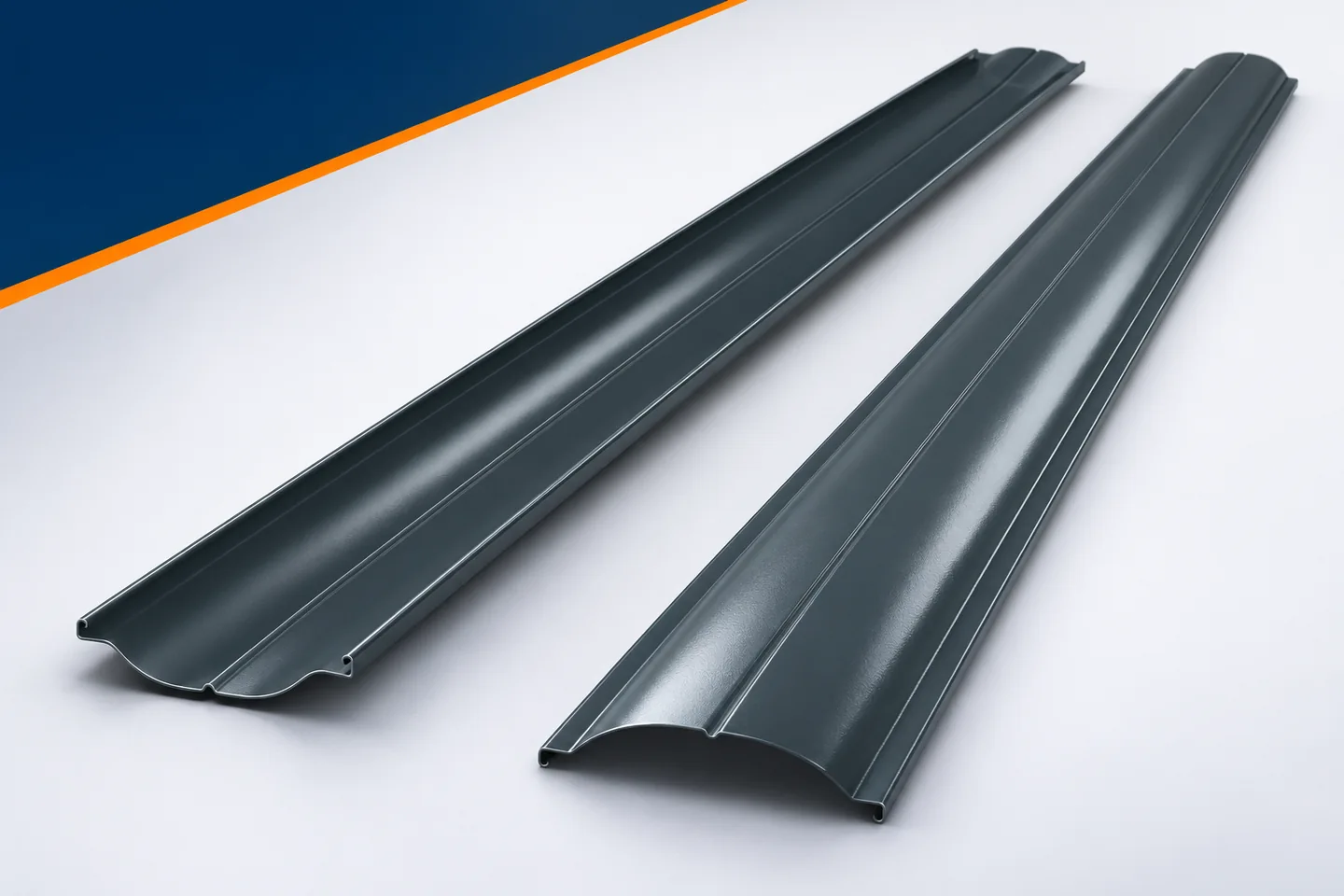
Distinguish between cross-section and end outline
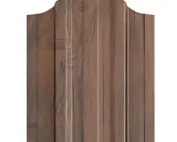
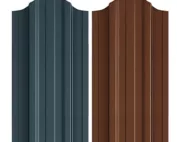
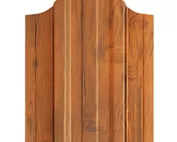
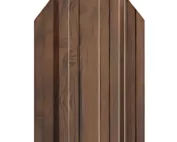
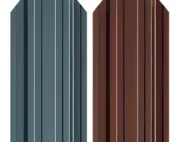
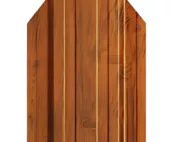
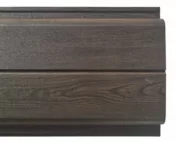
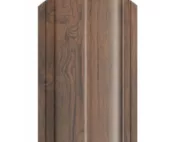
A photo of a single picket can make assessment difficult. A front view shows the curve but hides the depth of the profile. An angled view better reveals the bends but can optically distort the line of the end. The most reliable approach is to compare the drawing with an actual sample. Steel sheet pickets should retain a recognisable shape in both front and side view.
Straight ends create a calm line
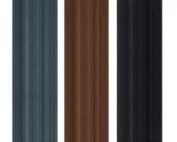
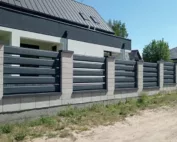
With equal lengths and correct installation, straight ends give an even top outline of the bay. They work well with a simple house form and orderly frames. This does not mean, however, that they are suitable only for modern architecture. The effect is also determined by colour, picket width and gap. The end itself is only one element of the composition.
A straight line clearly shows differences in installation height. That is why a common reference point and checking of successive pickets are important. It is not worth assuming that minor deviations will be hidden in the finished fence. They can be particularly visible in backlight. The solution requires care, although it looks economical and uncomplicated.
Rounded ends accentuate individual pickets
Arched ends emphasise the repetition of the infill. With larger gaps, each picket is more clearly separated from the next. Such an arrangement can suit traditional buildings, but is not permanently tied to them. A simple house can also benefit from a soft end. Before choosing, it is worth viewing several elements side by side, not just a single sample.
Steel sheet pickets with an arch are not automatically safe in every application. A rounded outline does not remove all cut edges. The quality of workmanship, absence of deformation and appropriate intended use are important. Such a detail should not be treated as confirmation of suitability for a balustrade or other fall protection. Such functions require separate assessment.

For horizontal installation, check both ends
Horizontally, the ends reach the area of the posts or mounting strips. A straight cut on both sides is often needed. However, this must result from the specific solution. Not every manufacturer permits every profile to be laid horizontally. The choice of direction should therefore be confirmed before ordering the pickets, not after delivery of the elements with the decorative end.
The length, taking into account clearance and accessories, is also important. The ends should not be forced between the supports. The system may provide for cover caps and additional central support. One should not invent a lock for an ordinary picket connecting it to the next into a full panel. These are separate elements fixed to the structure in accordance with the documentation.
Assess the edge, not just the shape
On delivery, check that the ends match the order and have not been crushed in transit. Pay attention to burrs and the condition of the coating near the cut. Do not run your hand along an unfamiliar edge. Thin sheet metal requires careful handling and appropriate protection during installation. An aesthetic curve does not change this rule.
If an element needs to be shortened, use a method approved for the material. Cutting with a tool that generates excessive heat can damage the protection. Reproducing the curve on site is also often more difficult than a simple shortening. Therefore, ordering the correct length and ends reduces the need for on-site intervention. Any protection of the cut should comply with the manufacturer’s recommendations.
Describe the variant without leaving room for guesswork
In the order, it is worth specifying the top end and the bottom end separately, or both ends of a horizontal element. Add the length measured according to the product definition. For a rounded end, confirm whether the given value includes the highest point of the curve. This is a detail that can affect the alignment of the entire fence line. It is best to clarify it on a drawing. For several lengths, assign a separate designation to each group. This prevents mixing up elements with a curve intended for different parts of the fence.
Metal fence pickets with a straight and rounded end offer different composition possibilities. There is no need to look for one variant that is best for all houses. More important are compatibility with the system, the quality of the edges and the planned line of the bay. Once these issues are settled, the end becomes a deliberate detail. It does not need to be corrected later or hidden with random additions.
7 branches. Materials closer to your project.