Metal fence pickets and fencing
Wood-effect steel fence pickets: assessing the finish before buying
In brief
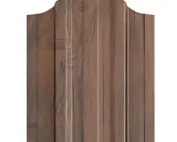
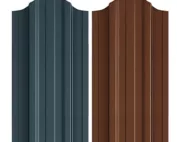
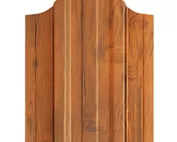
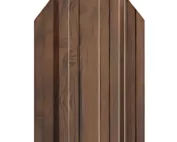
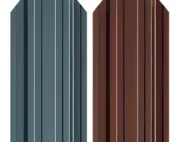
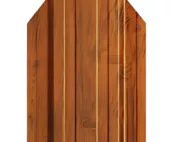
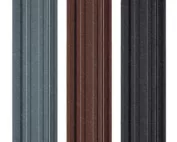
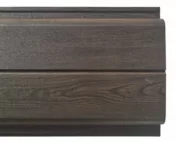
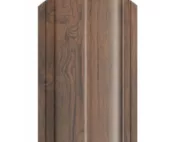
Wood-effect fence pickets combine a decorative finish with the structure of profiled steel sheet. They suit people who want a warm wood pattern without using timber pickets. The product should nevertheless be assessed realistically. Sheet metal does not have the same texture and geometry as a wooden board. Its appearance depends on the print scale, gloss, cross-section and repetition of the elements. A sample should show these features before the finish is repeated along the whole boundary. A small flat swatch shows only part of the colour and surface pattern. It does not reveal how the pattern looks across a rib. The folds in steel pickets change the lighting of the finish: some areas look brighter while others remain shaded. A sample of the finished picket is therefore more useful than a picture of the finish alone.
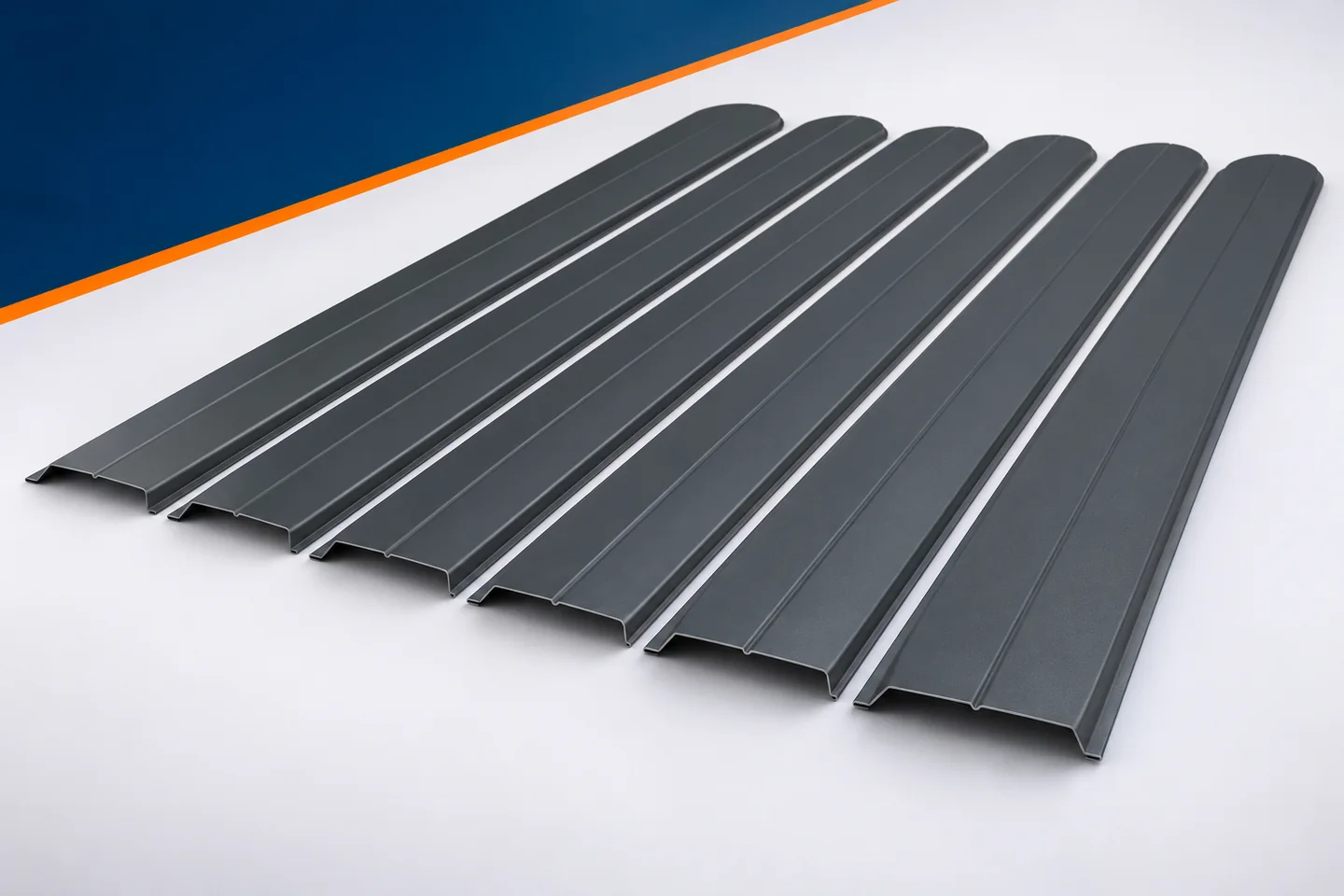
Start with a sample of the actual profile
If possible, view several elements side by side. A long fence section gives a different impression than a single picket in your hand. The repeatability of the pattern may only become visible when viewed together. It does not automatically have to be treated as a defect. Also assess the edges and ends. A decor visible on the face does not mean an identical effect on every cut edge. The sample shows how the pattern actually ends, so it is worth looking at it up close and at an angle. It is worth knowing, however, what rhythm will be created and whether it suits the character of the property.
Do not treat the finish name as an exact colour
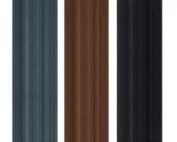
Terms referring to wood are interpreted differently. A similar name can mean a different shade, grain contrast and level of gloss. One should not assume that the pickets match the windows or gate solely on the basis of a description. Each of these elements may come from a different finishing technology. A real sample is particularly important here.
Place the metal pickets next to the material they are meant to reference. If real wood is nearby, check both elements in daylight. A small difference in tone can look natural, while a strongly different pattern can compete with the surroundings. Sometimes a uniform colour of the structure proves to be a better combination. There is no obligation to repeat the decor on every surface.
Determine the pattern and installation direction
With vertical pickets, the decor is usually read along their length. When laid horizontally, the relationship of the pattern to the building’s form changes. Such a rotation must be assessed aesthetically, but also technically. Not every model is intended for both installation directions. The choice of decor does not remove restrictions regarding supports, length and fixings.
If you plan a horizontal layout, confirm how the elements are finished and the mounting system. Do not turn a random picket into a pretend load-bearing board. Metal pickets remain thin profiles fixed to the structure. Their shape should comply with the product drawing. The wood grain drawing alone does not define the thickness of the steel core or the geometry of the profile. These parameters must be checked in the specification of the selected variant.

Check what the back side looks like
Not every wood-effect variant has the same pattern on both sides. The back may be finished differently. This is very important when the fence is viewed from a terrace or by a neighbour. Before ordering, it must be clearly confirmed which surfaces are decorative. The phrase “coated steel sheet” does not replace this information.
A double-sided decor does not mean a two-row layout. In a single row, the spatial folds and the structure from behind will still be visible. If you expect greater screening, a separate spacing design is needed. It is worth viewing a complete bay sample from both directions. This allows you to assess the pattern, the gap and the visibility of the fixings at the same time.
Separate the visual effect from the protection parameters
A wood-effect appearance does not in itself determine durability. You need to know the material, the coating system and the conditions of use. Do not assume that a decor is always more or less resistant than a solid colour. A comparison requires data for the specific variant. The cleaning instructions and the procedure for dealing with damage are also important.
The surface is not maintained like natural wood. An impregnation intended for boards is not automatically suitable for coated steel sheet. Nor should the decor be sanded to remove a local scratch. Such intervention can destroy the finish. Any repair should be agreed for the product, and in the case of larger damage it is worth considering replacing the element.
Order a consistent set for the entire section
With decors, a full specification is particularly useful. Record the pattern, gloss, finish on both sides, cross-section and length of the pickets. Do not limit the data to a general description of “brown wood”. If the fence is being built in stages, keep a sample. Later batches may differ visually, so conformity must be assessed again before installation.
Wood-effect steel sheet pickets can create a warm and orderly fence. The best effect is achieved through a sensible combination with the surroundings and an honest assessment of the pattern. There is no need to expect the profile to be indistinguishable from a board from every distance. Its advantage is a ready, decorative surface and a repeatable shape, matched to the real way the property is used.
7 branches. Materials closer to your project.