Metal fence pickets and fencing
Reading a metal fence picket data sheet: what the figures mean
In brief
The product data sheet should make it easier to compare fence pickets and prepare an order. Sometimes, however, it contains abbreviations that are easy to misread. The strip width before profiling is not the width of the finished component. The maximum production length does not mean the span without supports. Such distinctions have a direct impact on the quantity of material and the method of installation. Metal fence pickets should only be selected after combining the data from the table, the drawing and the instructions. Each of these sources answers slightly different questions. Also check the document version marking. An older catalogue and the current offer may describe different variants, so discrepancies should be clarified before accepting the parameters.
Start with the geometry of the finished profile
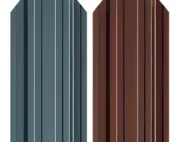
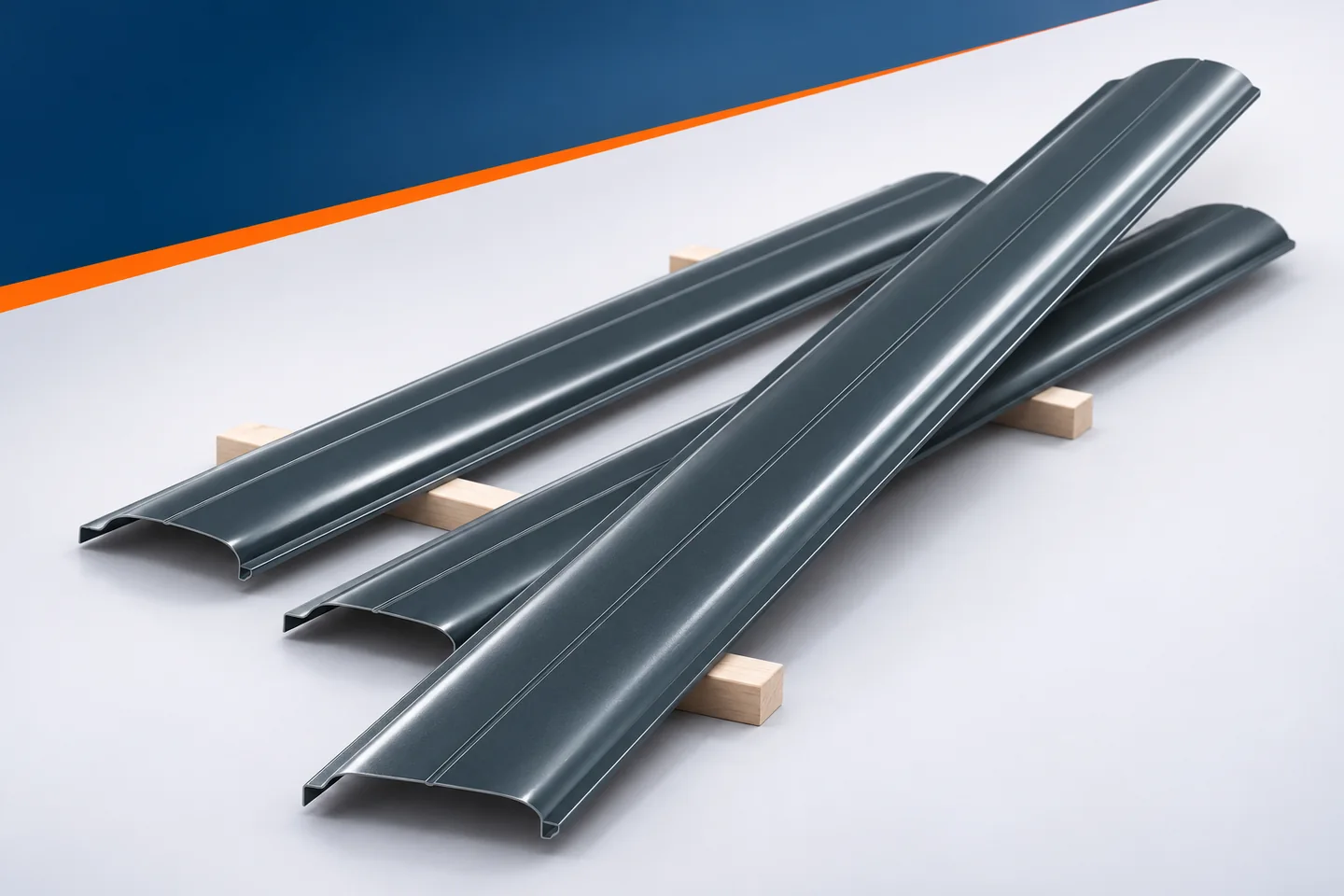
Check the overall width and the section height. The first helps you plan the pales within a bay. The second describes the depth of the element, not the height of the fence. Next to it, the input width may be given, i.e. the strip of sheet metal before profiling. It should not be used to calculate the number of pales on the finished structure.
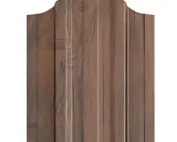
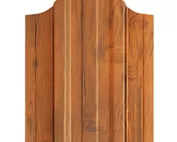
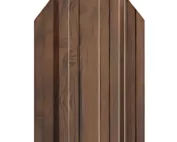
The drawing should match the selected variant. Look at the shape of the edges, the position of the ribs and the overall proportions. A photograph alone can conceal part of the cross-section. Also check the end shape. Sheet-metal pickets that look similar from the front may have different folds and installation restrictions. The category name does not identify the specific profile.
Read the length together with its explanation
The data sheet may state a minimum length, a maximum production length or a maximum recommended length. These are not always the same concepts. Information that an element is made to measure does not authorise any arbitrary use. A long profile may need additional supports. The operating conditions must be determined separately for vertical and horizontal layouts.
When ordering, also confirm how the ends are measured. If the pale has a rounded top, it is important to relate the stated length to the highest point. In horizontal installation, clearances and system components must be taken into account. Do not order all lengths based on the distance between the outer surfaces of the posts if the infill occupies a different field.
Separate the steel, metallic coating and colour
Sheet thickness is a different parameter from paint thickness. The steel grade also does not by itself describe the type of corrosion protection. If the data sheet gives several designations, check their meaning in the material documentation. Do not combine unclear abbreviations into a default product class. Any doubt should be clarified by the supplier of the specific variant.
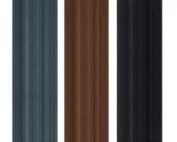
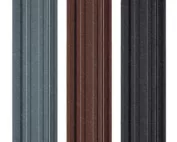
The organic coating may differ in type, thickness, texture and gloss. Colour does not describe these features. Likewise, the term “galvanised” does not say what the front and back of the pale look like. A full specification of metal pales should clearly separate this information. This makes it clear what you are comparing and which parameters have actually been declared.

Check the variant for both sides
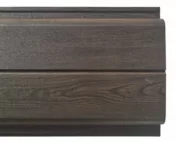
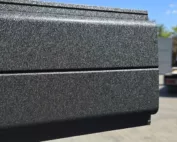
On a fence, the reverse surface is often clearly visible. The data sheet should therefore explain whether the decoration is on one or both sides. It is also worth establishing whether the back has identical gloss and texture. The term “coated on both sides” may refer to protection, not to identical decorative finishing. A sample allows the appearance to be verified.
Do not confuse this feature with a double-row layout. Steel fence pales with colour on both sides can be installed in a single row. Two rows relate to the structure and require a separate quantity schedule. If the category description, variant name and table conflict, confirmation must be obtained. One sentence should not be chosen simply because it better matches expectations.
Refer to the installation and user manual
A dimensions table is usually not enough to build a fence. The instructions show the correct accessories, supports and fixing sequence. They may also restrict the installation direction of a given profile. It is worth reading them before ordering material, because the required components affect the entire schedule. The absence of a mention in a short description does not mean there are no requirements.
Check transport, storage and cleaning separately. Factory packaging is usually protection for a defined period, not unlimited storage. Environmental conditions may exclude certain applications. It is not worth adopting a general claim of maintenance-free performance if the instructions require inspections. The user document should guide subsequent handling of the material.
Turn the data sheet into a clear order specification
After reviewing the documents, prepare a short schedule. It should cover the profile, lengths, quantity, declared thickness and finish on both sides. Add the installation direction and the correct accessories. If certain data remain unclear, record the question instead of making your own assumption. It is easier to clarify them before production than after delivery of made-to-measure pales.
A good product data sheet does not replace the fence design, but it provides the information needed for it. Steel pales can then be matched to the structure and the desired appearance. The most important thing is to read the parameters together with their definitions. This keeps width, length and coating as specific product characteristics rather than numbers used for overly simple comparisons.
7 branches. Materials closer to your project.