Fibre cement roofing
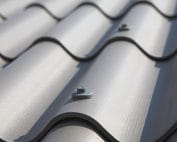
Fibre cement fixings and sealing washers: how they work together
In brief
The smallest item on the order can determine the tightness of a large roof area. A screw on its own is not yet a complete fixing. Fibre cement sheets require the correct shank, a pressure and sealing component, and a hole made in accordance with the system. Asbestos-free fibre cement should therefore be priced together with the accessories. Replacing them with a random set makes it difficult to predict how the connection will behave under wind and during temperature changes. The shank transfers forces to the substructure. The pressure component distributes the load over the intended area, and the seal limits water ingress. The shape of the head and the way the tool is guided are also important. Damage to one component can weaken the performance of the entire set.
Each part has a different task
A strong screw with a worn washer can still be a leak point. A new seal on an unsuitable fastener will not solve the anchoring problem. Therefore, when ordering, complete solutions should be compared, with information on the application. A description of diameter and length alone is not enough to establish the equivalence of two sets.
Wood and steel require different selection
A fastener intended for a wooden batten has a different task in the anchoring part than an element for a steel purlin. In steel, the thickness of the substrate and the extent of drill-through matter, among other things. In wood, the required embedment depth and the condition of the material are assessed. Fibre cement boards do not change these principles. It must not be assumed that a longer screw of any type will be a safe replacement. It must match the profile, the lap and the structure. During renovation, previous holes in the supports must also be taken into account. New fixing in a damaged location may not achieve the required performance, even if the fastener itself is correct.
The environment also affects accessories
Fibre cement does not rust like steel, but the metal parts of the connection can corrode. A humid atmosphere, proximity to the sea or the conditions of a livestock building require appropriate selection. Fibre cement boards resistant to certain influences do not automatically protect an unsuitable screw. The material and protection of the fastener and its approval for the given environment must be checked. This applies to the entire set, not just the visible head. The selection should also take into account the substructure and contact between different metals. Accidental mixing of parts from several sets makes it difficult to assess resistance. It is worth keeping the description of the accessories together with the roofing documents.
The seal needs controlled pressure
Too little pressure can leave a path for water. Too much can deform the seal and excessively load the board. It makes no sense to assess quality solely by how tightly the head has been tightened. Asbestos-free fibre cement should not be compressed until every unevenness of the substrate is levelled. If the sheet stands proud, the support, the lap and the conformity of the profile must be checked. The washer serves to seal a correct connection, not to mask incorrect geometry. The torque and method of tightening are determined for a specific set. The tool should allow the installer to control the final result without damaging the seal or the surface of the ridge.
The hole and washer are selected together
The intended clearance around the shank helps to limit stresses. The seal must effectively cover the penetration at such a hole. Fibre cement boards with prepared detailing may have different diameters at different points. Their orientation and laying pattern must be observed. The hole should not be enlarged arbitrarily and washers then selected by trial and error. If the documentation specifies a dedicated drill-through fastener, its compatibility with the board must be checked. An ordinary screw does not become such a system through a similar appearance. During installation, perpendicular guidance of the tool and the absence of chips under the seal are also important.
Repair does not always mean replacing the rubber
A leak at the fixing can result from wear of the seal, but also from a crack in the ridge, corrosion of the shank or movement of the support. The source must first be determined. Fibre cement boards near the fixing should be inspected by a person using safe access. Increasing the pressure without identifying the cause can enlarge the crack. Also, covering the head with a thick layer of compound does not indicate a durable repair. Sometimes the set needs replacing, sometimes the sheet or a section of the substructure. A well-chosen repair removes the cause and restores the intended behaviour of the connection. Masking the symptom makes subsequent inspections more difficult.
Small parts are worth describing in the specification
The purchase list should include the substrate type, the fastener variant, the gasket material and the pressure element. The quantity should be determined according to the fixing plan, taking into account the edge zones and accessories. Fibre cement boards are then part of a complete order, rather than the only precisely described item. It is advisable to keep the packaging labels and fixing documents after acceptance. They will make it easier to order matching parts for servicing. The stock should not be a random mixture of leftovers from different sites. On the next renovation, the head colour alone may not be enough to identify the material, the protection and the intended use of the set.
Order asbestos-free fibre cement together with a specified fixing system. Information about the substrate and the conditions of use will help select the right set, including for future servicing.
7 branches. Materials closer to your project.