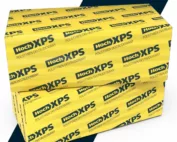
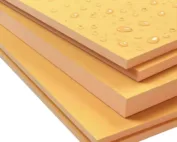
XPS insulation
XPS in a ground-bearing floor: what a correctly selected layer achieves
At a glance
A floor on the ground separates the interior of the house from the cooler substrate. Insulation matched to it limits the flow of heat and works together with the layer we will walk on. XPS can be useful where low water absorption and resistance to pressure also matter. Extruded polystyrene can be laid in precisely fitting boards, which makes it easier to create a continuous layer. However, its thickness and position are determined by the entire floor build-up. The thermal resistance of a board depends on its thickness and its thermal conductivity. For XPS, both figures can be found in the product documentation. A lower lambda at the same thickness means greater resistance, and increasing the thickness at the same lambda also raises it.
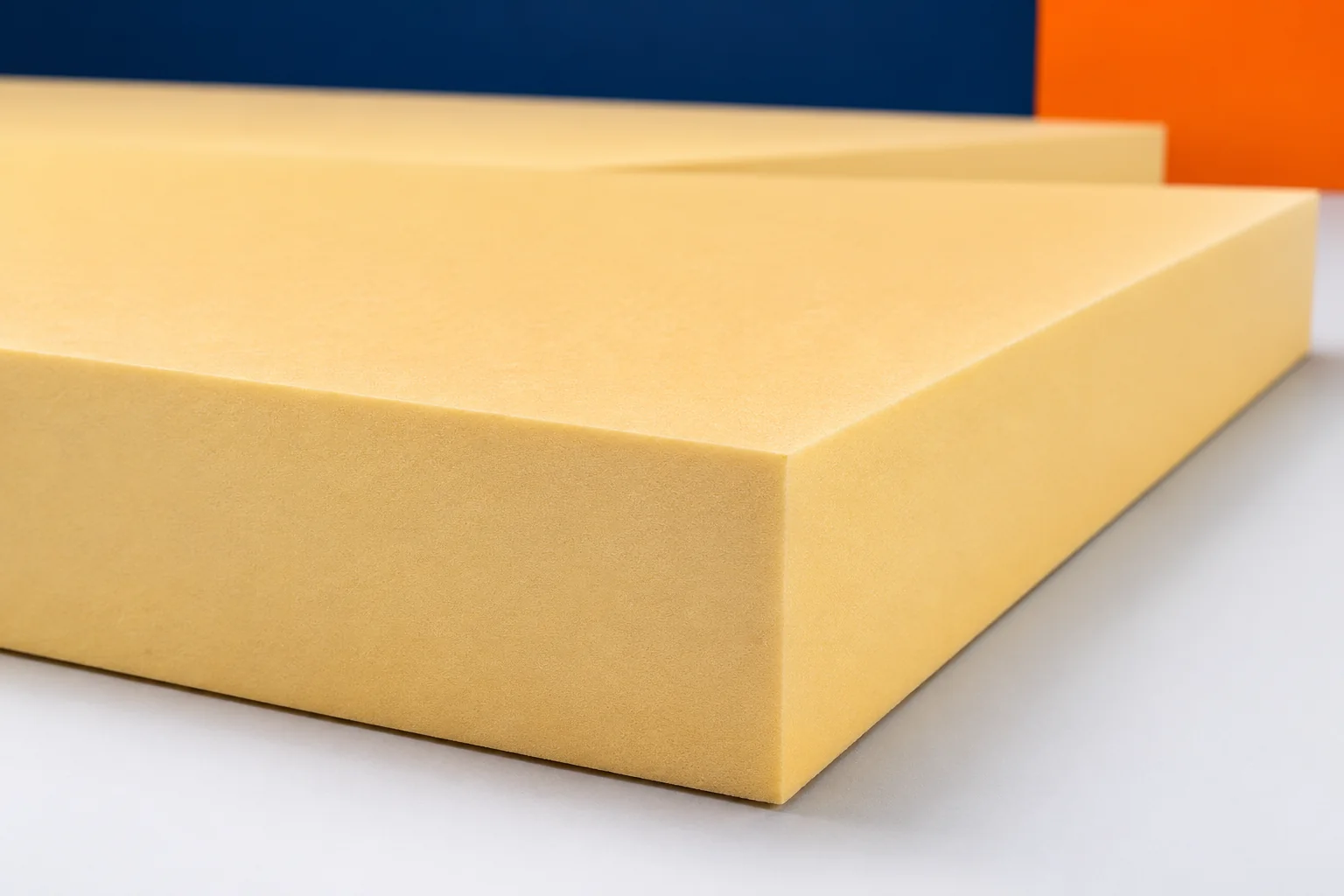
Insulation performance depends on thickness and lambda value
Such a comparison allows you to assess offers consciously, instead of choosing a material solely by the price per pack.
Extruded polystyrene should be assessed for the thickness actually planned in the house. The parameter given in the offer heading may relate to only part of the product range. XPS alone does not determine the U-value of the entire floor. The calculation also takes into account its geometry and its contact with the ground. This means the selection matches the building, not an arbitrary value repeated for every house.
The benefit of low water absorption
XPS has a structure with a high proportion of closed cells. This limits water absorption and is one of the reasons this material is used in the basement area. In a floor, however, the entire system of protective measures counts. Thermal insulation and damp-proofing have different tasks. Their correct combination allows the properties of the boards to be used without expecting them to replace the building’s sealed waterproofing.
The position of the waterproofing should be specified in the design. Its junctions with the walls and the penetrations of pipes are important. Extruded polystyrene can work in various solutions, but XPS does not automatically seal the joints between boards. When installing the floor, it is therefore worth checking both types of insulation separately. This is simpler than looking for the source of moisture after the finished covering has been laid.
Boards provide predictable geometry
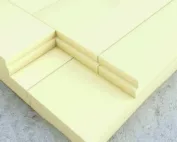
Rigid rectangular XPS elements make it easier to maintain an even layer thickness. They can be fitted to corners and to the line of the walls. This feature is useful when checking levels, because once laid the continuity of the entire surface is visible. The prerequisite is a stable, even substrate. The insulation should not be used to conceal a loose spot or a protrusion in the layer beneath it.
Extruded polystyrene can be cut with tools suited to the board thickness. Precise cutting limits gaps and makes it easier to use offcuts at the edges. XPS is laid in accordance with the instructions and the design, including where several layers are used. Offsetting the joints helps maintain the continuity of the system where such a configuration is permitted. What counts is the accuracy of the workmanship, not merely covering the substrate with material.
Loads also include furnishings
The floor is subjected to loads from people, furniture and heavier built-in elements. Some forces act locally and over a long period. XPS should match the construction of the substrate and the assumed loads. The compressive stress value at a specified deformation allows products to be compared, but it is not a ready-made service limit. Depending on the application, data on creep are also required.
A heavy wall or appliance may require separate support. These should not be placed at any arbitrary location without checking the floor design. Extruded polystyrene combines insulating performance with useful mechanical properties, but it works together with the load-distributing layer. A correctly selected XPS and a properly executed substrate form a predictable system. A stronger material alone will not repair a construction above it that is too weak.
It is worth planning the installations before laying
Pipes and cables may require space within the floor layers. Their arrangement should be determined before XPS is installed, so as to preserve the insulation thickness and support. Precise fitting of the boards is more convenient than cutting random grooves after the work is finished. It is also worth limiting the crossing of services where this leads to local raising of the level of the entire substrate.
At walls and transitions to other rooms, XPS should connect with the adopted thermal system. Particular locations are the entrance threshold, the garage and the area of large glazing. Each of these details may have different load or temperature conditions. Agreeing them in advance helps to maintain an even height of the finished floor. Afterwards, attention can be focused on the correct execution of the screed and the finish.
Choosing the material with installation in mind
Among XPS manufacturers are Synthos, Austrotherm and swisspor. A comparison of their products should cover the parameters for the given thickness, the format and the number of boards per pack. The name styrodur used in conversation does not replace these data. It is also worth checking the available type of edge. A good match between format and rooms can simplify laying and reduce the number of offcuts left over.
Before covering, the support, the condition of the XPS and all installation penetrations are checked. Extruded polystyrene performs its task well when it forms a continuous, correctly loaded layer. Its advantage is the combination of thermal properties, low water absorption and convenient working. Utilising these properties requires a clear cross-section and precision that later remain hidden beneath the finished floor.
7 branches. Materials closer to your project.