Polystyrene and insulation
Why does the TR parameter matter in façade insulation?
At a glance
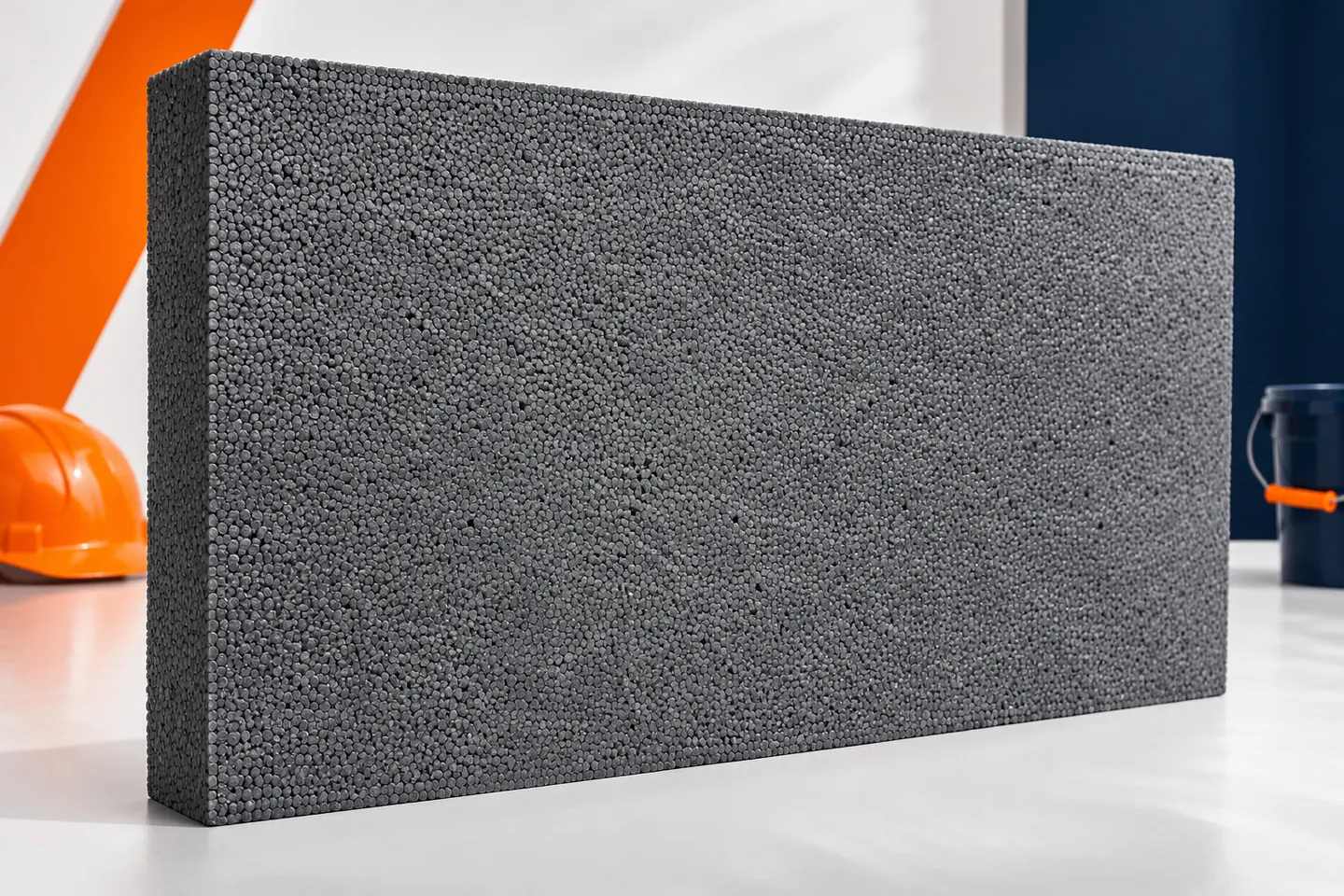
TR describes the tensile strength of polystyrene perpendicular to the board surface. In an ETICS system it is one of the properties needed to assess how the insulation interacts with the other layers. We explain how to read TR80 and TR100, why this parameter must not be replaced by hardness, and what, besides the board itself, determines the durability of the façade. The test concerns the tensile loading of a specimen in the direction perpendicular to its main surfaces. The result describes the material’s ability to withstand such an action. The designation TR100 indicates a declared level of at least 100 kPa, and TR80 a level of at least 80 kPa. This is a property of the board determined in a specific test, not a measurement of the adhesion of the adhesive to an old wall.
What does the TR parameter measure?
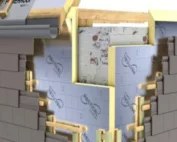
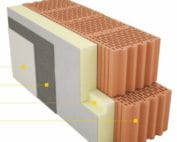
The TR value is also not a force that can be applied directly to an entire square metre of façade. The actual build-up comprises the substrate, adhesive, EPS, reinforcement and render. Depending on the system, mechanical fasteners are also used. Each of these elements has its own task. A parameter for one material does not automatically describe the load-bearing capacity of the complete composite.
Why is TR important in ETICS?
Thermal insulation is subjected to loads including those related to wind and temperature changes. The layers must work together without undesirable separation. Adequate tensile strength of the EPS is part of the system requirements. Therefore, when choosing a façade board, a low lambda value alone or a general application name on the packaging is not enough.
Look for the required TR level in the documentation of the adopted ETICS. One should not establish a single minimum for all possible solutions based solely on a popular product range. Boards with different declarations are available on the market. Compliance is determined by suitability for the specific system and project, taking into account the other parameters and the method of fixing.
Does a higher CS(10) replace TR?
CS(10) relates to compression, while TR relates to tension in a specified direction. These are different ways of loading the material. A board recommended for floors may have high compressive resistance, but its suitability for ETICS requires separate verification. One cannot assume that “harder polystyrene” will always be a better replacement for a façade board.
Similarly, density does not directly give the TR result. The appearance of the granules, the colour and the feel when pressing with a hand do not replace testing. Compare declarations, not colloquial descriptions from the seller. If the document does not contain the required information, clarify it before purchase. The absence of a value is not proof that the material meets the requirement with an adequate margin.
Why can a good board fall off the wall?
The highest declared TR does not repair a dusty substrate or detached plaster. The bond may lose adhesion at a location other than the EPS itself. That is why preparing the wall and selecting the adhesive are equally important. Before installation, the load-bearing capacity, cleanliness, moisture and evenness of the substrate must be assessed. In difficult cases, appropriate adhesion tests are needed.
The adhesive contact area and the curing conditions also matter. If the mortar dries out too quickly or the board heats up, the bond may be weakened. Adding fasteners later does not always remove the consequences of such a defect. TR confirms a property of the material, but correct execution must ensure that the entire system actually makes use of the characteristics of all the intended components.
How should an on-site test be interpreted?
During an adhesion test, it is not only assessed whether the specimen could be pulled off, but also where the failure occurred. Pulled-off paint indicates a different problem from EPS rupture. The result must be read in accordance with the procedure and the system requirements. The mere fact that some of the polystyrene foam remained on the wall does not provide complete information about the numerical strength of the bond.
Do not replace the laboratory TR test of the entire delivery with such a test. The purpose, the loading method and the specimen preparation are different. On site, what is checked above all is the suitability of the actual substrate and the selected bond. In cases of significant doubt, testing with an appropriate method may be necessary. The conclusions should correspond to what was actually tested.
How should TR be taken into account when ordering?
Record the required lambda, thickness, TR level and the other characteristics arising from the system. After delivery, compare the label with the declaration and the design. Do not accept a substitution merely because the new board has the same colour and format. Also check the condition of the edges and surface and the storage conditions. Documented parameters do not justify installing damaged material.
Façade polystyrene is produced by, among others, Arbet, Termo Organika, Swisspor and Knauf Therm. The required TR level must be compared with the documentation for the specific variant.
Keep the delivery data together with the ETICS documents. This makes it easier, during a later assessment of the façade, to distinguish a material problem from a substrate or workmanship error. TR is an important part of the specification, but it works together with the other requirements. The correct decision consists in checking the conformity of the entire solution, not in choosing the largest number visible on the label.
7 branches. Materials closer to your project.