Gutters and drainage
Steel or plastic gutters: what to compare before buying
In brief
Before choosing steel or PVC, sketch which roof slopes drain into each outlet. A roof valley can concentrate much of the runoff at one point. Use the sketch to compare gutter sizes and downpipe positions in the two systems. Then check how the steel surface is protected, how the PVC system accommodates thermal movement and whether the eaves will be accessible for cleaning. Include fittings, brackets, joints and outlets in the quotation. The price of a straight gutter length tells you little when the other components and installation requirements differ.
What do both solutions have in common?
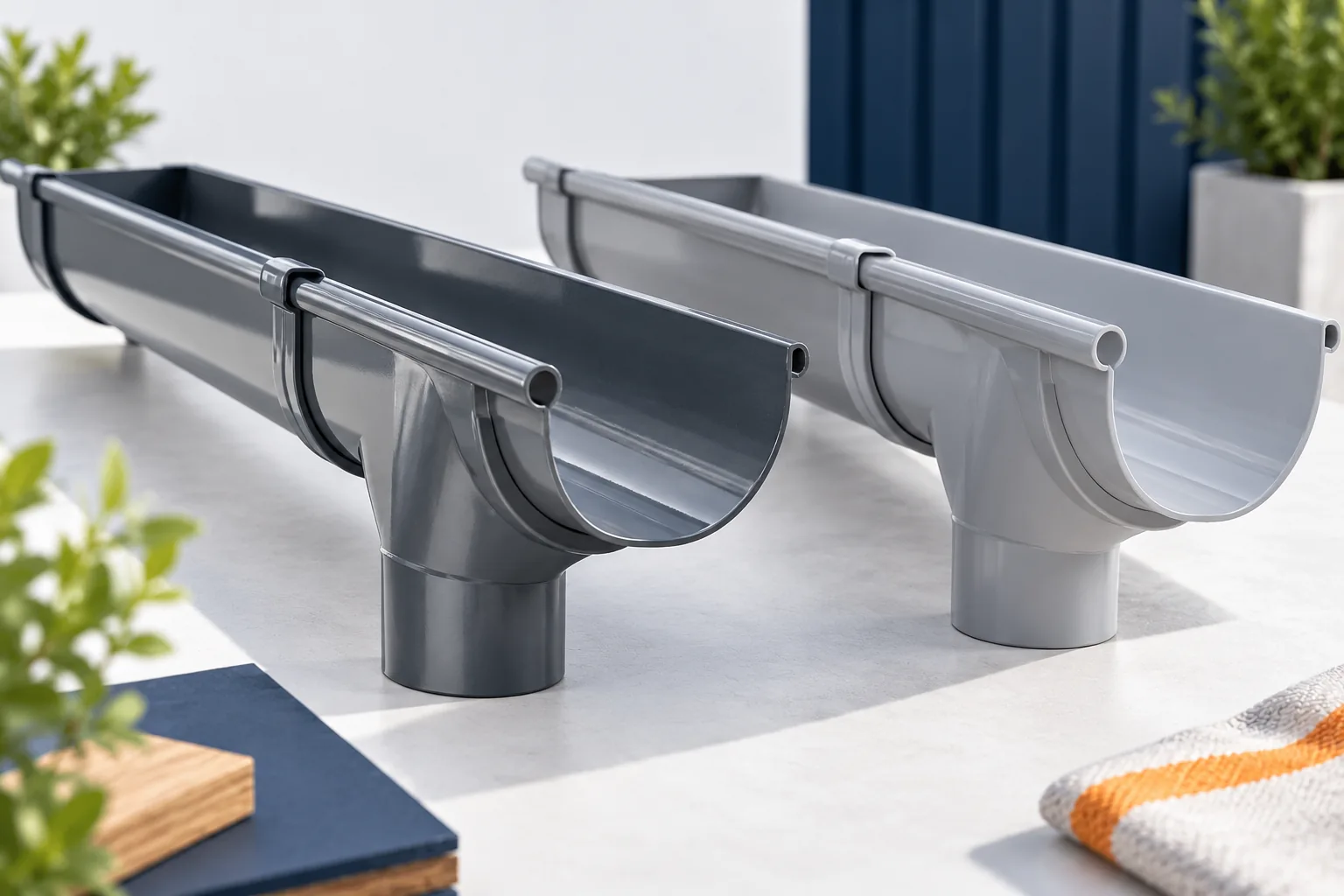
The gutter must collect water running off a specific part of the roof and pass it to the outlet. What matters is the catchment area, the position of the outlet, the run of the roof valleys and the local concentration of flow. Two roofs with a similar outline may require a different arrangement of downpipes. The diameter should not be chosen solely by the width of the fascia board.
In both systems, the correct brackets, falls and connections matter. You should also plan where the water will go after it leaves the downpipe. Rainwater drainage will not solve the problem if the outlet ends at the foundation and floods the surroundings of the building. Before buying, it is worth having a plan of the entire drainage route, not just the number of metres of gutter.
At a roof valley, a large volume of water reaches a short section of the eaves. This point requires separate assessment. Simply enlarging the downpipe at the other end of the building may not prevent overflow at the valley. Capacity should be considered for the entire drainage route.
What sets steel apart?
Steel components are protected against corrosion and may have coatings in various colours. They are easy to match visually with tile-effect metal roofing or roof flashings. However, the choice of finish should take the environment into account. Moisture retained with leaves, contamination and damaged edges require inspection, even when the external paint still looks good.
During cutting and joining, the tools and procedure specified for the system must be used. Overheating of edges or swarf left in the gutter can impair the protection. Steel also changes dimensions with temperature. A long run should not be fixed in a way that prevents the intended movement and loads the connections.
How does PVC behave?
Plastic does not corrode like steel and is lightweight. However, thermal expansion must be taken into account. Space for movement is left in the connectors in accordance with the instructions. The temperature during installation may matter. No element should be pressed unconditionally fully home, nor should a connection that is meant to allow sliding be immobilised.
Impact resistance and service conditions depend on the specific product. It is not worth judging the entire category on the basis of a thin, random gutter from another application. Check the data sheet, the installation conditions and the available accessories. When replacing a section, a compatible system is required. A similar connector shape does not confirm a tight fit.

Which material is easier to maintain?
Both require the removal of leaves, sediment and other obstructions. A blocked outlet can cause water to overflow regardless of the price of the gutter. Guards that limit leaves falling in do not remove the need for inspections. It is worth checking whether they can be removed and cleaned. Access matters especially with a high eaves and in the vicinity of trees.
For steel, also check the coating and the cut edges. For PVC, pay attention to the joints, seals and the ability of components to move freely. Do not use random preparations to regenerate the seals. A substance incompatible with the material can worsen their condition. Cleaning should also include the outlet below the downpipe.
What should you check in a cost breakdown?
Compare the whole set including gutters, pipes, corners, outlets, brackets, clips and connectors. The length of straight sections is only part of the expense. An unusual corner or a bypass around a façade detail can change the result. Also establish the cost of delivery and installation. Quotes should cover an identical drainage layout and the same access conditions.
Ask about the availability of parts needed for a later repair. A system whose basic element is cheap may prove inconvenient once a single corner is damaged. It is worth keeping the manufacturer’s and model designation in the building documentation. When comparing quotes, start with the parameters, but in the order specify a particular system and parts compatible with it.
How do you choose without guessing?
First, rule out variants that do not meet the required capacity and eaves geometry. Then compare the environmental conditions, the method of installation, the appearance and access for maintenance. With steel roofing, steel gutters can give a consistent effect, but this is not obligatory. Well-chosen PVC can also suit such a roof.
The final choice should be based on a complete set of components and correct installation. Do not mix parts from several systems in the hope of saving money. If overflows occur after rain, check the flow and the position of the outlet before replacing the material. Often the problem concerns the geometry or maintenance, not the plastic or steel itself.
7 branches. Materials closer to your project.