Installation and workmanship
Choosing a roofer and agreeing who is responsible for each part of the job
In brief
When choosing a roofer, check above all their experience with the specific covering and roof geometry, not just the overall number of projects. Ask for examples of details such as the valley, eaves and chimney junction, and for documentation of the layers before they are covered. In the contract, allocate responsibility for measurement, materials and installation, and set out the stages of inspection and the rules for settling additional work. Remember that installing modular metal tiles differs from a roof made of sandwich panels, so familiarity with one system does not guarantee proficiency in the other.
How do you check experience with the chosen covering?
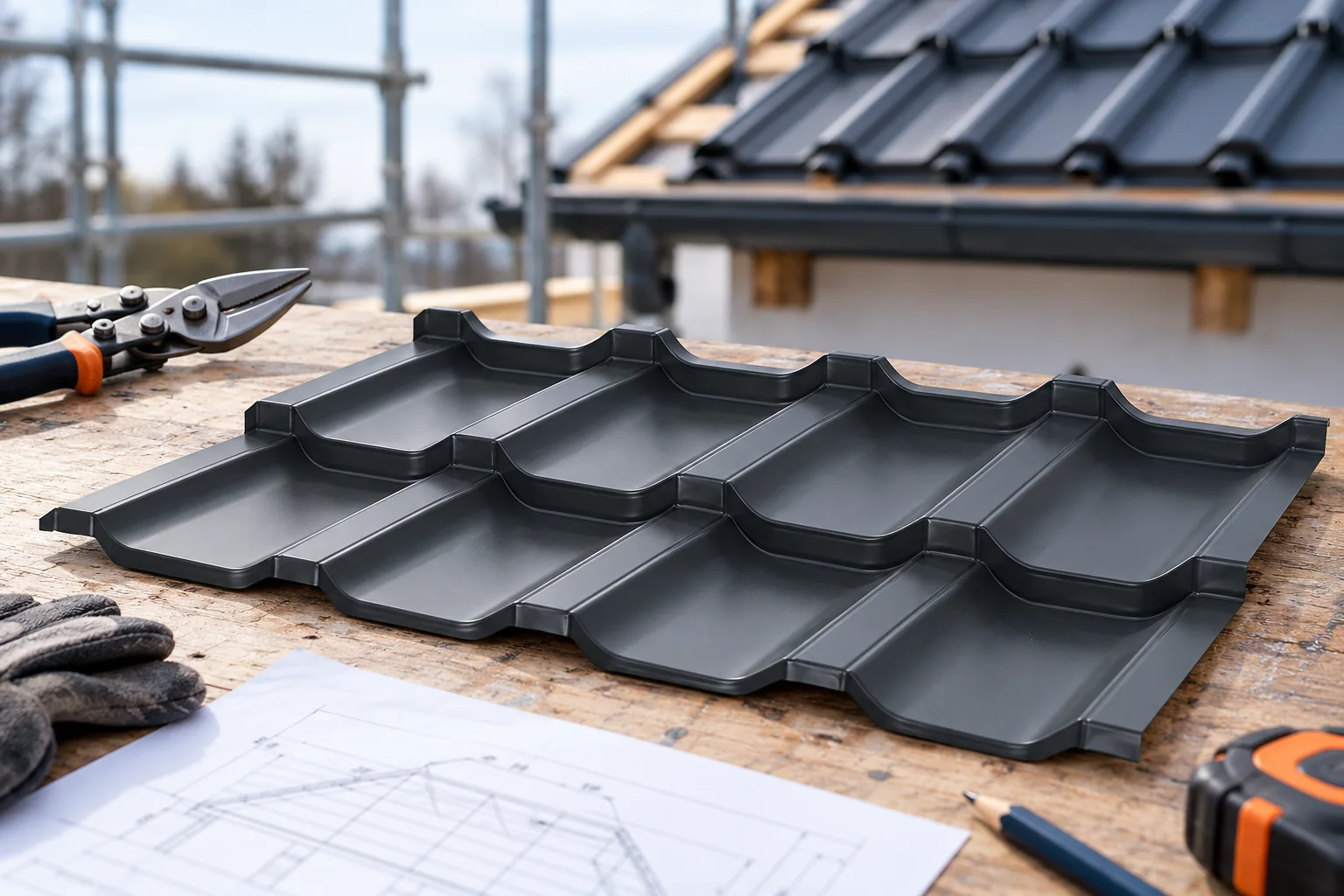
Ask for examples of work with similar material and roof geometry. Installing modular metal roofing tiles differs from building a roof from insulated sandwich panels. Familiarity with one system does not automatically mean proficiency in every system. It is worth asking how the roof valley, eaves and chimney connection are to be executed. A specific answer says more than a general assurance of many years’ experience.
Photos of the finished roof surface are helpful, but they do not show the layers underneath. It is good to view the documentation of the details before they are covered. If you contact a previous client with their consent, also ask about punctuality, tidiness and response to defects. It is not only about a nice-looking roof on the day of handover, but about how the work is conducted and problems are resolved.
What should the cost estimate include?
The scope must be described more broadly than ‘roof construction’. It should include dismantling, preparation of the substrate, layers under the covering, flashings, drainage and cleaning. It is worth specifying who is responsible for transport and waste management. If part of the works is excluded, it must be clear who will carry it out and when. A gap between crews can leave the building unprotected.
Compare quotes according to the same items. A lower amount may result from omitting the replacement of battens or new flashings. It is good to establish how works whose scope will only be known after the roof is uncovered will be settled. This does not mean consent to arbitrary surcharges. A procedure is needed: showing the problem, describing the solution, providing a quote and agreeing before additional works are carried out.
Who is responsible for measurement and buying the material?
Dimensioning errors can result in sheets that are too short or a large amount of waste. In the contract, it is worth specifying the person responsible for measurement and approval of the cutting plan. If the client purchases the material, the contractor should confirm the required variant and accessories in advance. Substitutes should not be ordered simply because they look similar in a photo.
Also establish acceptance of the delivery and inspection for damage. The material may need drying, separation of the pack or appropriate storage. Someone must be responsible for these activities from the moment of unloading. Product documentation and installation conditions should reach the crew before work begins. They must not remain solely in the email inbox of the person placing the order.

How do you discuss safety and protecting the house?
The contractor should plan access, fall protection and securing the area below. During renovation, protecting the interior from precipitation is also important. Ask how large a section will be uncovered at one time and what will cover it. The plan should not depend solely on the hope of a few days of good weather.
Access arrangements for the driveway, storage area and household through-routes must be established. Long sheets and bundles of panels require space. It is also worth asking about the contractor’s insurance and the scope of cover, if held. It does not replace careful workmanship, but it helps clarify how a potential claim would be handled. The conditions should be clear before work begins.
How should inspections be planned during the works?
Some works must be inspected before they are covered. This applies to the substrate, membrane, insulation and fixings that will be inaccessible once completed. Stages and photographic documentation can be agreed in the contract. There is no need to wait until the end with every comment. Early detection of an incorrect connection at the eaves avoids having to dismantle freshly laid covering.
The final acceptance should cover the completeness of details, the condition of the coating and the removal of metal swarf. A list of defects with correction deadlines should be drawn up. Settlement should be linked to the agreed scope and stages. Material documents, instructions and confirmations of completed works should be handed over to the owner. This is the basis for subsequent roof servicing.
How should responsibility for materials and workmanship be divided?
The manufacturer’s warranty for the covering relates to the conditions specified for the product. It is not automatically a warranty for the entire installation. A processing error, damage during cutting and a surface defect may have different causes and different addressees for the report. It is well worth establishing a contact and inspection procedure without prejudging who is responsible for each possible problem.
A reliable contractor does not have to promise a roof with no maintenance at all. They should explain the inspection arrangements and point out areas requiring attention. Choosing a team ends with a concrete plan: what will be done, from which materials, by when and how it will be accepted. Such transparency is more practical than general assurances of the highest quality.
7 branches. Materials closer to your project.