Choosing a covering
What a pronounced stepped profile changes in modular tile-effect roofing
In brief
The distinct appearance of modular metal roofing tiles comes primarily from the profile geometry, not from wave height alone. When choosing, check the effective cover width, the number of modules per sheet and the permitted roof pitch — these parameters determine the roof layout and the product’s suitability. A high profile does not replace correct support or fixing, so compare a sample with the technical drawing rather than relying on a photograph alone. Also remember that the same profile looks different on a cloudy day and in strong sunlight.
What creates a pronounced surface pattern?
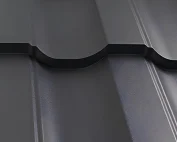
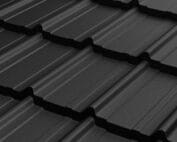
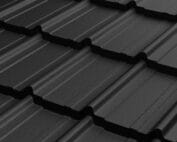
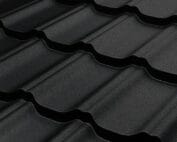
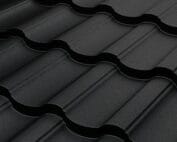
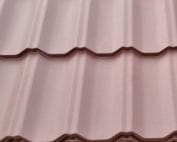
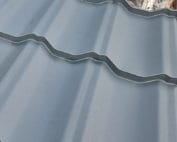
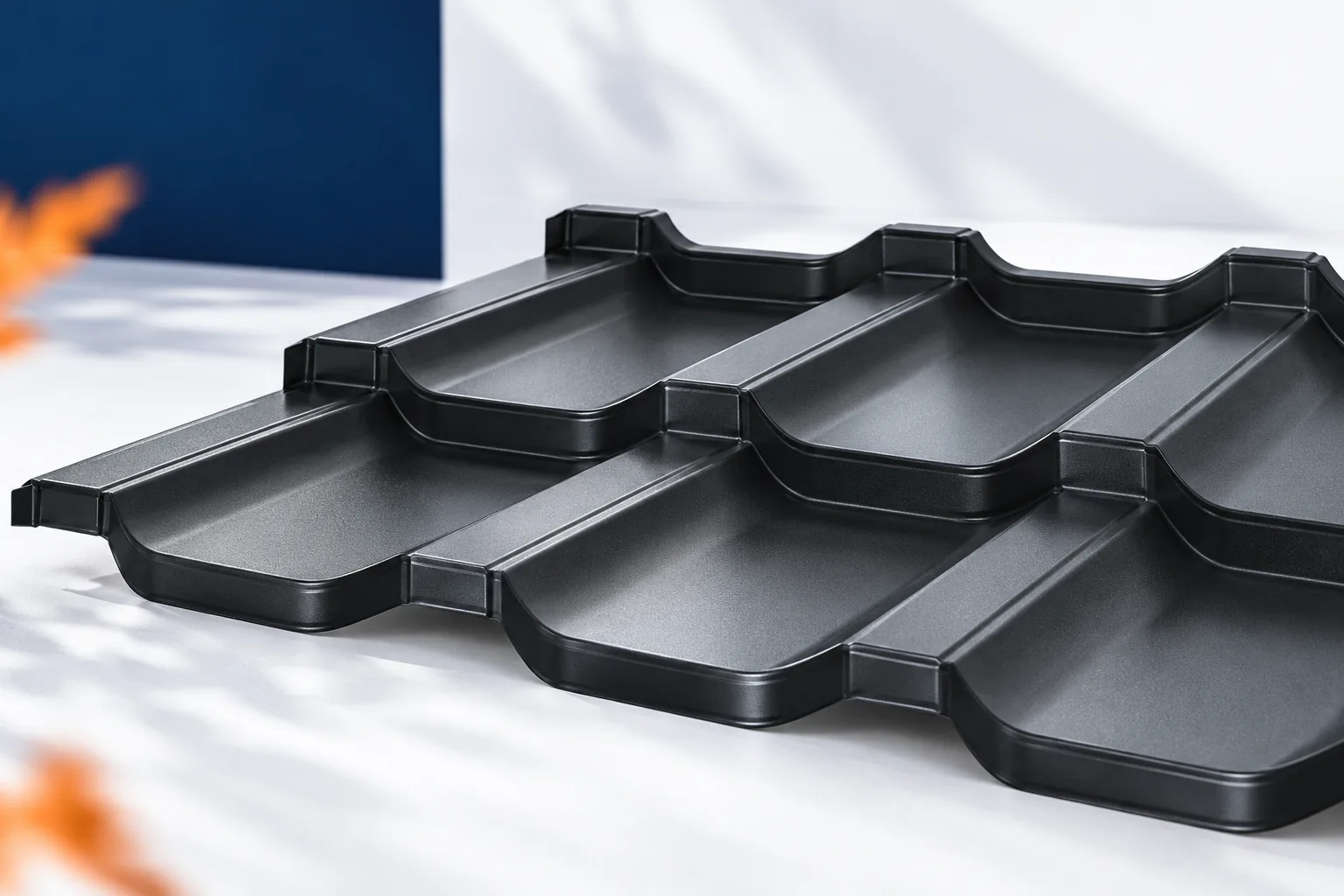
The appearance is shaped by the waves running along the sheet and by the transverse steps. Light falling at an angle brings out their height. The same profile can therefore look calmer on a cloudy day and more pronounced in strong sunlight. Assessing it from a single photo alone can be misleading.
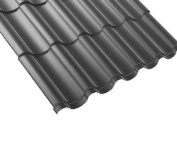
The total profile height should not be equated with the height of a single pressed profile. The technical drawing separates these dimensions. In a real example module, the step is 32 mm, while the height shown in the front section is 52 mm. These are parameters of a specific product, not a definition of the entire modular category.
How does the module format affect the roof layout?
A modular sheet has a fixed shape and an effective cover area. Depending on the design, it may comprise one or several rows of the pattern. When ordering, what counts is the number of pieces resulting from the roof layout. The total area is not the same as the cover area after the laps are formed.
Regular division helps maintain a consistent pattern. However, it requires a correct start to laying and control of successive rows. A slight unevenness at the eaves can gradually shift the whole. Therefore, measuring the diagonals and checking the geometry of the substructure should precede installation, not just the assessment of the finished roof area.
Does a high profile mean greater load-bearing capacity?
Profiling affects rigidity, but appearance alone does not determine the permissible load. The thickness and grade of the steel, the cross-section shape and the support all count. Tile-effect metal roofing still requires a substructure installed according to its instructions. The batten spacing cannot be increased arbitrarily just because the pressed profile looks massive.
Similarly, resistance to denting should not be assessed solely by the wave height. During installation, the support points and the way of moving are important. Thin profiled sheet does not behave like a solid mineral element. Protection against deformation is also needed during unloading and when handling small modules.
On which roof slope does this pattern look good?
A pronounced profile can emphasise a wide roof and a regular building form. Where there are many small sections, its pattern will be interrupted more often by flashings and cut pieces. It is worth assessing the proportions in a view of the whole house. An overly decorative division can compete with the façade if that too has many patterns and materials.
The pitch is of practical importance. The selected model must be approved for the actual slope. A high profile does not allow this condition to be omitted. The geometry of the overlap and the position of the fixing holes are part of the system. Requirements from another profile should not be transferred on the basis of visual similarity.

How does the coating change the perception of the embossing?
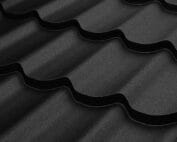
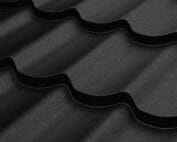
A matt surface reflects light more gently, while gloss emphasises reflections more strongly. A dark colour can accentuate the shadow between rows. This does not mean that only such a variant suits a three-dimensional profile. A lighter shade can give a lighter effect on a large roof slope. The choice is best confirmed with a physical sample.
The coating parameters should be assessed separately from the appearance. Suitability for the environment and the expected cleaning are important. Two surfaces with a similar matt finish may have different properties. It is not worth paying extra merely for the name of a finish without checking its data. A well-chosen colour should suit the house, and the coating should suit the conditions of use.
What should you look out for with accessories?
The profile height matters at transitions, flashings and when fixing equipment. The base of a chimney or bracket must match the shape of the covering. An element described as intended for tile-effect metal roofing does not have to fit every profile. Compatibility should be checked before making a hole.
The solution for the ridge, eaves and side edges is selected in a similar way. Maintaining a pronounced pattern must not come at the expense of ventilation. Sealing all the spaces under the wave can disturb the intended flow. The detail should at the same time protect against precipitation and provide the function required by the roof system.
How do you prepare an accurate order?
Put together the roof slope plan, dimensions, openings and flashings. Ask for the module layout and the number of cut pieces. Check whether the price refers to a piece, the total area or the effective area. Comparing the same data allows the actual cost to be assessed. A high profile by itself does not say how much material will remain after installation.
On acceptance, inspect the edges and pressed profiles that may have been damaged in transport. After installation, remove swarf and film in accordance with the instructions. A pronounced roof looks best when the regular pattern is not disturbed by deformation and random details. The care taken in laying is just as important as the choice of profile itself.
7 branches. Materials closer to your project.