Maintenance and safety
Preparing your roof for snow, frost and winter weather
In brief
Winter roof preparation begins with deciding who will assess the need for snow removal and how it will be carried out, not with cleaning the gutters alone. Before the frost, repair loose flashings, damaged connections and active leaks before the weather makes access difficult. Also check the places where installation work was previously done, because openings left behind may only reveal a problem during lying snow and thaw. There is no single safe snow depth for all roofs – construction, weather conditions and actual load determine it.
What defects must be rectified before frost?
Loose flashings, damaged joints and active leaks should be repaired before winter weather restricts access. It is worth checking areas after previous installation work. Leftover openings or poorly executed penetrations may only reveal a problem during snow accumulation and thaw. The repair should restore the correct roofing detail.
Preparations should not be limited to the appearance of the surface. Traces of moisture in the attic may indicate a problem with the layers beneath the steel sheet. If structural weakening is suspected, a technical assessment is required. Winter is not a good time to test how much longer a damaged element will hold. The scope of work should be determined when the roof is accessible and can be thoroughly inspected.
How do you ensure water has a drainage path?
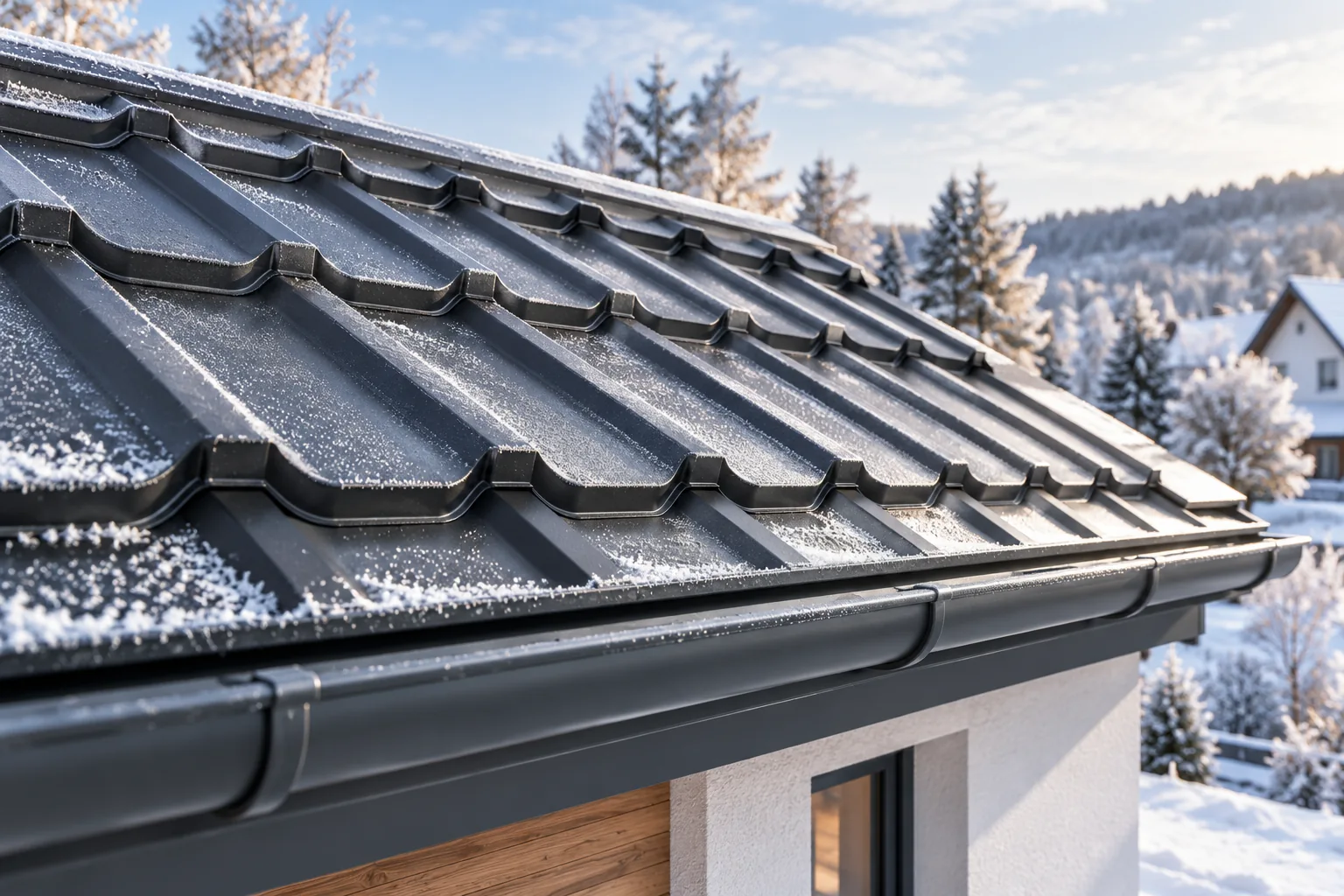
Before winter, gutters, roof valleys, drains and silt traps must be cleaned. Water from melting snow must have a designated path away from the building. A blockage in the downpipe can cause backwater even if the gutter appears empty. Connections and fixings should also be checked. A loose section under additional load may deform or lose its seal.
On a flat or low-slope roof, the outlets and any emergency drains specified in the design are important. They must not be obstructed by materials or covered with makeshift covers. The drainage heating system, if used, requires checking in accordance with its own documentation. It does not replace cleaning and correct slope formation.
What should you check on snow guards?
Before the season, the condition of brackets, fasteners and barriers should be assessed. A bent or loose element requires its cause to be checked. A snow guard is intended to limit uncontrolled snow movement but retains its weight on the roof. It must therefore match the geometry and design loads. Individual random brackets should not be added without assessing the entire system.
Areas above entrances, walkways and terraces require particular attention. Installations that may change the way snow accumulates must also be considered. A gutter does not take over the function of a snow guard. If snow has damaged the drainage system in previous seasons, it is worth analysing the fixings and the arrangement of guards before winter rather than waiting for the situation to repeat.

How do you know when there is too much snow?
Load depends not only on thickness but also on the density and moisture content of the snow. A wet layer can weigh considerably more than fresh powder of the same height. Drifts near taller walls and differences in distribution across the roof slope must also be taken into account. A single measurement at a random location does not describe the entire roof.
The owner or manager should be familiar with the inspection rules arising from the building’s documentation and its condition. When concerning symptoms appear or there are doubts about the load, an assessment by a suitably qualified person is needed. One should not wait for visible deformation as a signal to act. The absence of noticeable changes is not in itself confirmation of safety.
How should a snow removal plan be prepared?
The plan should indicate access, safeguards, the route of the skylights and the drop points. The sequence of snow removal is important so as not to create an unfavourable concentration of loads. A large mass should not be transferred onto the adjacent section without an assessment of the structure. Persons carrying out the work must know the restrictions on moving across the given covering.
Skylights may be completely hidden under snow, so their location must be established in advance. The area below must be secured against access by persons. The tools and method must not damage the coating or the waterproof layer. Scraping ice with a sharp object can lead to a leak. Safe organisation takes precedence over rapid cleaning of the surface.
What should be monitored during thaw and after the season?
During a thaw it is worth checking the drainage and the accessible interior of the attic. Water can reveal defects that were not visible during ordinary rain. Growing icicles and ice require securing the zone below and assessing the cause. They must not be removed in a way that endangers persons or damages the gutters. Knocking down the ice alone does not explain where it came from.
After winter, the fixings, flashings and snow guards should be assessed. It is good to compare photographs from the autumn inspection. A record of the changes noticed will help plan repairs and the next round of preparations. A roof is better prepared for winter when it has efficient details and an established method of servicing, and not only when it has been cleaned once before the first snow.
7 branches. Materials closer to your project.