Fences
What distinguishes metal picket fencing from other fences?
In brief
The choice of a metal picket fence depends not on the profile of an individual element but on the entire bay layout. Check whether the posts and foundations suit the planned spacing and whether the fixings can transfer the loads. Before buying, draw the bays, gate and entrance as a single whole, allowing for symmetry at the ends. The quality of the picket alone does not determine stability – durability depends on the rails, posts and their setting in the ground.
How is a picket bay constructed?
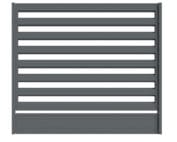
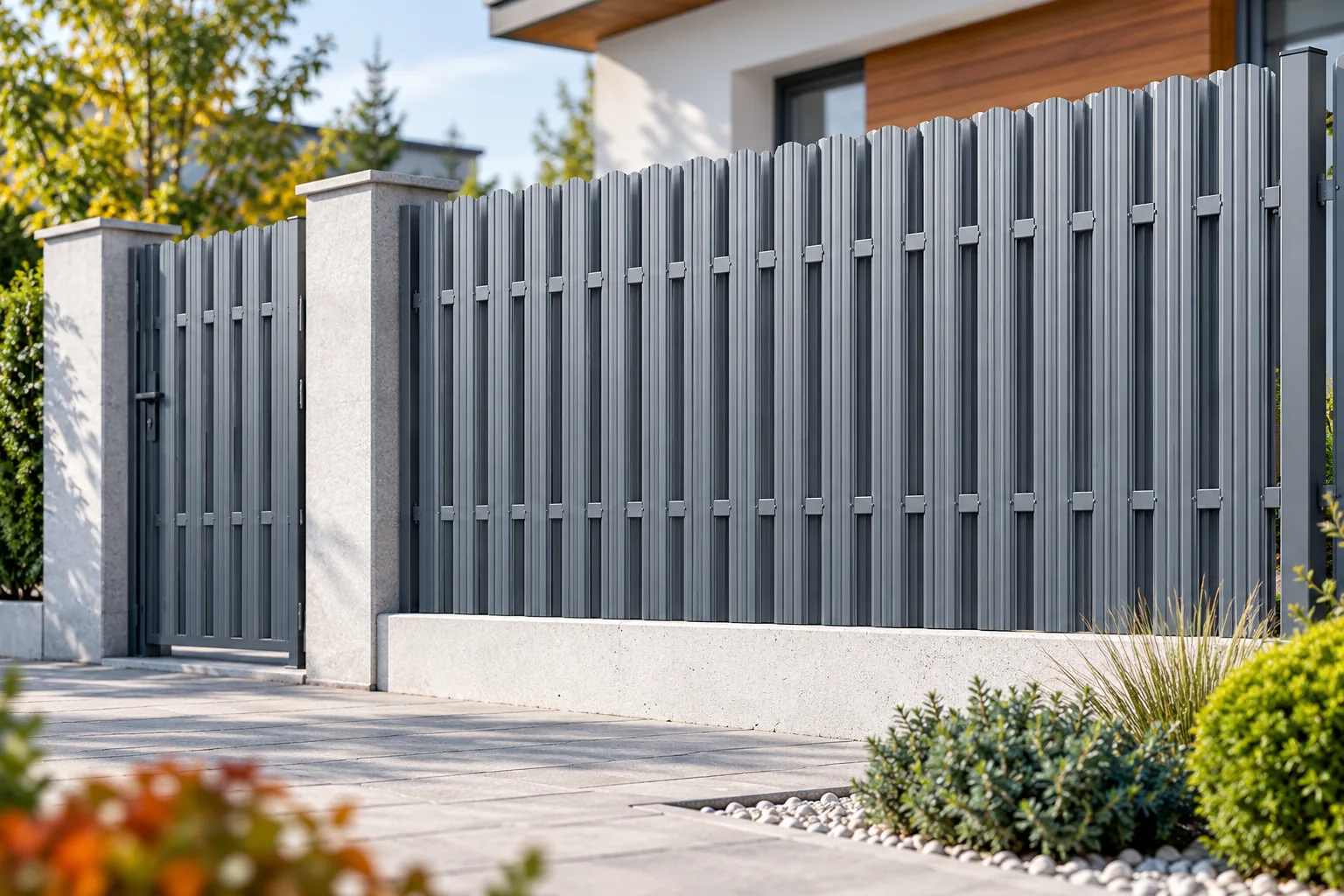
A picket made of thin coated steel sheet is given a profile that provides rigidity. The elements are fixed to the crossbars, and these transfer loads to the posts. The posts must be properly set in the ground. The quality of the picket alone therefore does not determine the stability of the fence. Incorrectly selected fixings can weaken correctly made material.
Before ordering, establish the height and width of each bay. Check whether the posts already exist and whether they are plumb and correctly spaced. It is not always possible to fit a ready-made panel without modification. If individual pickets are to be installed, the spacing plan should account for symmetry at both ends and at adjacent sections.
How does single-sided differ from double-sided arrangement?
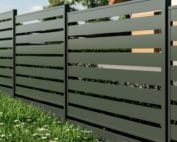
In a single-sided arrangement, the pickets are on one side of the crossbars. On the other side, the structure remains more visible. In a double-sided arrangement, the elements can be offset relative to each other. This gives a different visual screening and a different pattern of the bay. Such a solution must be provided for in the given fence system.
The degree of privacy is best assessed from several directions. What looks solid from the front may still leave a view at an angle. A denser arrangement uses more material and changes the wind load. A second row should not be added to an existing fence without checking the posts, crossbars and their connections to the foundation.
How to choose height and spacing?
First establish the purpose. The front part of the garden requires different screening from the area by the terrace or the driveway. The height of the bay should match the proportions of the house and the lie of the land. Random jumps at successive posts should be avoided. On a sloping plot, a deliberately chosen stepped arrangement or a diagonal arrangement permitted by the system is needed.
A gap beneath the pickets makes it easier to keep things tidy and reduces contact with the ground. Its size must, however, be matched to the use of the property. It is also worth checking the operation of the gate and the side gate with the planned surface. The final level of the paving or ground should be known in advance. Later raising of the ground can impede the movement of the leaves.

What finish should you look for on a sample?
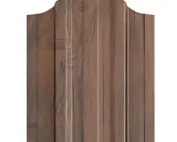
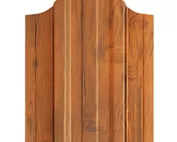
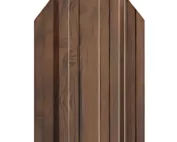
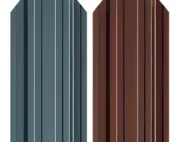
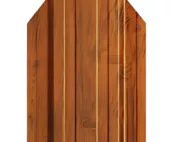
Pay attention to the shape of the top edge, the side folds and the appearance from the garden side. A double-sided coating is not available in every variant. In some solutions both sides have a similar character, in others the technical finish remains visible. This difference should be established when ordering, not after the entire fence has been erected.
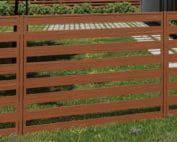
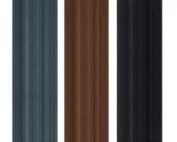
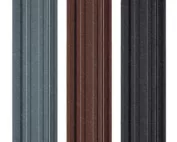
Match the colour with the gate, joinery and roof covering. With a wood-effect finish, inspect the repeatability of the pattern across several elements. With a matt finish, check the texture against the light. A catalogue photograph may alter the perception of the surface. A matching colour code on two different materials does not always ensure identical gloss and shade in daylight.
What affects the durability of the installation?
Fasteners must match the components to which they are fixed and the external conditions. Control of the clamping pressure and protection of cut areas is important. During work, do not drag the pickets over sharp edges or place them on a dirty surface. Scratches can also occur during the apparently easy installation of lightweight elements.
Wind is of great importance. A tall, dense bay behaves differently from a low fence with wide gaps. Selecting the foundation solely by the number of kilograms of steel ignores this difference. Load-bearing capacity and stability should be derived from the design and ground conditions. This also applies to the posts at the gate, which carry additional loads during movement.
How should later maintenance be planned?
Pickets do not require oiling like wood. They do, however, need washing and checking for damage to the coating and fixings. It is worth keeping the name of the variant, the lengths and the purchase documentation. If a single element is damaged over time, this data helps in finding a matching replacement. A new picket may, however, differ from the old one in shade.
When comparing offers, count the entire set, not just the price of a single picket. Include the crossbars, posts, fasteners, end pieces, transport and installation. Assess the gate and the side gate separately. A picket fence offers great freedom of appearance, but the best result arises when the bay layout, privacy and construction have been established before purchase.
7 branches. Materials closer to your project.