Steel profiles and structures
Cold-formed steel sections for industrial and agricultural buildings
In brief
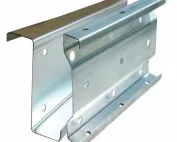
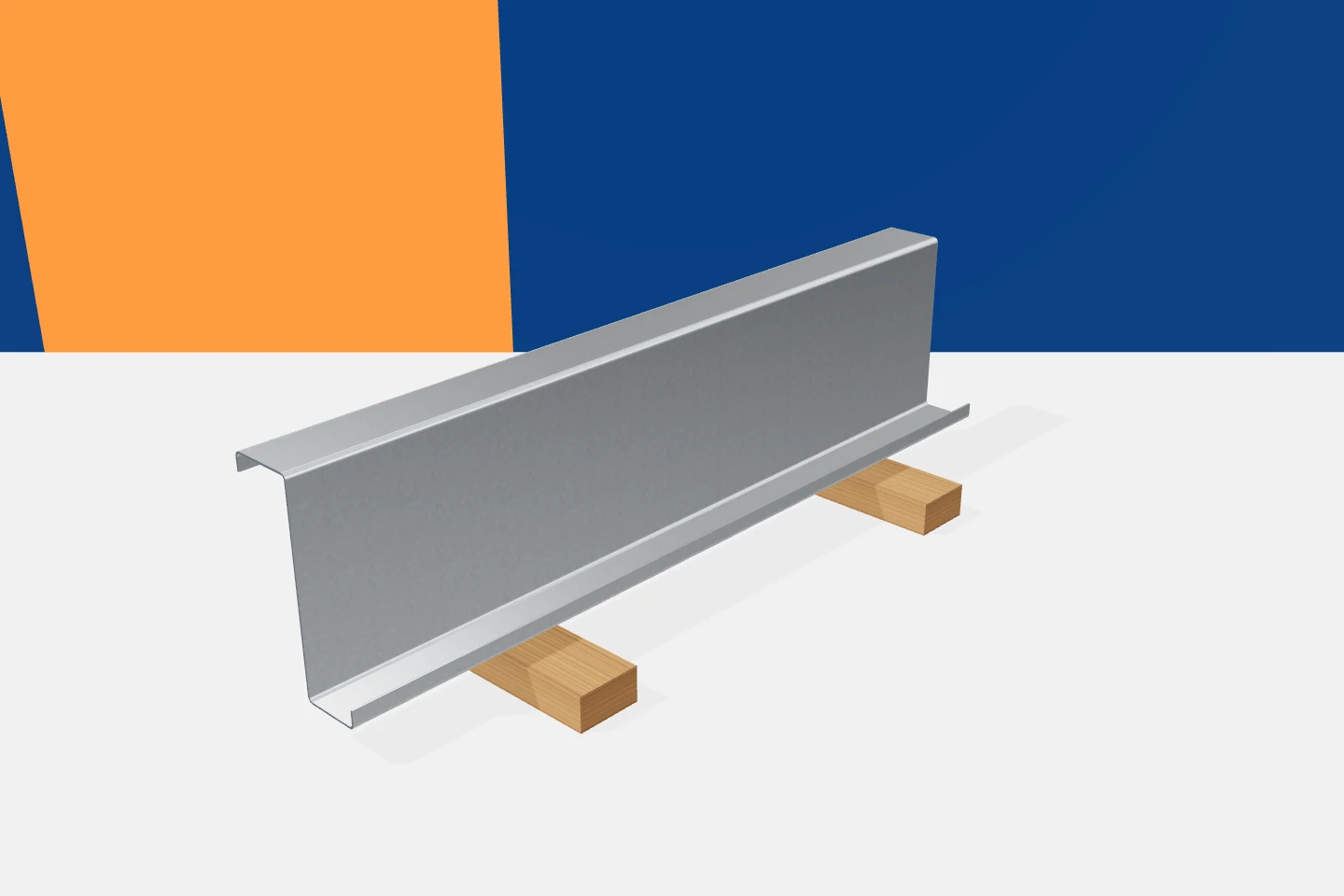
Cold-formed profiles are used in many lightweight steel structures. They can form roof, wall, framing and grid elements. Their advantage is the ability to produce repeatable parts with a defined length and geometry. However, this does not mean one solution fits all buildings. A warehouse, a production hall and an agricultural building may place completely different demands, even when they look similar from the outside. Roof purlins and wall rails transfer the loads of the envelope to the main structure. Z-sections are often used in the roof, and C-sections in rails and framing. Sigma profiles can be part of a suitably selected beam system. The specific application results from the design, not only from the name of the section.
In a warehouse, the envelope layout is what matters
Frame spacing, panel direction and the location of openings all matter. A change in the thickness or type of enclosure can affect the choice of supports. Operational requirements must also be anticipated. If the hall is to receive additional equipment later, its loads should be defined before ordering the profiles.
A production hall needs coordination of installations
Equipment, cables and suspended loads should not end up on the structure by chance. Not every cold-formed profile is intended for fixing installations. Information is needed on weight, position and how forces are transferred. Additional openings and brackets should be checked.
It is worth defining zones where installations will run without collision. This allows later cutting of steel to be limited. The internal environment also matters. Moisture and process substances can affect the choice of coating. Describing the building simply as an industrial hall does not yet define the appropriate corrosion protection.
In agriculture, conditions can vary greatly
A machine shelter, a storage building and a livestock building are not the same environment. They differ in humidity, ventilation method and the presence of substances that may affect the material. The selection of galvanised profiles should take these conditions into account. Specifications should not be transferred from one building to another without verification.
Open walls and large entrances also matter. They affect the assumed wind action conditions. It cannot be assumed that a low enclosure weight means low structural requirements. Loads and the structural scheme should be determined for the actual location and the way the building is used.
The façade substructure has its own task
Omega profiles can form grids and cladding support elements. Their hat-shaped section provides specific fixing surfaces. However, the spacing, thickness and anchoring method of the entire system must be checked. A small profile also transfers forces, and its connection must not be arbitrary.
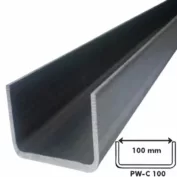
Channels or other sections are sometimes used as intermediate elements. Each should have a clearly assigned function. The cladding subframe does not automatically become building bracing. Similarly, the presence of panels does not allow the verification of roof profile stabilisation to be omitted. The interaction must follow from the design.

Solar applications require separate selection
C and Z profiles are also found in structures for photovoltaic modules. This does not mean that any channel section from a hall is suitable for such use. The module layout, loads, supports and connections must be taken into account. For mounting on a building, the existing structure must also be checked.
Surface protection must match the exposure and the fastening solution. Material compatibility at contacts is important. The choice of profile should be part of a complete system or a suitably developed design. The mere availability of holes in the flange does not confirm suitability for attaching a device.
Prefabrication brings benefits with good data
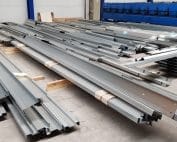
Ready-made lengths and hole patterns can streamline the execution of repetitive projects. Labelling of elements and preparation of assembly sets are important. The more is agreed in advance, the fewer operations remain on site. However, prefabrication should not be equated with the absence of a need for documentation.
First, the geometry and loads must be determined. Then the division into parts, the transport method and the sequence of works can be refined. Cold-formed profiles are particularly useful where this process is well organised. Otherwise, some of the benefits disappear in reworking and fitting of elements.
For an extension, the condition of the existing building must be assessed. New profiles may have a different function than parts installed many years earlier. The connection between the two stages and the effects of changed loads must be checked. Dimensional compatibility alone does not prove that the old structure can accept additional elements without verification.
The same product does not mean the same solution
Z-sections, channel sections, sigma and omega profiles form a wide range of possibilities. Their use is determined by specific conditions, not by a general list of applications. Before purchase, the function, structural scheme and required parameters must be known. This allows a quote to be prepared that matches the actual project.
Connections, enclosures and subsequent inspection should also be remembered. A good profile is one element of a correct structure. Galvanised profiles can reduce the scope of protective works on site, but require the right environment and execution. Their advantages are best seen in a complete, well-considered arrangement.
7 branches. Materials closer to your project.