Maintenance and safety
Planning safe snow removal from a roof
In brief
Snow depth alone cannot tell you whether a roof is overloaded. What matters is the load the structure was designed to carry, the weight of the snow and where it has collected. Wet snow can be much heavier than an equally deep fall of dry powder. Parapets, adjoining higher walls and changes in roof level deserve particular attention because wind can build up drifts there. If the structure changes shape, develops cracks or makes unusual sounds, restrict access to the affected area and seek a prompt professional assessment.
Why centimetres of snow are not enough
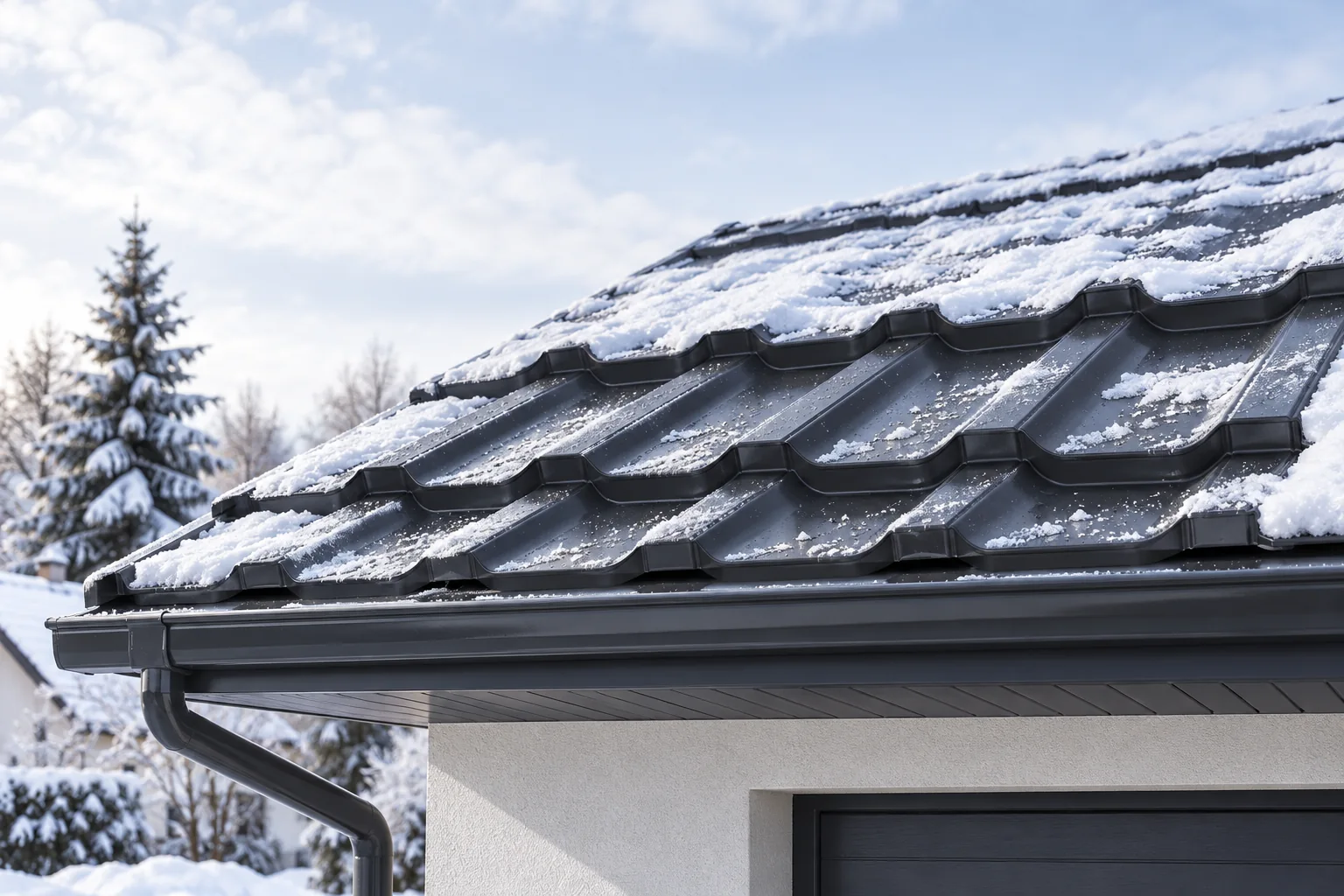
A layer of fresh light snow and a similarly thick layer of wet snow can have different weights. Ice, drifted snow and local accumulations add to this. A simple threshold in centimetres therefore does not give a reliable assessment. The permissible load on the structure and the actual conditions on the roof must be known.
Areas by parapets, higher walls and changes of level require particular attention. The distribution of snow may be uneven. The designer or the person assessing the condition of the building should take these zones into account. The owner should not derive the permissible mass on their own from the T18 or T35 marking or the thickness of the sandwich panel alone.
What to do if overload is suspected
If worrying deformations, cracks or unusual noises appear, access must be restricted and a professional assessment obtained urgently. A person should not be sent onto the roof slope merely to inspect the snow at close range. The additional weight of a person and equipment can increase the risk in an uncertain location.
Organisational measures should also protect people located beneath the endangered part of the building. In the event of immediate danger, the relevant services must be called. Removing part of the snow without establishing how the structure is behaving is not always the safe first action. A plan matching the condition of the building is needed.
Who should prepare and carry out the works?
Snow removal at height should be entrusted to prepared persons with the right equipment and organisation. Access, slipperiness, edges, openings and skylights must be assessed. The worker must know the places where they may stand. Snow can hide weak sections and obstacles. The entire roof slope cannot be regarded as a safe platform.
Before starting, the scope of snow removal, the way people will move and the place where snow will be deposited or thrown must be established. Monitoring weather conditions and visibility is also important. Gusty wind, icing or lack of light can prevent the task from being carried out safely. The timing of the work must take these limitations into account.
How to plan fall protection
Collective protective measures should be considered first. If an individual system is used, it requires a suitable anchor point and the selection of all components. Fitting a harness alone does not provide protection. It is not permitted to attach to an arbitrary gutter, snow guard or roof step unless it is approved for that function.
The means of reaching the protected zone and the possibility of providing assistance must be taken into account. The rescue plan should not be drawn up only after an incident. The access and egress route must also remain clear. Placing equipment or snow by the roof hatch can hinder evacuation, even if the working area itself is protected.

Why must you not create piles on the roof slope?
Moving snow from a large area to a single point increases the local load. It may exceed the load that occurred previously. The sequence of removal also matters for the behaviour of the structure. The method of work should follow from the roof assessment, particularly for large halls and systems sensitive to uneven loading.
The area below must be secured against access by people and vehicles. Falling snow or ice can damage building elements and endanger passers-by. Warning a person standing directly beneath the eaves is not sufficient. The zone must be designated according to the conditions and monitored throughout the works.
How do you protect the steel sheet and roof components?
The coating must not be scraped with a metal blade or ice chipped off in a way that could damage the covering. The tools and method must suit the material and the operating recommendations. Seals, flashings and service penetrations require particular attention. Damage may only become apparent as a leak during the thaw.
Gutters and snow guards are not places to rest equipment. Photovoltaic panels and skylights also have their own limitations. If they are under snow, their position must be known. It is worth using the roof documentation. Accidentally uncovering an obstacle with a hard tool increases the risk of damage.
What should be checked after snow removal and before the next winter?
After the works, the accessible flashings, fixings and drainage outlets must be checked. Signs of mechanical damage and changes in the position of elements are important. In the event of a defect, the repair method appropriate to the covering must be determined. Documentation of the works helps later to assess whether a leak is related to snow removal, a frozen outlet or another cause.
Before the season, it is worth preparing an inspection plan and contact details for the contractor. In a large facility, the permissible loads and response procedures should be known. Gutter maintenance and access to equipment also require attention. Snow removal becomes safer when it is a planned building maintenance activity rather than improvisation during adverse weather.
7 branches. Materials closer to your project.