Sheet metal and roofing
How to find the cheapest roofing that suits your roof?
In brief
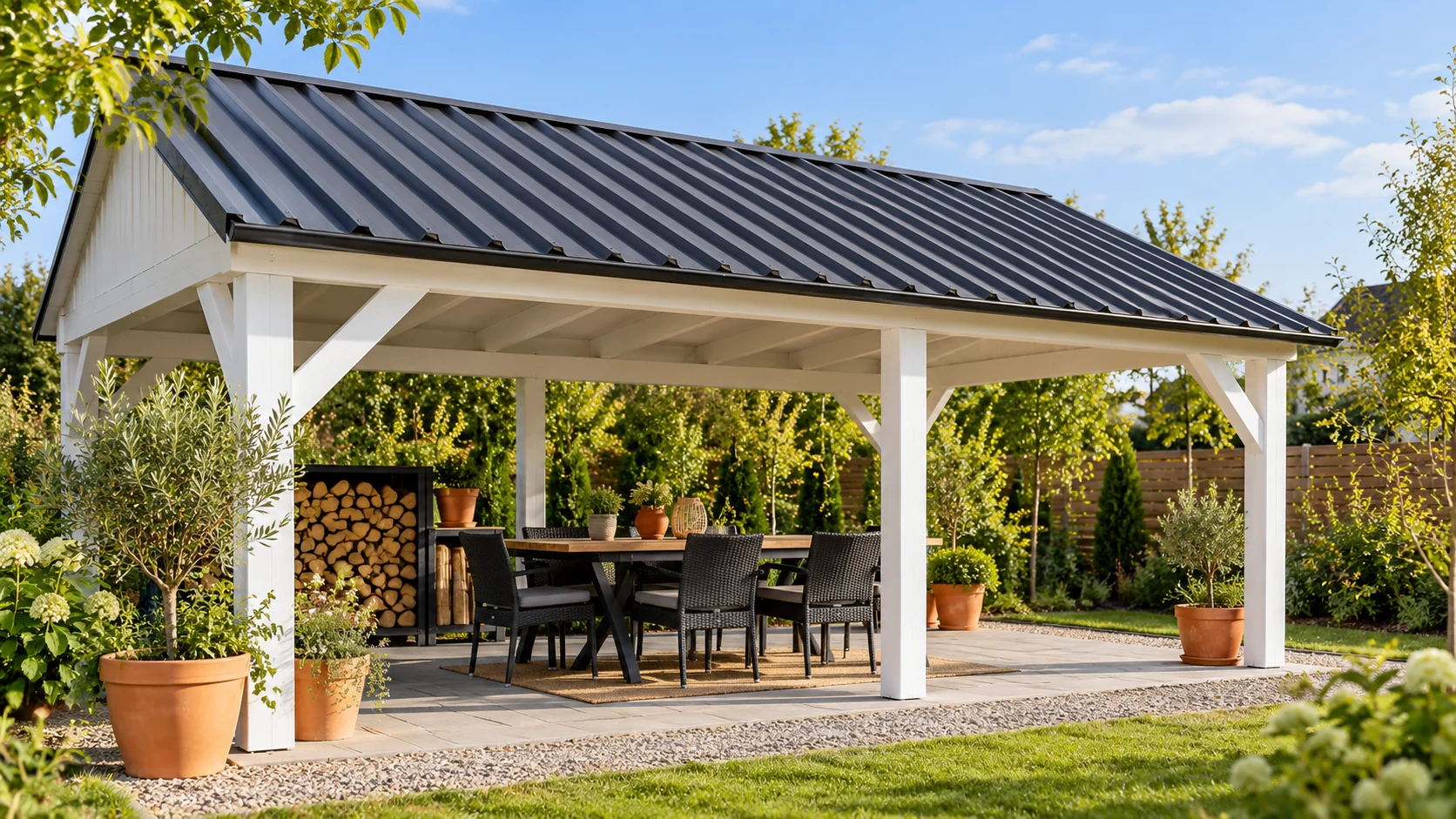
The cheapest sheet does not necessarily produce the cheapest finished roof. Differences arise in the substrate, the amount of waste, flashings and labour. The choice is also limited by the pitch and the load-bearing capacity of the structure. It is worth comparing complete solutions for a single roof slope. Only such a calculation shows where the saving is real. An open garden canopy and a heated house require a different layer build-up. In the first case, the main task may be protection against precipitation. In the second, insulation, moisture control and user requirements are added. The external surfaces alone cannot be compared as ready equivalents.
First determine what the roof is to provide
Also check the requirements regarding the appearance and surroundings of the building. If a given type of covering does not suit the adopted design, its low price does not create a realistic option. It is worth starting the comparison with solutions that can actually be used in the given location.
How do pitch and structure narrow the choice?
Every covering has conditions of use at a given pitch. Connections, lengths and seals also matter. Do not reduce the pitch below the requirements in order to save on the height of the structure. Such a change may require an entirely different roof solution.
When replacing, check the condition and load-bearing capacity of the supports. The weight of the new covering is one of the figures, but the other loads also count. If repairs or reinforcements are needed, add them to the cost. Omitting this item will distort the comparison of materials.
When can a simple trapezoidal steel sheet give a favourable result?
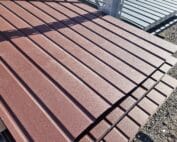
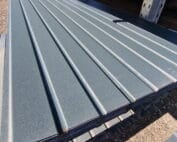
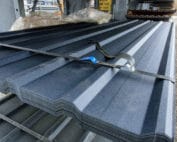
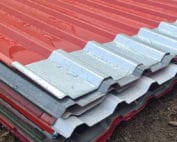
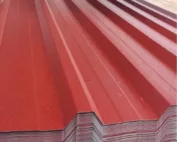
On a rectangular roof slope, well-chosen long sheets can reduce the number of cuts and transverse joints. However, the advantage must be weighed against the support spacing and transport. The profile, thickness and coating must still match the roof conditions.
With many valleys, recesses and penetrations, the situation changes. More material may end up as waste, and labour will increase. Shorter modules are then often more convenient, but their result must also be calculated. The comparison cannot be decided solely by the price of one metre of sheet.
What to consider with other types of roofing?
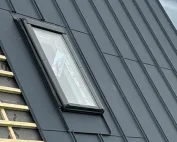
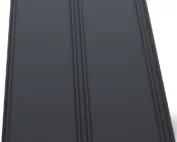
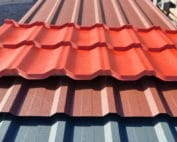
Tile-effect metal roofing requires the correct support spacing and details. Standing seam systems have their own requirements for the substrate and installation. Bituminous solutions may also need a specific deck. In every case, the full build-up must be calculated, not just the top layer.
Do not attribute one preparation cost to all materials. The flashings and accessories needed during the work can also differ. If a contractor prices two variants, ask for a separate substrate scope. This shows where the difference in the final sum comes from.

What does a simple cost comparison model look like?
Assume a roof of 60 m². Variant A has an agreed cost of covering €972.09 net, accessories €277.74 and installation €694.35, totalling €1944.18. Variant B has material for €763.78, but requires a substrate for €509.19, accessories for €208.30 and labour for €648.06. In total this gives €2129.33 net.
All amounts serve only the calculation. In the second variant, the material alone is cheaper by €208.31, but the whole is more expensive by €185.15. This does not mean that a particular technology has an advantage on the market. It merely shows why a comparison should cover the same functions and the complete scope.
How do you account for maintenance and repairability?
Check the requirements for cleaning, inspection and access. A roof under trees may require leaves to be removed from the drainage more often. With a complicated geometry, some connections are harder to reach. The cost of use therefore also depends on the location and the details.
Ask about the possibility of replacing a single element and matching the colour in the future. However, do not promise unchanging availability for many years. It is worth keeping the material markings and installation documentation. This will make later identification and repair planning easier.
Where can you save before approving the order?
First check the cutting plan, the number of bends and the possibility of simplifying the shape. Calculate the lengths of flashings and the joint delivery of accessories. A good fit reduces unnecessary purchasing. It does not require omitting seals or reducing the number of fastenings specified in the design.
Ultimately, choose a solution consistent with the structure and function of the building. Add all exclusions to the offer so that you do not later discover a missing scope. The price of a finished roof is the result of several decisions. The lowest rate for the outer layer alone describes only one of them.
Questions before ordering
Is there one cheapest roofing for every roof slope?
No. The result depends on the geometry, the substrate, the requirements and the scope of works. You need to compare solutions for the same roof.
Can you save by omitting some of the required screws?
No. The fixing is determined by the loads and the system. Savings should be sought in matching and organisation, without omitting necessary components.
7 branches. Materials closer to your project.