Installation and execution
What work does a roofer carry out?
In brief
The roofer installs the layers and details that drain water and protect the building interior. They lay the covering, prepare flashings and install drainage within the agreed scope. A good result requires collaboration with the carpenter and the designer. Before commissioning the works, establish exactly what the service includes, which materials will be used and how you will accept the finished roof. The scope usually includes the underlay, the substructure for the covering, installation of the sheet metal and execution of flashings. Gutters, ventilation elements and roof accessories may be added. Not every quote includes all these items. Removal of the old roof, repair of the structure and insulation are often separate works.
What works does a roofer carry out?
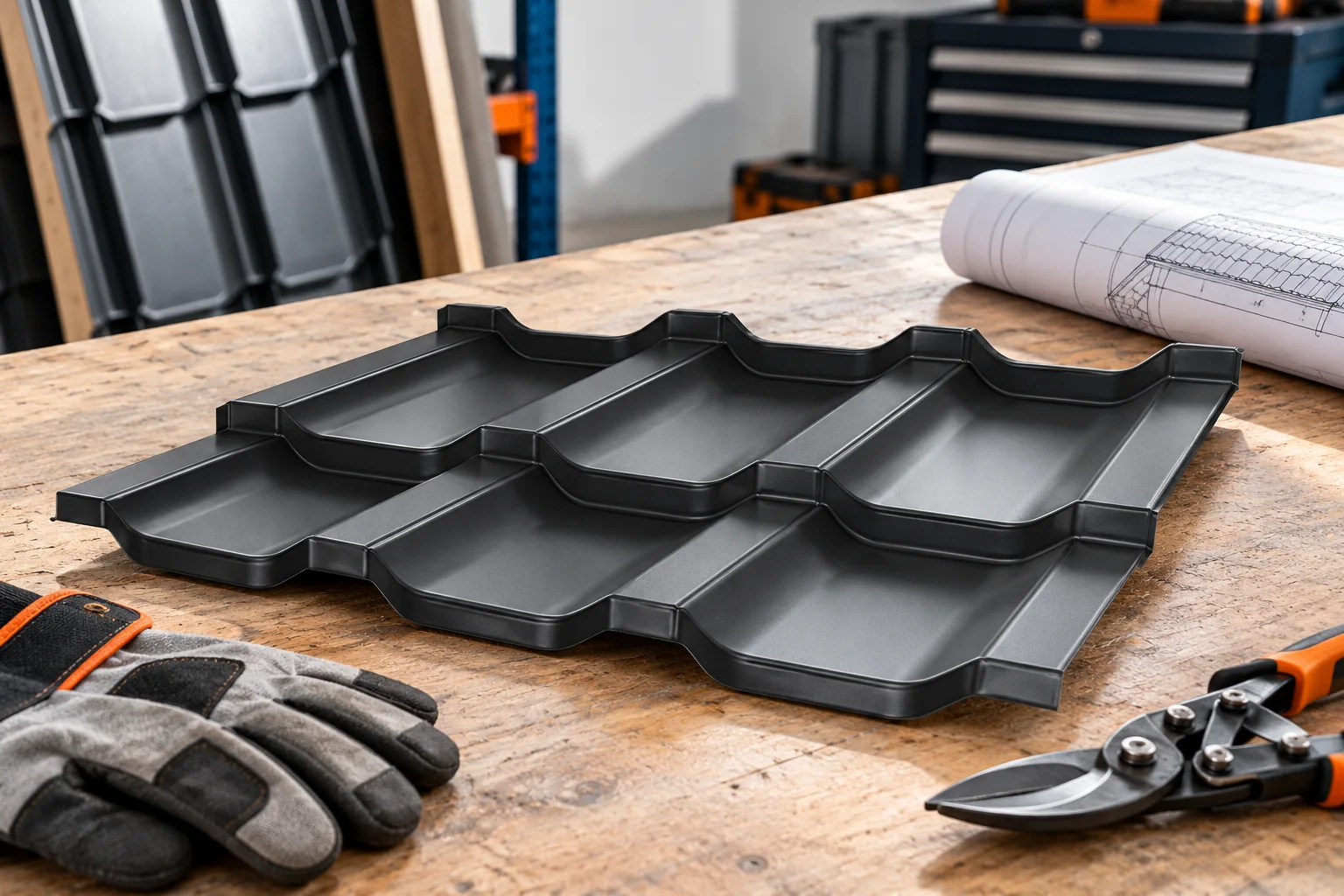
The scope usually includes the underlay, the substructure for the covering, installation of the steel sheet and execution of flashings. Gutters, ventilation elements and roof accessories may be added. Not every offer contains all these items. Removal of the old roof, repair of the structure and insulation are often separate works. They must be named before work begins.
The roofer checks the substrate required for correct laying of the covering. This includes, among other things, the plane of the roof slope, the diagonals and the eaves line. If a construction error is noticed, it should be reported for clarification. Forcing a straight line by pulling the sheet hard can damage the panel. Repair of the substrate is agreed before it is covered.
How does their work differ from that of a carpenter?
The carpenter deals primarily with the timber structure and its connections. The roofer is responsible for the covering and its details within the assigned scope. In practice, one team may offer both types of work. This does not remove the need to establish responsibility and handovers. The structure, insulation and covering have different technical requirements.
Changing the cross-section of a rafter or removing a post is not an ordinary roofing correction. Such decisions require a structural assessment. In turn, the method of laying the overlap, fixing the panel and forming the eaves follows from the instructions of the selected system. The experience of the tradesperson helps apply these rules to a specific building, but does not replace a design where one is needed.
Why are details more important than the speed of laying?
A large, simple roof slope can be completed quickly. More attention is required by chimneys, roof valleys, windows and edges. At these points, different directions of water runoff and material movements meet. The flashing must have the appropriate shape, overlap and fixing. Tightness should not depend solely on a thick layer of random sealant.
In a ventilated roof, the installer leaves an air path from inlet to outlet. Excessive sealing of the ridge can be a mistake, even though everything looks neat from the outside. With insulation, the connections of the airtight layer on the interior side are also important. Therefore, looking only at the colour and evenness of the steel sheet is not enough to assess the entire work.

Which tools indicate the correct method?
Tools approved by the manufacturer are used for cutting coated steel sheet, including suitable shears and nibblers. An angle grinder heats the edge and scatters hot particles. It can damage the anti-corrosion protection. After working, swarf must be removed. Left on the roof slope, it will begin to rust and may soil or damage the coating.
Fasteners must be suitable for the substrate and the connection point. A wood screw is not a substitute for every steel screw. The seal must be neither crushed nor left loose. The system instructions determine the method of installation. The number of screws and their layout must also take into account the roof zones and the project requirements.
What should be established before signing the order?
The description of works should specify the type of covering, the scope of flashings and the method of drainage. Agree the purchase of materials, measurement, unloading and storage. For sheets cut to size, establish who approves the lengths. Record the rules for changes and additional works. Also clarify who provides scaffolding, protection and protection of the building during rain.
Ask for references with similar material and similar geometry. The roof of a hall with sandwich panels places different demands than the roof of a house with tile-effect metal roofing. Experience in one group alone does not confirm knowledge of the other. Training in the specific system is also useful, especially when it has unusual locks or a detailed assembly sequence.
How should the roof be handed over and prepared for use?
Acceptance covers the covering, flashings, drainage and visible connections. Check that protective films, filings and installation residues have been removed. Record together the places requiring improvement. Document the layers covered during the works. Photos will later allow the course of the substructure and details to be established without dismantling the finished roof.
Finally, accept the product documents, warranty conditions and maintenance recommendations. Establish how noticed defects are to be reported. Not every later stain means a roofer’s error, because the cause may also be condensation or damage by other works. Reliable documentation helps to identify the problem and repair its source instead of merely covering up the symptom. Do not postpone acceptance until the first downpour.
7 branches. Materials closer to your project.