Choosing a roof covering
When is a lightweight roof covering worth considering?
In brief
A lightweight sheet metal roof covering can make renovation easier and reduce the weight of the outer roof layer. However, it does not mean that the assessment of the structure can be dispensed with. All layers, snow, wind and additional equipment must be taken into account. Low weight also brings benefits in transport, but long sheets still require careful handling. The choice should be based on the entire roof system, not just the kilograms of a single material. The weight depends on the steel thickness, profile and coating. For an example of tile-effect metal roofing cut to size, the data sheet gives approximately 4.7 kg/m². This is the value for a specific product, not for every roof sheet. A high structural sheet or thicker trapezoidal steel sheet may have a different weight.
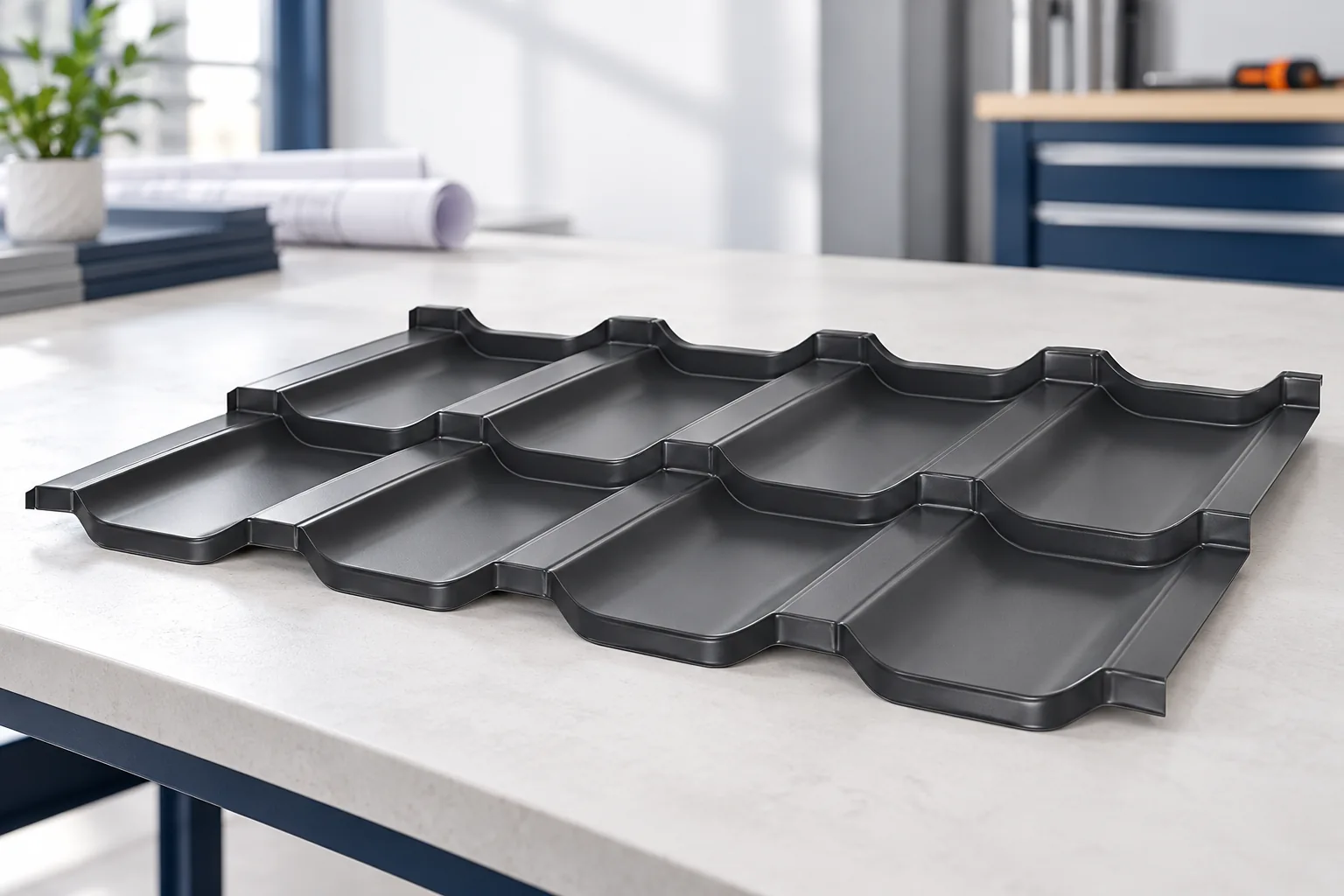
How much does the covering itself weigh?
The weight depends on the steel thickness, profile and coating. For an example of tile-effect metal roofing cut to size, the data sheet gives approximately 4.7 kg/m². This is the value for a specific product, not for every roof sheet. A high structural sheet or thicker trapezoidal steel sheet may have a different weight. It is also necessary to check what surface area the parameter refers to.
The sheet itself is only one layer. Battens, counter-battens, any sheathing, insulation, claddings and equipment add to the balance. When renovating, the condition before and after the change should be compared. Adding several layers may reduce the expected difference. The structural engineer needs a full schedule, not just information about the lightweight roofing.
Why does low weight help with modernisation?
Limiting the dead load can be beneficial for an existing structure. This gives reason to consider tile-effect metal roofing or a suitably selected trapezoidal steel sheet when replacing a roof. However, the final decision depends on the condition of the roof truss. Deflected, damp or damaged elements still require assessment, regardless of the planned material.
Connections, the support on the walls and the stability of the entire system must also be checked. New sheet metal will not repair a weakened wall plate. Nor will it solve the problem of an uneven plane. Levelling the substructure is needed both for aesthetics and for correct installation. The lightness of the covering may limit the scope of changes, but does not replace their assessment.
Is a lighter roof less exposed to wind?
It cannot be concluded in this way. Wind action depends, among other things, on the geometry, building height, surroundings and roof zones. Forces can tear the roofing away from its supports. Therefore, suitable fasteners and their arrangement are important. The low mass of the sheet does not exempt from verifying the fixing, especially at eaves, corners and roof edges.
Snow also remains a load independent of the weight of the new steel sheet. It must not be assumed that replacing a heavier material automatically allows the batten spacing to be increased. Every change of support must be checked. If photovoltaics are planned, they must be included in the structural assessment together with the mountings and the way additional forces are transmitted.

What are the benefits of transporting small panels?
Modular tile-effect metal roofing allows the material to be divided into manageable elements. This can facilitate work with limited access and a cramped construction site. However, the weight of the pack and the way it is unloaded are important. A small individual panel does not mean that the entire pallet can be placed anywhere on a ceiling or roof without checking.
Long sheets are light relative to their area but prone to deformation during improper lifting. They must be carried with adequate support, without being dragged along the ground. Wind makes even thin sheet difficult to control. Installation conditions should follow from site safety, not from the assumption that a light material poses no risk.
Does lightweight steel sheet provide quiet and warmth?
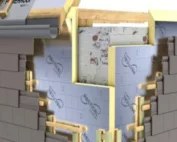
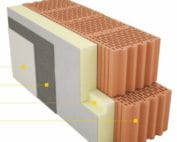
Thermal insulation is the responsibility of the entire building envelope assembly. A single sheet does not replace insulation. In a house with a loft, insulation material, airtightness from the interior side and moisture control must be planned. PIR boards can reduce the required insulation thickness at a given thermal resistance, but they must be used in an appropriate system.
The perception of rain noise depends among other things on the substrate, insulation, linings and fixing. A reliable noise level cannot be derived from the mass of the sheet alone. An open canopy behaves differently from a roof over a finished bedroom. Where acoustic requirements are high, the properties of the entire assembly must be verified, not those of a single layer.
How to choose lightweight roofing for a specific roof slope?
For a simple roof it is worth comparing cut tile-effect metal roofing, modular tile-effect metal roofing and trapezoidal steel sheet with the required parameters. Each option must match the pitch and the structure. For a renovation, an inspection is needed, and for a new house, conformity with the design. The cost estimate should include the substrate, flashings, ventilation and drainage, not only the price of the sheets.
Lightness is a useful property if it helps solve a real problem: reduce load, facilitate transport or simplify execution. It should not be the only criterion. A well-chosen covering must also perform safely, drain water and suit the environmental conditions. Only such a combination shows the sense of choosing sheet metal.
7 branches. Materials closer to your project.