Fences
Six practical benefits of a metal picket fence
In brief
Metal pales are worth considering when you want a repeatable appearance and less maintenance work, but not full privacy. Before ordering, check how the system handles corners, the gate and the side gate, as these determine the even rhythm of the bays. Filling density is another key variable: a denser layout gives more privacy but increases wind load, so leave the choice of posts and foundations to the designer. Assess both sides of the element and access to a single pale.
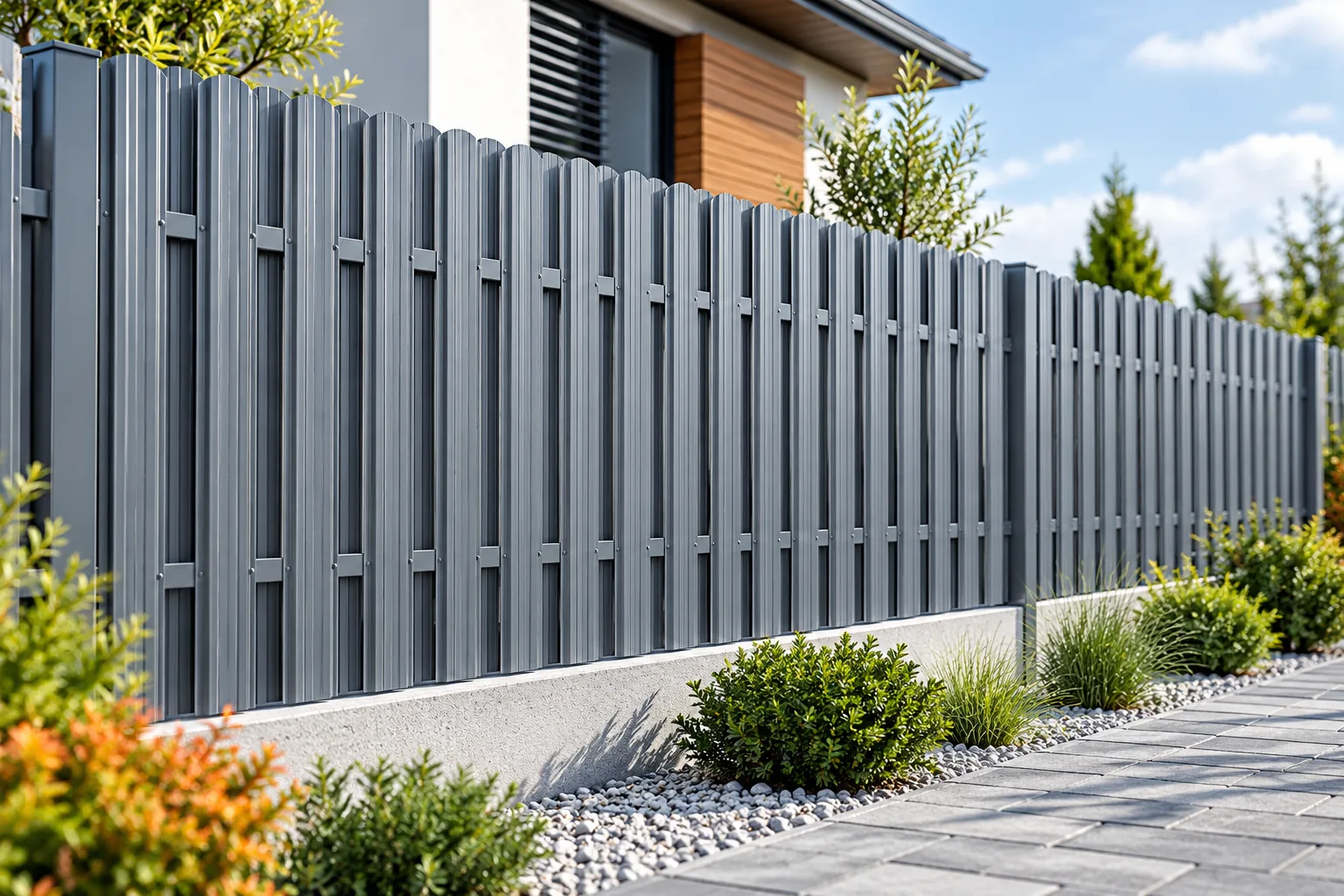
1. A repeatable rhythm across the entire fence
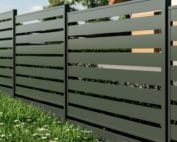
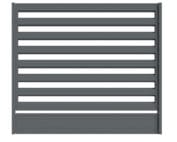
The pickets have a defined profile, width and finish. This makes it easier to achieve an even division along a long section of the property. The height can be matched to the design of the bays, and the spacing planned before installation. As a result, the last picket at the post does not have to look like a random offcut added at the end of the job.
This repeatability is best used after measuring all the sections. The gate, the pedestrian gate and the corner often have different widths from a standard bay. Keeping an identical gap will not always produce an even layout at every post. Minor adjustments to the spacing are worth drawing up in advance rather than deciding them while screwing the elements together.
2. The ability to adjust privacy
Single-sided installation with larger gaps leaves a view of the garden. A denser layout restricts visibility from the street. In some systems, pickets can be used on both sides of the rails, offset. The visual screening then also depends on the viewing angle. A trial bay shows the effect better than a small sample of the sheet metal alone.
A dense fence should not be equated with complete airtightness. Light and air can still pass between the elements. However, the smaller the open area, the greater the significance of the wind. The heights of the posts, their cross-sections and the foundations are not selected solely on the weight of a single picket.
3. Less work on renewing the surface
Factory-finished steel does not require cyclical oiling or impregnation like exposed wood. This is convenient with a large number of narrow elements and a hard-to-reach side of the fence. Gentle washing and checking the condition of the coating are usually sufficient. However, the instructions for the finish used must be followed.
Damage from a stone impact or careless installation requires assessment and appropriate repair. Metal is not a material free of servicing needs. A scratched edge, a loosened fastener or a spot where wet leaves accumulate should not wait for a major renovation. A regular short inspection allows a problem to be noticed earlier.

4. Consistency with the roof and joinery
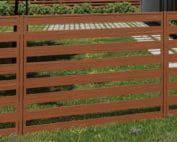
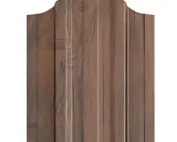
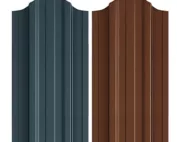
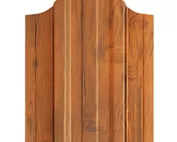
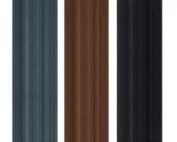
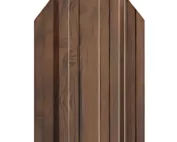
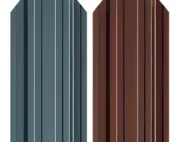
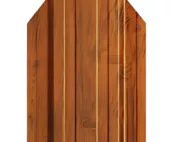
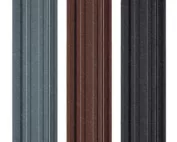
The pickets can have a uniform colour or a wood-effect finish. This makes it easier to tie the fence in with a graphite roof, a dark gate or a warm shade of the façade. The sample determines the match. Texture and gloss can change the perception even when the colour stated in the order sounds the same.
Before purchase, check both sides of the component. Double-sided coating is not a feature of every picket. From the garden side, a different coating, a different shade or a crossbar may be visible. The choice should match how the fence will be viewed by the household, not solely from the street in a catalogue photo.
A wood-effect finish allows you to reduce the number of materials requiring different maintenance treatments. However, it is not wood and up close has its own texture and pattern repeat. Compare several components placed side by side. Over a longer section, the effect may differ from a small fragment shown in the catalogue.
5. Convenient division into small elements
Individual pickets are easier to carry than a full, heavy infill the width of an entire bay. This makes work easier on a plot with limited access. However, it does not mean that the entire system is arbitrarily light. Posts, crossbars, the gate and foundations have separate requirements as well as their own weight and method of installation.
On sloping ground, dividing into components offers several options for running the top line. Stepped bays or a solution following the slope can be considered if the system permits. Clearance above the ground and correct fixing must be maintained. It is not worth adapting the shape by randomly bending ready-made pickets.
6. Option to replace a single picket
Damage to one component does not always require replacing the entire bay. If the fixing and access allow, a specific picket can be removed. Retained labelling of the product, dimension and coating helps. It is worth keeping this data together with the gate documentation and the bay layout from the time of order.
After years, a new component may differ in colour from material exposed to the weather. A change of supplier or geometry also makes it harder to select a replacement. It is therefore worth checking the possibility of repair before purchase. The benefits of metal pickets are greatest when the appearance, servicing and construction of the fence have been planned together.
7 branches. Materials closer to your project.