Thermal insulation and insulation
Metal roofing and energy use: what difference does the insulation make?
In brief
The metal sheet alone does not determine energy use – the whole roof assembly matters, not just its outer layer. Before renovating, check whether the insulation sits in a separate layer or forms the core of a sandwich panel, as these are different systems. Compare the existing thermal resistance with the designed one, including thermal bridges and joint airtightness. Choosing a material with lower lambda may reduce insulation thickness, but it does not guarantee specific savings. Leave the scope of works to the designer.
What is the external metal sheet responsible for?
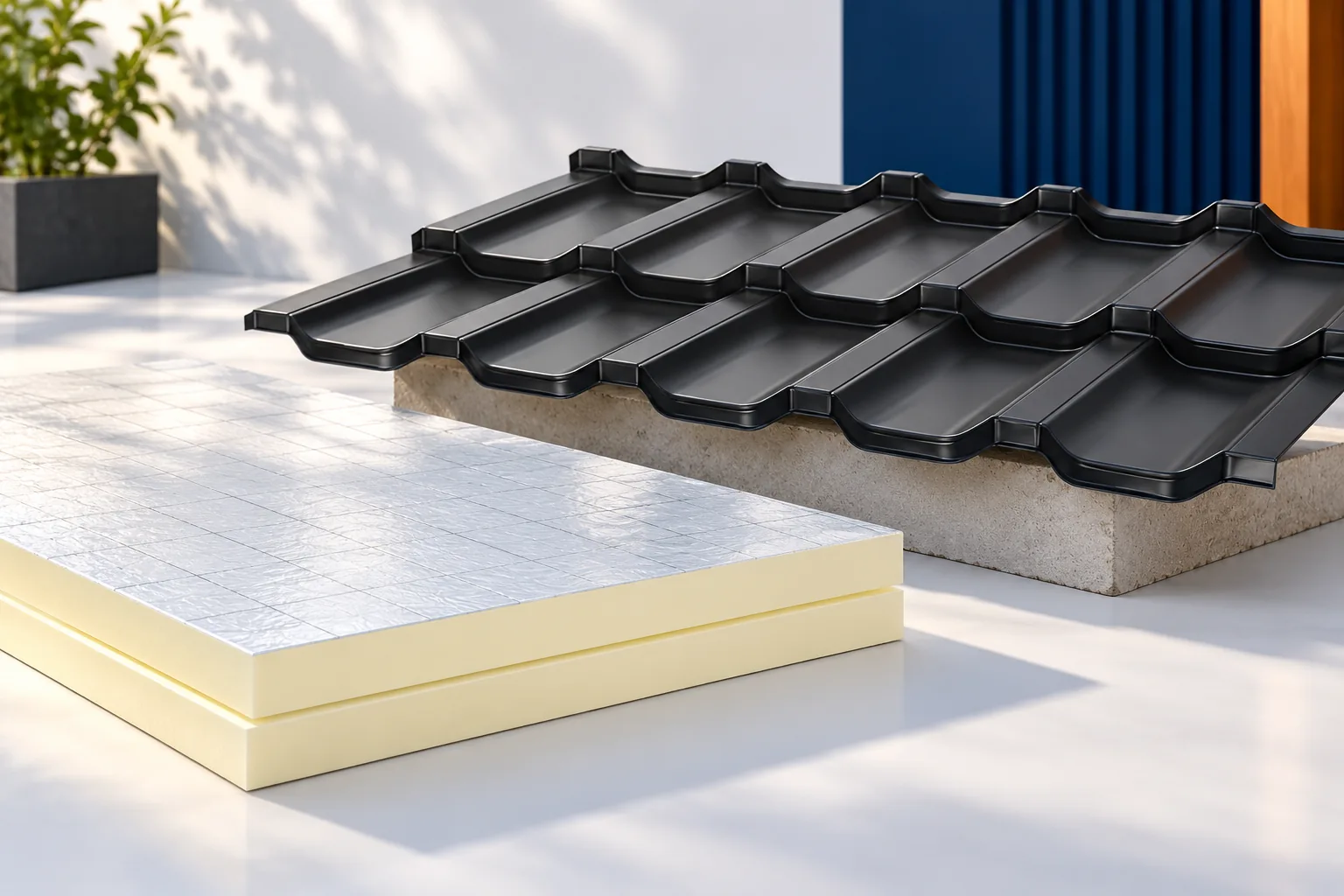
Its basic function is protection against weather conditions within a specific roof assembly. The profile and coating affect durability and the way water is drained. A thin sheet, however, is not a layer with high thermal resistance. Changing one colour or shape for another does not replace insulation.
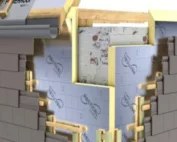
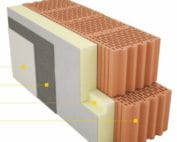
In a roof made of tile-effect metal roofing or trapezoidal steel sheet, the insulation sits in a separate layer. In a sandwich panel it is permanently bonded to the facings. These are different solutions that must be described separately. The properties of a panel with a PIR core should not be attributed to the sheet visible on its surface.
What does lambda say, and what does the U-value say?
Lambda describes heat conduction through a material. At the same thickness, a lower value means greater thermal resistance of the layer. The U-value relates to a building component or a specific element. The lower it is, the smaller the heat flow at the same temperature difference. These are not interchangeable parameters.
For a finished roof, all layers and thermal bridges count. A result calculated solely from the thickness and lambda of the insulation is a simplification. For panels, it is worth checking whether the stated value includes the effect of joints and fasteners. Comparing catalogues requires a consistent basis, even if the symbol U appears on both sides.
What benefit can PIR provide?
An example board with a lambda of 0.022 W/(m·K) has a resistance of about 4.55 m²·K/W at a thickness of 100 mm. The same resistance of a layer with a lambda of 0.039 requires about 177 mm of material. This shows the advantage of PIR where construction height is limited. It is not yet a calculation of savings on the heating bill.
The materials being compared may have different fire, acoustic and mechanical properties. Mineral wool may be chosen for fire and sound. Selected XPS grades suit applications exposed to moisture and high load. A low lambda of PIR does not justify replacing every material in every part of a building.

Why does airtightness change the result?
Unsealed joints can let air pass through the building envelope. This creates losses that the insulation’s good parameter alone does not describe. Particular attention is required at the roof-to-wall junction, the window perimeter and service penetrations. The airtight layer should form a continuous whole, not a collection of separate patches.
At the same time, ventilation of the rooms must be maintained. Sealing incidental leaks does not mean giving up air exchange. It is worth establishing how it will work after the renovation. Ventilation beneath the covering serves a separate function. It is not a way of supplying fresh air to the rooms.
Which details can weaken the insulation?
A gap at the wall plate or gable wall can remain a weak point despite thick insulation in the middle of the roof slope. Likewise poorly fitted cuts around the window. It is worth drawing the junctions before the works and then checking them before they are covered. The most difficult places should not be left to improvisation.
In sandwich panels, the locks, seals and flashings are important. An incompletely closed joint does not give the same effect as a correctly installed product tested under specified conditions. The core thickness will not remedy a leaky joint. The choice of material and the quality of workmanship should be treated as a joint condition of the result.
And what about the energy needed in summer?
Overheating is influenced by the sun, glazing, shading, insulation and the method of ventilation. The roof colour can change the heating of the surface, but does not by itself determine the interior temperature. It is worth checking the gains through windows as well. A large unshaded pane can make a significant contribution to the room’s summer balance.
External window shading helps to limit the influx of solar energy. Insulation limits the flow of heat through the opaque part of the roof. Both solutions perform different tasks. It should not be promised that a single change will always allow cooling to be dispensed with. Such a conclusion requires an assessment of the specific building.
How do you calculate the real benefit of a renovation?
Gather data on the existing layers, the condition of the details, temperatures and energy consumption. Compare modernisation variants in a whole-building calculation. The roof area and the losses through walls, windows and ventilation matter. If the roof is not the main source of losses, improving it will not reduce the overall bill to the same extent as its own U-value.
After the renovation, the result should be assessed taking into account the weather and the way the building is used. A lower temperature set in the home or a milder winter changes the bills regardless of the material. Good insulation gives a measurable parameter of the building envelope. A reliable assessment of energy nevertheless requires a full balance, not a general promise attributed to a single type of covering.
7 branches. Materials closer to your project.