Choosing a covering
Roofing panels and sheets: what to check before choosing a covering
In brief
Before choosing panel or sheet roofing, first establish the roof pitch, the method of support and whether the building will be heated, and only then compare products. Check the coverage width, the minimum pitch for the specific product and all the layers beneath the covering. A trade name can be misleading: a panel may mean a small module of tile-effect sheeting, a long metal sheet or a sandwich panel, so state the full category, profile shape and intended roof build-up in your enquiry.
What does the name panel really mean?
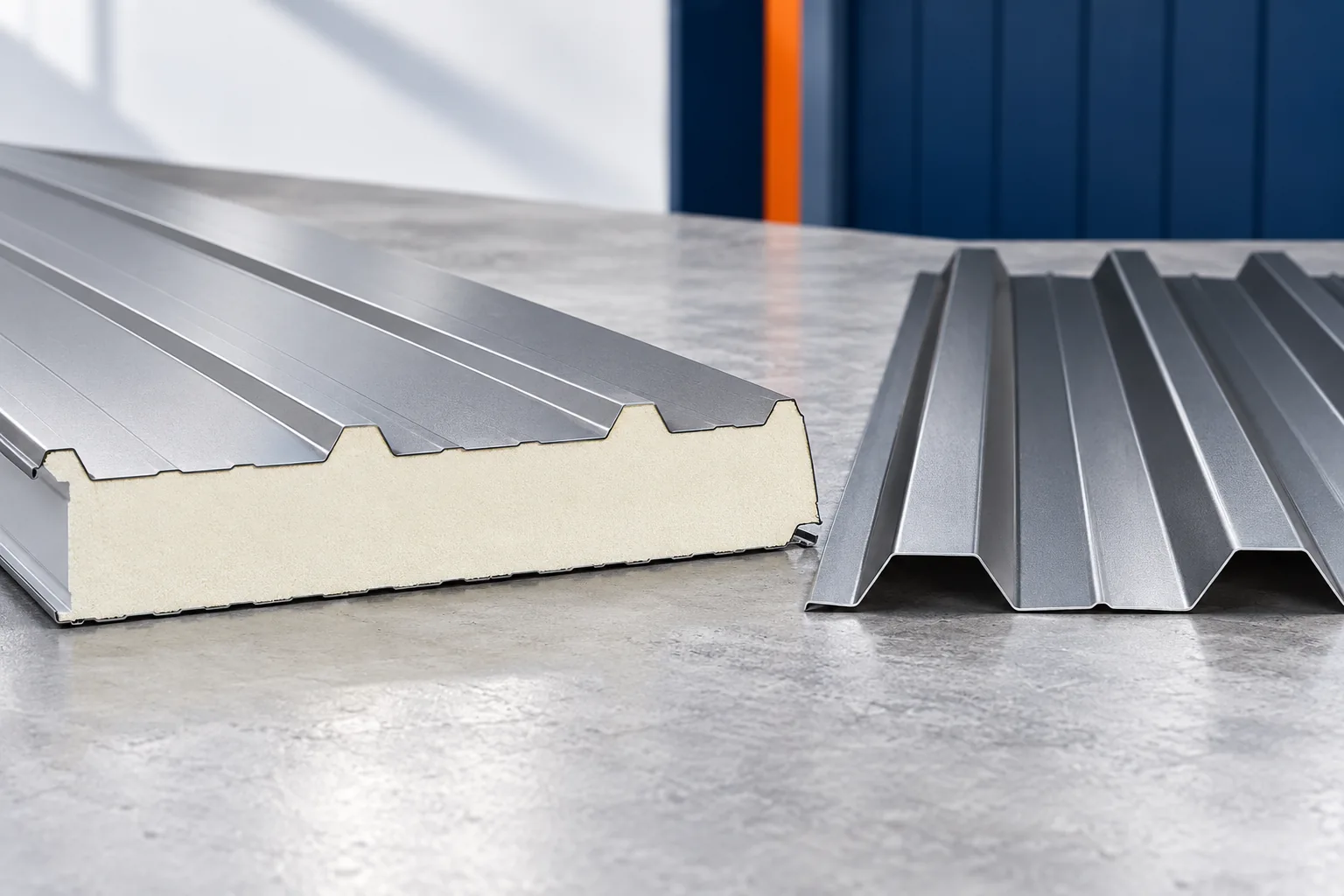
The word panel is sometimes used for different materials. It may mean a small tile-effect metal roofing module, a long metal element or an insulated sandwich panel. The trade name alone does not say whether the product contains insulation and how it carries loads. In a request for quotation it is therefore worth stating the full category, the profile shape and the expected roof construction. This allows equivalents to be compared.
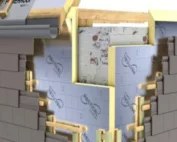
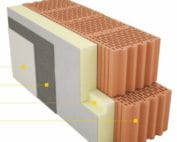
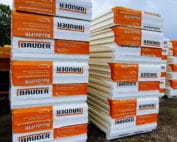
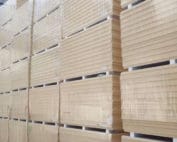
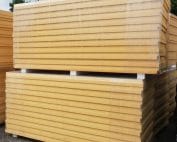
A thin PIR insulation board is also not a ready-made roof panel with steel facings. It forms an insulation layer and needs a protective arrangement and support. Swapping these products on the basis of the foam name alone can lead to an incorrect order. What you are actually buying should be shown by the material cross-section and its data sheet, not just a photo of the surface.
When are long sheets suitable?
A long sheet can cover the section from eaves to ridge without a transverse joint. On a straight roof slope this makes it easier to plan the sheet layout. Tile-effect metal roofing cut to size is ordered according to a prepared schedule of lengths. For T18 and T35, the laying direction and the correct roof variant must also be determined. Length alone does not determine tightness.
Large elements are sensitive to incorrect lifting. A flexible sheet can be permanently deformed if it is supported only at the ends. Before delivery, an unloading area, a sufficient number of people or a device and a route for carrying onto the roof are needed. On a tight plot, a smaller format may prove more practical, even if the longer sheet looks more favourable in the material schedule alone.
What does a small metal roof tile module offer?
Modules are easier to distribute between workstations and to store in a limited space. They also make it easier to replace a single damaged element, provided a matching profile is available. On roofs with many changes of direction they allow the covering to be planned more precisely. However, they still require cutting at roof valleys, corners and obstacles. A small format does not eliminate material losses.
The module length is linked to the batten layout and the detail of the first row. Subsequent rows cannot be shifted arbitrarily to fit the last sheet to the ridge. Each profile has its own joining rules. Two similar modules may have different edges and embossments. An order for a supplement should be based on the exact product and batch designation, not on colour alone.

When should you choose a sandwich roof panel?
An insulated sandwich panel combines an outer facing, an insulating core and an inner facing. It can quickly close the roof of a garage, workshop or hall when it is properly matched to the supports and loads. Its thickness and permissible span result from calculations. They should not be selected only according to the building width or the price of the thinnest variant.
In such a roof, the seams, flashings and junctions with other building elements require particular care. The presence of foam alone does not guarantee airtightness. Service penetrations and any skylights must also be resolved. A roof panel has a different profile from a wall panel. Using the latter on a roof slope without confirmed suitability is not a sensible way to save money.
How to compare covering and losses?
The overall width also includes the portion used in the overlap. To calculate the number of elements, the coverage width is required. The same applies to the price per square metre. A lower price calculated from a larger overall area may look better than the actual cost of covering the roof. In a comparison, both offers must be brought to the same unit.
The material allowance depends on the laying plan. On a rectangular roof, some waste results from fitting the edge strip. On a triangular slope, the hips and valleys add further cuts, and dormers and chimneys require additional trimming. A percentage added without a drawing is only an approximation. For more expensive coverings or complex shapes, it is worth requesting a sheet schedule and identification of cut locations.
What to check before approving the selection?
First determine the pitch, the length of the slope, the supports and whether the building will be heated. Then compare the requirements of the relevant products. The minimum slope may change with the presence of longitudinal joints and skylights. Degrees must not be confused with percentages. A short profile name also does not answer the question of the permissible snow load.
Finally, compile the complete roof with transport, flashings, fasteners, layers under the covering and labour. Check the possibility of storing the delivery and access for later repairs. A good choice of format makes the execution and maintenance of the entire system easier. The visual effect in a photo is only one criterion and does not replace the material’s compliance with the design.
7 branches. Materials closer to your project.