Gutters and drainage
Box or half-round gutters: how to compare the two shapes
In brief
The choice between a square and a half-round gutter depends primarily on comparing the cross-section, outlet layout and installation rules of the specific system, not on shape alone. Check whether the available tables or calculations apply to your variant, whether the instructions cover that exact product, and whether cleaning access has been provided for. Compare the complete set with pipes, bends and corners, because a short section shows neither the proportions nor the costs of the whole drainage system.
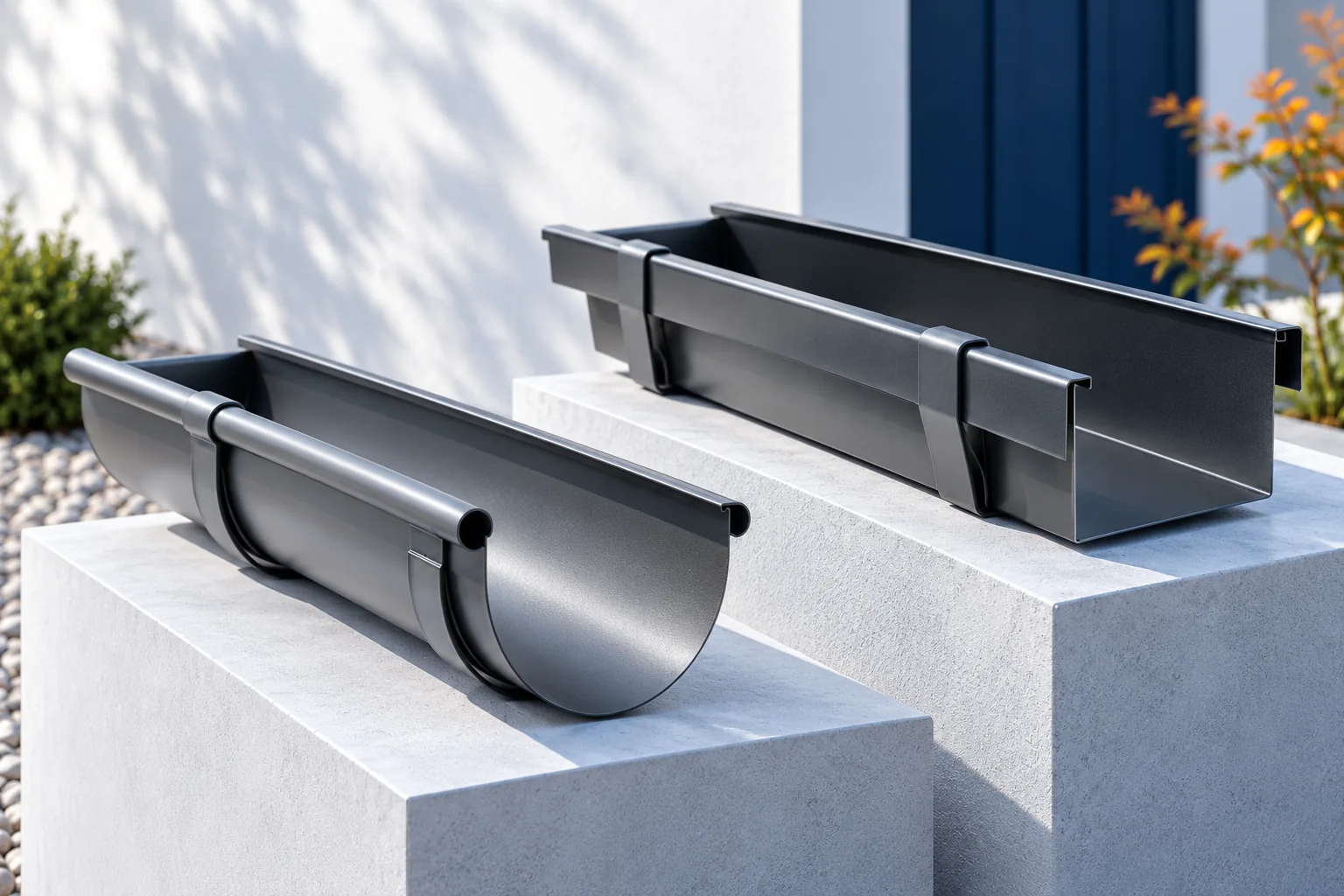
How does the shape affect the appearance of the house?
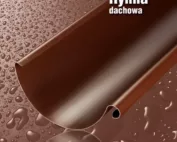
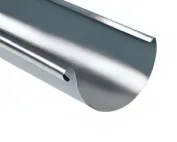
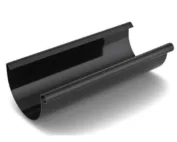
A half-round gutter gives a gentle line and suits many traditional and contemporary buildings. A square profile emphasises the straight edges of the building more strongly. It can harmonise with flat flashings and modern joinery. However, the perception also depends on the gutter size, colour and fixing method. The same profile looks different under a wide eaves and on a roof without eaves.
It is worth seeing the whole arrangement together with downpipes, bends and corners. A short section of gutter alone does not show the proportions of the finished system. A cover can additionally change the visible eaves line. This does not mean that every square gutter is hidden or that its downpipe must disappear into the insulation. These are separate design decisions with different consequences for servicing.
Which cross-section will take more water?
Performance depends on the actual cross-section and the configuration of the outlets. The names square and half-round are not sufficient for comparison. Two systems with a similar external width can have different capacities and different permitted catchment areas. Tables or calculations for the specific solution are needed. The position of the downpipe relative to the length of the gutter run is also important.
When selecting, the effective area of the roof slope is taken into account, not only the building’s footprint. A roof valley can direct water from a larger part of the roof in a concentrated way. At such a point, the way the flow enters the gutter is of great importance. A larger nominal cross-section will not solve a poorly shaped valley outlet or an undersized outlet opening.
Are the installation rules the same?
Each system specifies the type of brackets, spacing, gutter position and method of connection. Many gutters use a fall towards the outlet, but some solutions with a cover provide for a horizontal arrangement. One fall value must not be transferred to all products. It must be checked whether the instructions apply to the variant that is to be used on the building.
The possibility of thermal movement is also important. The gutter changes length with temperature, and the connections must remain tight. Additional sealant mass or accidental screwing can restrict the intended movement. Components with similar dimensions do not have to be compatible. Connecting accessories from different systems requires confirmation, which cannot be replaced by pressing the seal on site.

What does cleaning and servicing look like?
An open gutter should provide access to leaves and sediment. With a cover or concealment, the method of reaching the interior and the connections must be established in advance. It is not worth discovering only after blockage that dismantling requires disturbing the façade. Cleaning accessibility is part of the system choice, especially near trees. Leaf guards also require inspection.
A semicircular or square shape does not remove the need for inspections. Debris can accumulate at the outlet, corner and connector. Check whether the gutter has local ponding after the brackets have deformed. A high eaves requires safe access. Do not lean a ladder against the delicate edge of the gutter, as this can damage the system and endanger the person cleaning it.
What affects the price of the complete system?
The price of gutters is increased by brackets, corners, connectors, end caps, outlets, bends and pipes. In variants with a cover, additional elements and installation details appear. A short roof with many corners can have a high proportion of accessories in the costs. Therefore, comparing only the price per metre of gutter is often of little use. A comparison of the entire building is needed.
It is worth checking the availability of repair elements in the chosen colour. An unusual shape or size can prolong the later replacement of a damaged section. This does not mean that such solutions should be avoided, but it is good to know this consequence. The material and coating also affect the price and user requirements. The shape alone does not allow determining which variant will be cheaper after several seasons.
How to choose without guessing?
Prepare a roof plan with the lengths of eaves, roof valleys and planned downpipes. Ask for two specifications of comparable capacity. See how both systems work with the eaves flashing and the façade. If one requires structural modifications or an additional cover, this should appear in the cost estimate. The choice then becomes a comparison of solutions, not just of cross-sections.
Ultimately, it is worth choosing a system that meets the flow requirements, can be installed correctly and remains accessible for cleaning. Match the aesthetics to the building form and the other flashings. Both a square and a semicircular gutter can be a good solution. The condition is to treat it as part of the entire drainage system, from the roof slope to the point where the rainwater goes.
7 branches. Materials closer to your project.