Installation and workmanship
Five roofing faults to look for before handover
In brief
The key decision before accepting a metal roof is whether the inspection will cover layers that will soon disappear beneath the covering. It is worth checking the geometry of the substrate, the batten spacing, the method of fixing, the condition of the coating, the continuity of ventilation and the routes for water drainage. Most problems stem from faults that are visible before work is completed, so photographs and stage-by-stage inspections offer more than a view of the finished slope from the ground. Documentation of the stages helps catch errors before correcting them becomes expensive.
Mistake one: uneven or incorrectly spaced substructure
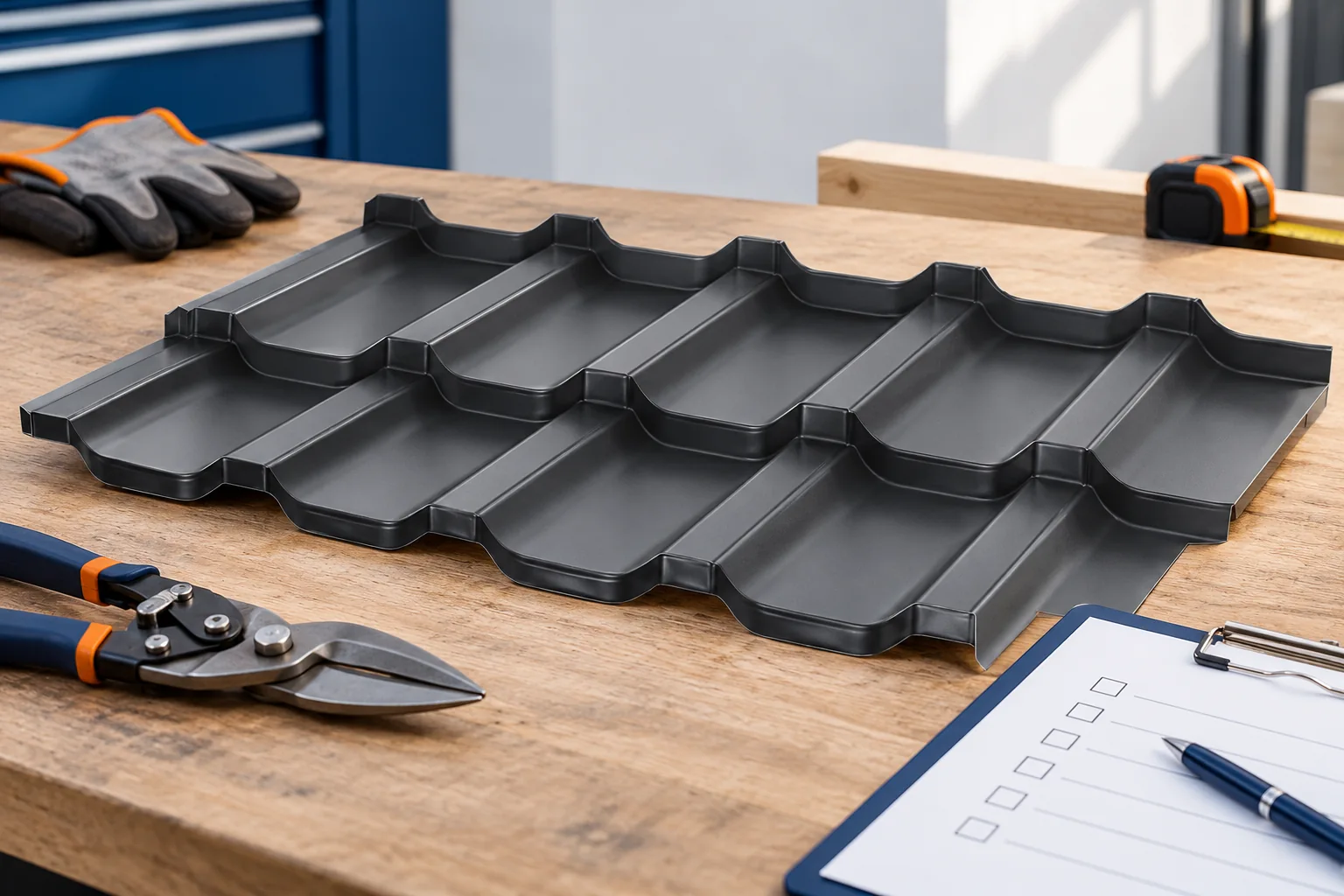
The covering should be laid on a prepared substrate with the correct geometry. With tile-effect metal roofing, the batten spacing is linked to the module and the eaves detail. With trapezoidal steel sheet, it depends on the loads and the profile documentation. Randomly spaced supports can cause poor support of the sheets and difficulties with connection. Tightening the sheet with screws is not a correct way of straightening the entire substructure.
Before covering, it is worth checking the eaves line, the plane of the roof slope and the diagonals. Irregularities are often more visible after a large area has been laid, when correcting the error is more expensive. In a renovation, an assessment of the condition of the timber is also required. New battens fixed to a weakened element do not automatically restore its load-bearing capacity. This stage should be accepted before the opportunity for free inspection of the structure disappears.
Mistake two: incorrect fastenings
The screw must be matched to the substrate, the material and the function of the connection. Too short a screw may not provide the required anchorage. If overtightened, it crushes the washer or deforms the sheet, and if too loose it does not provide correct compression. The angle of insertion is also assessed. A washer seated at an angle does not perform as intended in the system, even if the screw appears firmly seated.
The arrangement of the fasteners follows the instructions and the design. At corners and edges, the requirements may differ from those in the middle of the roof slope. Correctness should not be assessed solely by counting the average number of screws per metre. Their position is important. Additional holes made in the wrong place also require a solution, rather than being left under a random drop of sealant.
Mistake three: coating damage during cutting
An angle grinder is not used on coated sheet. Overheating of the edges and hot swarf damage the material’s protection. Small points from scattered particles may also appear far from the cutting location. After installation, the entire working surface, roof valleys and gutters must therefore be inspected. A clean roof at the end of the works is a technical requirement, not merely a matter of tidiness.
Scratches can also occur when dragging modules or walking on the roof slope with a dirty sole. The scope of the repair should match the damage. A minor touch-up does not justify leaving a heavily dented sheet. It is worth establishing which elements were repaired and which were replaced. Random paint in a similar colour may age differently in the sun and may not provide equivalent protection.

Mistake four: interrupted ventilation path
The inlet at the eaves and the outlet in the upper zone of the roof must create the intended airflow. Blocking the gap with foam, mineral wool or incorrectly laid flashings can hinder the removal of moisture. It is not enough to state that there is some free space under the covering. The continuity of the path and the treatment of obstacles such as windows and chimneys are important. Each system has its own requirements.
The airtightness of the layer on the interior side is checked separately. Ventilation beneath the steel sheet does not remedy the free flow of warm, moist air through leaky vapour barrier joints. A distinction must also be made between condensation and rain penetration. Without identifying the cause, the wrong place may be sealed, further impairing the drying of the structure. Documentation made before the slopes are enclosed is helpful.
Mistake five: flashings without a correct water path
The roof valley, chimney, eaves and wall junction require matched details. Water must flow from the higher element to the lower one without backing up under the lap. Insufficient flashing width or a puncture in an area of intensive flow increases the risk of leakage. A large amount of sealant does not replace correct metal laying. It can, however, make it more difficult to establish later where the fault lies.
At acceptance, it is worth tracing the drainage all the way to the gutter. The roof valley should not end in such a way that the flow bypasses the drainage system. Around the chimney, the connection to its surface must be taken into account, not merely the fixing of the flashing to the covering. Thermal movement is also important. Rigid connections of elements that move can, over time, cause a seemingly carefully executed detail to lose its seal.
How do you carry out the acceptance inspection in practice?
Stage-by-stage inspection is most effective: substrate, preparatory layers, details and the finished covering. Agree with the contractor the points at which important areas will remain visible. Photographs should show the course of the joints, not only a general view of the building site. In case of greater doubt, an assessment by an independent person with appropriate competence is helpful. The client does not have to go onto the roof themselves to have reliable documentation.
In the protocol, record the specific defects, their location and the agreed method of rectification. Avoid the general statement that the roof requires corrections. Also check the handover of material designations, instructions and maintenance rules. Acceptance does not end the need for later inspections, but it should confirm that the works are correct. Minor errors are better clarified while the team and secured access are still on site.
7 branches. Materials closer to your project.