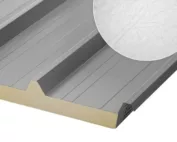
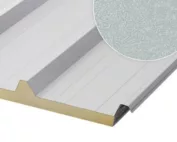
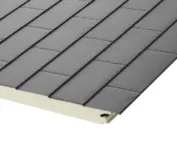
Selecting sandwich panels
Choosing a sandwich panel by application, size and price
In brief
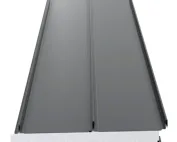
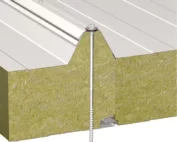
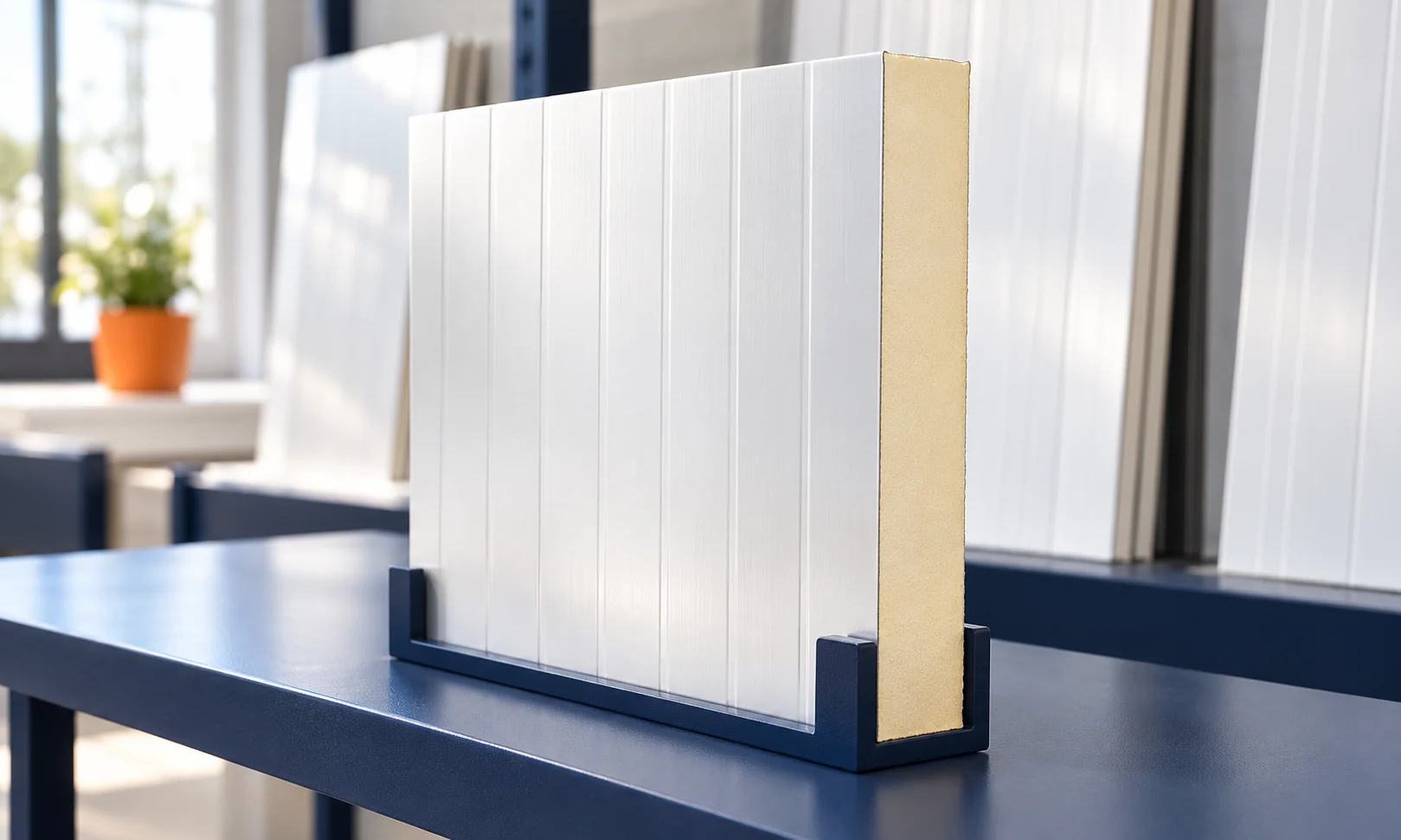
The name Oborniki panel is commonly used for sandwich panels. It does not specify a single core, size or level of insulation. When buying, you therefore need to move from the general name to a specific variant. Price only makes sense alongside parameters, length and quantity. That way you can compare offers that correspond to the same task. A sandwich panel combines an insulating core with facings. In many solutions both facings are steel, but versions with a different internal finish also exist. The full construction must always be established. An insulating panel with a thin foil is not the same product as a steel panel.
What are you actually buying under the common name?
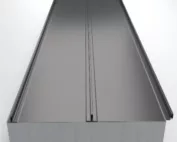
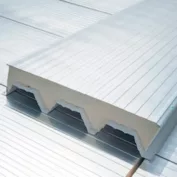
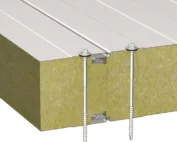
In the order, state the purpose: wall, roof or cold-storage cladding. Each group may have different edges, geometry and properties. Specifying thickness without this clarification leaves too many possibilities. A photo of a similar surface also does not confirm compatibility.
How to separate the functions of individual cores?
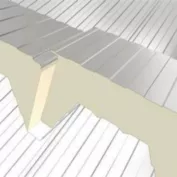
PIR is often chosen where thermal insulation matters at limited thickness. Mineral wool is assessed, among other things, against fire and acoustic requirements. EPS also appears in panels, but requires comparison of the complete panel’s properties. Assessing the core sample alone is not enough.
Fire reaction class, partition resistance and U-value are separate data. They cannot be replaced by a single word such as “warm” or “non-combustible”. First select the parameters required by the project. Only among the matching variants should you compare weight, price and ease of installation.
How does panel size affect a small façade?
The effective width determines the wall’s division rhythm. In example families, modules of 1 m, 1.1 m or 1.13 m occur. These are different solutions, not arbitrary settings of one panel. Dimensions must be read for the ordered variant and compared with the openings.
For a 5.5 m field, a 1.1 m module gives five full strips. A 1 m module means six strips before cutting. This simple example ignores corners and the fixing method. It does show, however, that a cheaper square metre does not always mean a smaller purchase. It is worth preparing an actual cutting plan.
Why are length and span different data?
The production length describes the dimension of the supplied element. The span refers to its behaviour between supports. A panel 8 m long does not have to carry loads without support over that entire length. Selection requires the appropriate table and structural scheme.
Long elements reduce the number of certain joints, but they change transport and lifting. On a small site, check the access route and the turning area. Shortening a panel can simplify logistics, but the additional joint must have correct support, sealing and flashing.

How do you convert a quote into the required cladding?
Compare the same core, thickness, facings and coatings. Establish which metre the price is calculated for. Also check the billing lengths and minimum order quantity. The effective metre of a panel does not always correspond to the metre of the finished wall after cutting.
Purely arithmetic example: 48 m² of ordered panels at an assumed €37.03 net gives €1777.44 net. If they cover 44 m² of wall, the cost of the panels alone will be €40.40 per m² of that wall. Transport, extras, structure and installation remain separate items. This is not a current price list.
What should you check at the point of purchase?
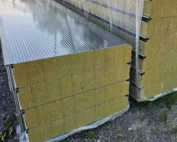
Ask for identification of the variant, documents and a length schedule. For a ready batch, check the number of pieces and the condition of the ends and locks. Establish whether the deviations concern appearance, dimension or properties. The term “outlet” alone does not explain the reason for the lower price.
Before payment, confirm the terms of transport, unloading and reporting non-conformities. Also check the availability of matching flashings and fastenings. Do not assume that missing elements will combine without problems with material of a similar name. Edge compatibility is as important as colour.
How do you finalise the choice without buying spares?
Match the panel with the structure, openings and the way the building is used. Take into account cleaning, humidity and the expected temperature. These conditions can change the choice of coating and seals. Planned heating should be considered before ordering, even if it starts later.
Calculate the material reserve from the cutting plan and the risk of specific cuts. An arbitrary percentage added to the area does not show which lengths are needed. The final order should allow the location of each piece to be indicated. This is a simple way to avoid both shortages and surplus that is difficult to use.
Questions before ordering
Does the term “obornicka panel” indicate a polystyrene core?
No. It is a colloquial name and is sometimes used for various sandwich panels. The type of core must be clearly confirmed.
Do two panels one metre wide have compatible locks?
This does not follow from the width. Compatibility requires checking the specific geometry and the intended method of connection.
7 branches. Materials closer to your project.