Steel halls and structures
Keeping a steel frame stable during erection
In brief
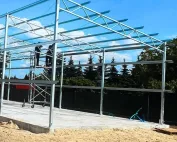
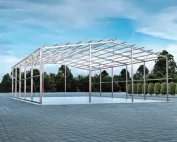
The steel frame of a hall does not become safe simply because all the large columns have been erected. During assembly, some of the elements that will work together in the completed building are missing. The supports and the way loads act change. Assembly therefore requires a prepared sequence and safeguards. The temporary state must be assessed as consciously as the final structural arrangement. In a completed steel hall, the frames are connected by purlins, rails and bracing. Some elements may rely on support provided by the envelope, if such interaction has been allowed for. During assembly, some of these connections do not yet exist. The design model of the completed building therefore cannot be applied directly to every moment of the works.
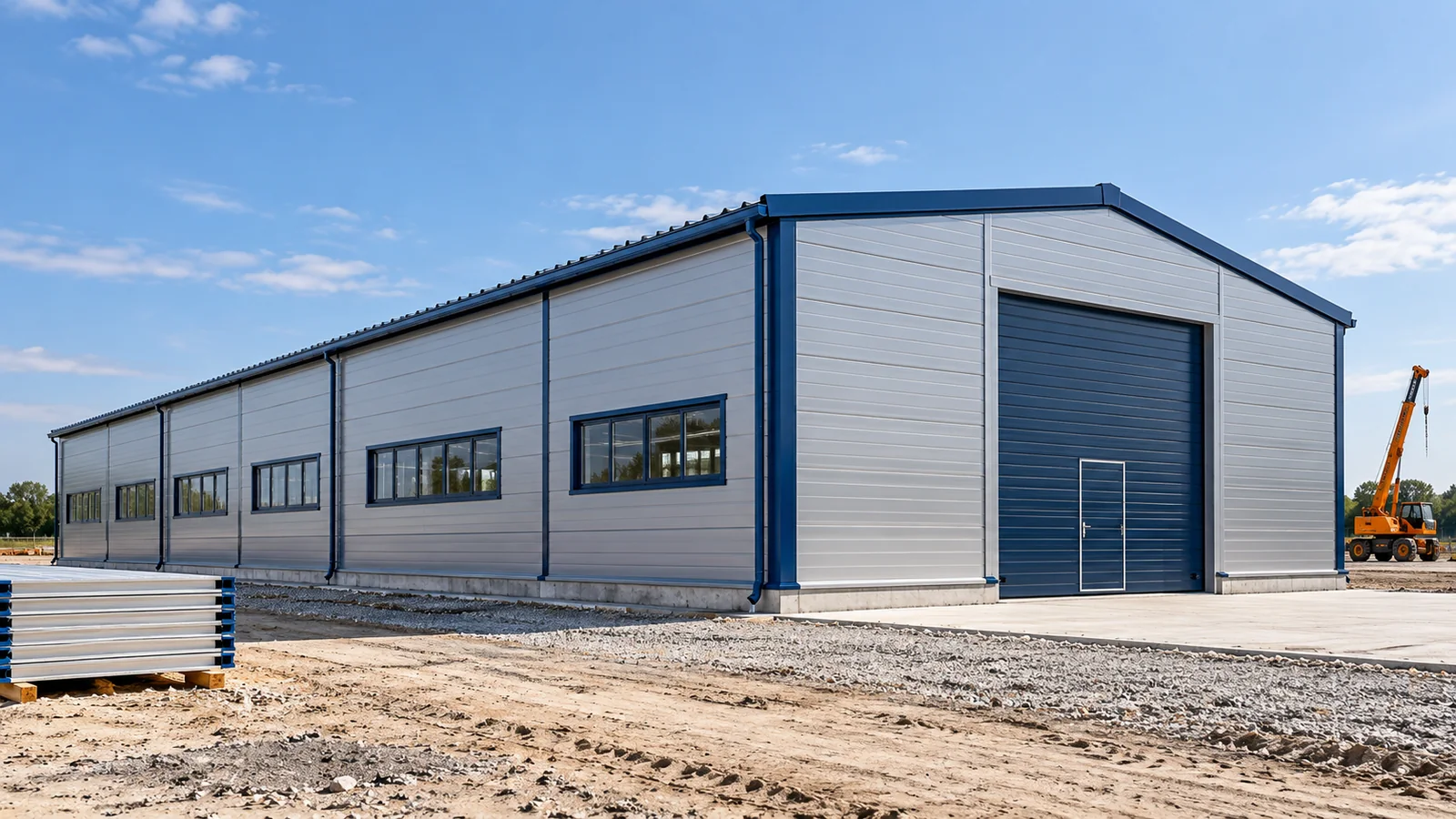
The completed hall and the construction stage are different systems
The steel structure requires defining the stages at which it remains stable. This applies to erecting columns, installing purlins and completing further bays. Temporary bracing may be required. Its selection depends on the design and the construction organisation. There is no single correct sequence for all halls of similar appearance.
A braced bay provides a reference point
In many designs, assembly is organised around a section that forms a stable spatial system. Only then are further parts attached to it. This must, however, follow from the documentation. A steel hall may require a different sequence due to geometry, element weights or equipment access conditions.
Permanent and temporary bracing have specific tasks. A safeguard must not be removed simply because the lifting of an element has been completed. It is necessary to know which connections are already made and what takes over the forces in a given state. Steel structures require continuity of support also during interruptions in work.
Foundations must be complete
Before assembly, the conformity of axes, levels and anchors as well as the condition of the foundations must be confirmed. Their readiness to accept the anticipated loads is important. A steel hall should not be assembled on supports whose geometry has not been checked. Errors revealed later make it difficult to fit connections and may affect subsequent stages.
Site organisation must also take into account the operation of the crane and transport equipment. Suitable access routes and ground beneath the equipment supports are required. A steel structure may be correctly designed and yet assembly will require a change of organisation due to terrain conditions. These arrangements must be completed before delivery of the elements.
Markings help avoid mistakes
Elements should be arranged according to the current drawings and markings. A similar profile does not necessarily have the same function or the same holes. In modular steel structures, repetition speeds up the work but does not remove the need to identify parts. Particular attention is required for elements at gables, bracings and openings.
When a connection does not fit, the cause must be determined. Randomly enlarging holes or cutting out part of the profile to achieve a fit is not permissible. A steel hall must retain the geometry and the solutions adopted in the design. Changes should be agreed and recorded before they are made.

Weather and storage affect the work
Wind conditions matter when lifting large components and panels. The organisation of assembly must correspond to safety conditions and the equipment used. The end of the day should not be treated as a reason to leave an unstabilised section. Steel structures must be secured for the state in which they will remain until work resumes.
Material packs must not be placed on the roof or load-bearing elements without verification. The concentrated load during assembly may differ from the final layout of the covering. In a steel hall, storage locations on the ground are also important. They should limit damage, water accumulation and collisions with equipment movement.
Inspection before closing the envelope
After completing the system, the geometry, completeness of connections and required protections must be checked. Some locations will later be difficult to access. A steel hall should proceed to subsequent stages on the basis of confirmed execution, not the appearance of the frame alone. This also applies to coating repairs at locations disturbed during transport or assembly.
The assembly plan for a steel hall should account for deliveries and the available working space. Determine who approves the solution to a non-conformity revealed on site. The steel structure must not lose its required support during handover of works to the next team. Do not remove temporary protections without meeting the conditions of the documentation. Maintain control over the currency of drawings after each agreed change.
Check the pack markings. Do not load an unaccepted system. In a steel hall, a minor missing fastener can prevent the completion of an important connection. Acceptance of bracing includes their fixings and conformity of position. Stability must also be ensured when weather stops assembly before the planned stage. The sequence of works should be understandable to the team that actually carries them out.
7 branches. Materials closer to your project.