Roof and energy
Replacing a roof with BIPV: reducing the risk of rain entering the house
In brief
When replacing a roof with a photovoltaic one, the most important thing is to keep control over the exposed surface. The house must not be left without planned protection simply because materials are due to arrive in a few days. BIPV allows the covering and the energy part to be coordinated, but it requires a prepared schedule. The scope of each stage should match the weather, the capacity of the crews and how quickly the building can be effectively protected. Before the old covering is removed, the availability of materials, crews and equipment must be confirmed. Accessories and parts needed to complete the open zone are also important. A missing flashing or other component can prevent the slope from being closed, even though most of the panels are already on site.
Why does the schedule start before demolition?
The schedule should not be based on guesswork.
The approach to changing weather must also be established. A short forecast does not guarantee that conditions will remain favourable throughout the renovation. The plan should include appropriate temporary protection and responsibility for its implementation. This is part of work organisation that has direct relevance to the interior of the house.
Can a roof be renovated in sections?
In some cases such a division is possible, but it must correspond to the geometry and the installation method of the system. A stage boundary cannot be arbitrarily set at a point that cannot be effectively protected. Connections, the sequence of laying and access to the layers must be taken into account. The decision should be made by the contractor in agreement with the design.
Staging does not automatically mean lower cost or a shorter renovation. It may increase the number of organisational steps. Its value, however, can lie in limiting the simultaneously exposed surface area. In an occupied house, such a benefit may be more important than the speed of maximally fast demolition of the entire roof.
How can the joint installation of covering and PV be used?
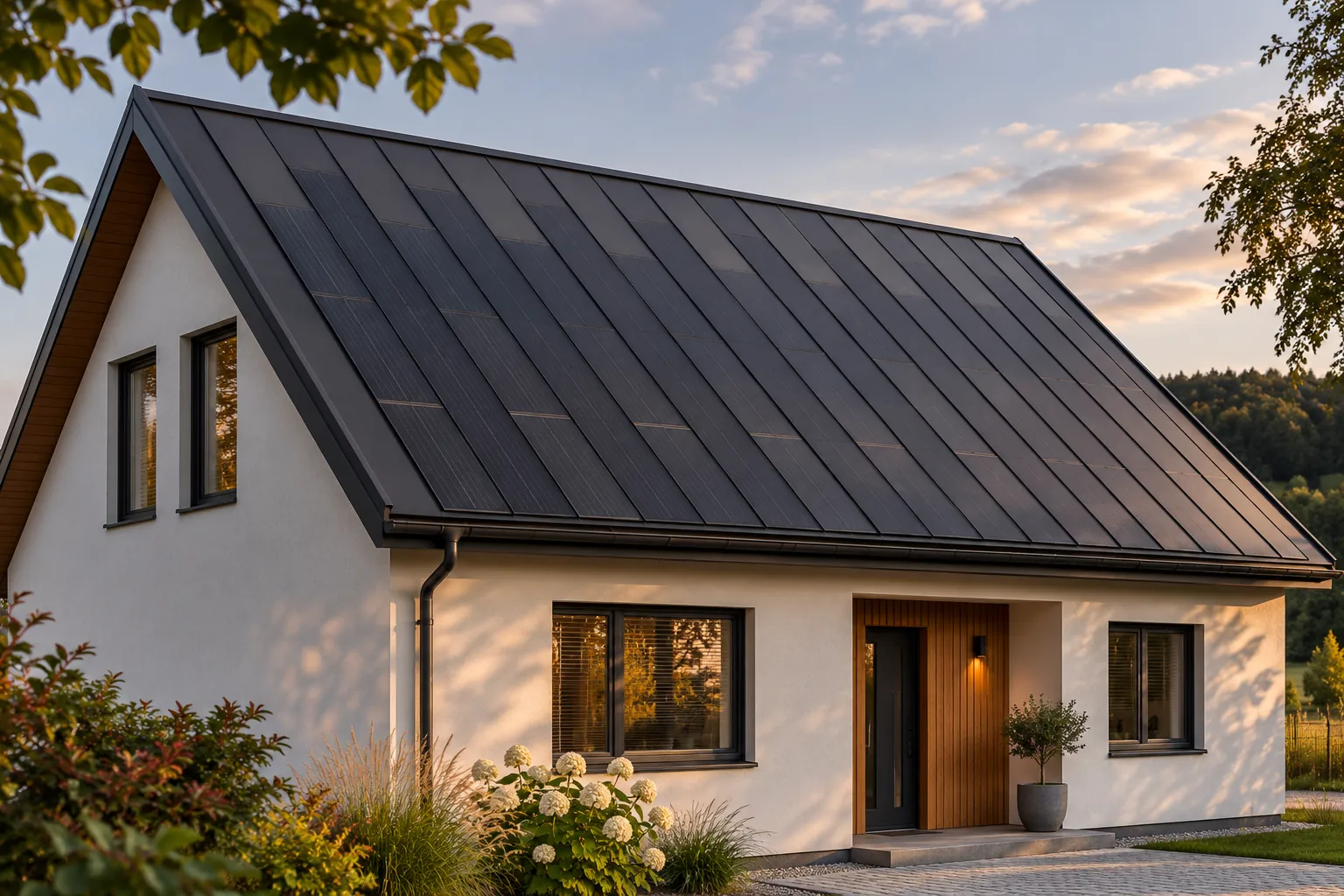
In an integrated steel system, the active fields form part of the roof slope. Roofing and electrical work must therefore be appropriately synchronised. Connections made during installation should not require later accidental dismantling of finished sections. The correct sequence allows successive areas to be closed according to plan.
The benefit is a single coordinated roof layout, instead of separately adapting the PV superstructure after the covering has been completed. However, this does not relieve the need to divide responsibilities. It must be established who assesses tightness, who accepts the installation and when a given stage can be considered complete. The appearance of the finished roof slope alone does not answer all these questions.
What should be done if a problem arises after demolition?
Under the old covering, damaged supports, wet insulation or missing layers may be revealed. These should not be covered with a new system merely to meet the original deadline. An assessment and agreement on the repair are needed. The plan should allow for time and the possibility of protecting the house in such a case.
It is good practice for the contract to set out how additional works are approved. The client should receive a description of the problem discovered and a proposed course of action. Photographs help with the decision without going onto the roof. A transparent procedure limits disputes and allows focus on the correct execution of the renovation.
How to protect the interior and surroundings of the house?
Residents should know which rooms require preparation. It is worth protecting attic equipment and establishing safe routes around the building. Dismantling, scaffolding and transport of components may restrict normal use of the property. Organising these matters reduces chaos, particularly when the house remains occupied.
Protecting the interior does not, however, replace protection of the roof itself. Temporary materials must be properly selected and fixed by the team. It should not be assumed that a light cover will cope with any precipitation and wind. Its purpose is to provide protection under specific conditions, in accordance with the works plan.
When can a roof slope be considered complete?
Once the covering is complete, the details, drainage and service penetrations must be checked. The electrical part is inspected separately. It is worth keeping documentation of the stages before the layers are covered. If the renovation also concerned insulation or the structure, acceptance should cover these works as well, and not only the external result.
A well-prepared replacement with BIPV can proceed in an orderly manner. The new roof combines protection of the house with energy generation and a calm appearance of the roof slope. The condition, however, is a plan matching the actual scope of works. The best schedule is one that allows each stage to be safely closed, even with an unfavourable change in conditions.
Examples of companies and brands in roof-integrated photovoltaics are Nelskamp, Wienerberger Wevolt, Electrotile, Solarstone, Terrán, SunRoof, SolRoof, EDILIANS, MDM NT (MyRoof) and ML System.
7 branches. Materials closer to your project.

- SEROCK — Dzierżenin 34 E
- BŁONIE — ul. Sochaczewska 138A
- RADOM — ul. Grobickiego 8
- ŁÓDŹ — Natolin 8
- OLSZTYN — Barczewo, ul. Prosta 9
- WROCŁAW — ul. Jerzmanowska 10C
- GORZÓW WLKP. — ul. Zielona 33/34