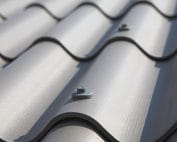
Fibre cement roofing
Roof pitch and selection of the fibre cement sheet system
In brief
The roof angle affects the rate of water drainage and the working conditions of the joints. It cannot be treated as a secondary dimension when choosing a covering. Fibre cement sheets have pitch requirements set out in the documentation for the given system. A single figure cannot be transferred to all profiles. Asbestos-free fibre cement may be a good solution for a pitched roof, but its suitability must be confirmed for the specific roof slope and local conditions. In documents, pitch is sometimes stated in degrees and sometimes in percentages. These are different ways of representing the same geometry, not figures used interchangeably. A percentage means the ratio of the rise in height to the horizontal distance.
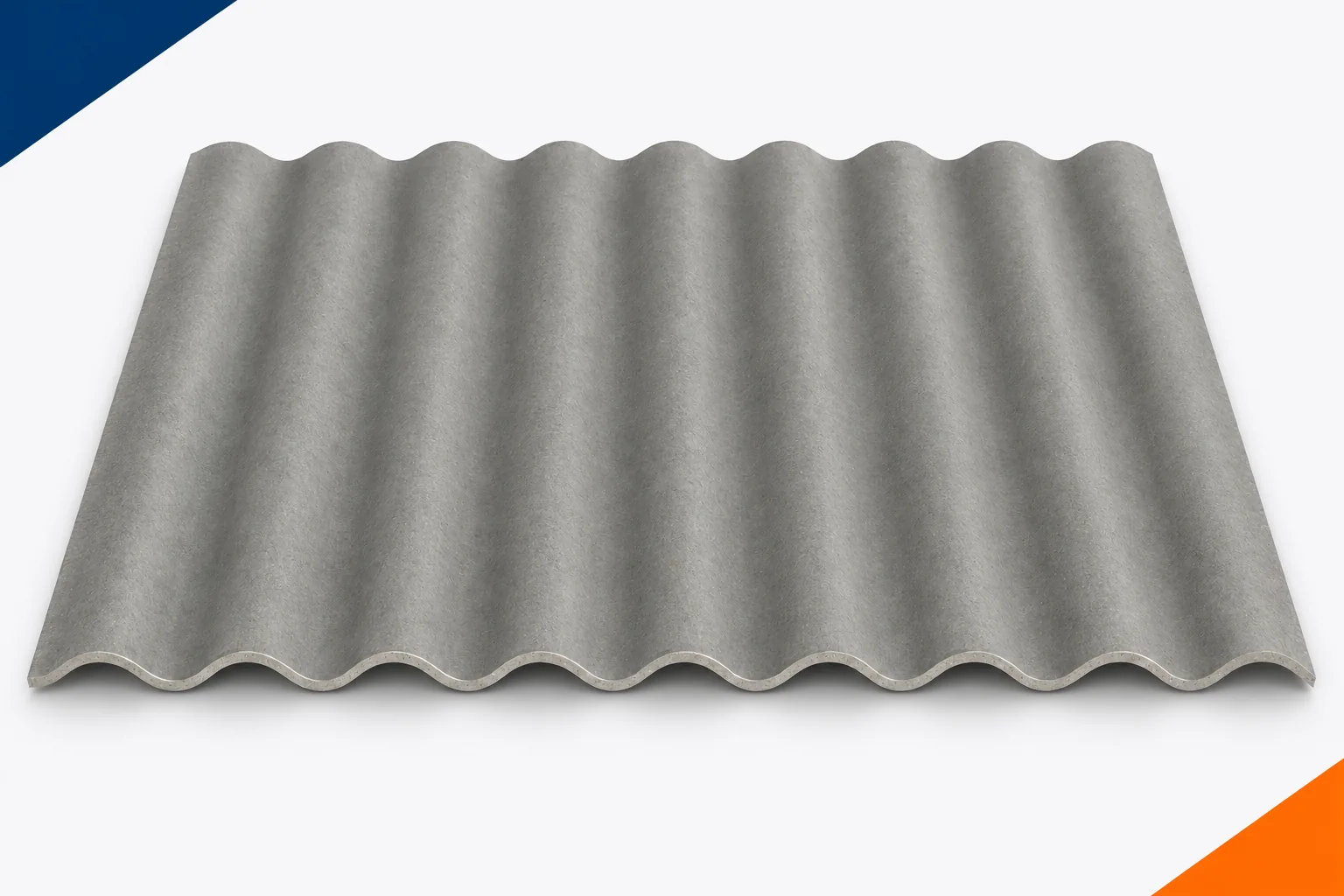
First establish what pitch the roof actually has
Degrees describe the angle. When measuring, do not confuse the length of the rafter with its horizontal projection. During renovation, deflections and unevenness must also be taken into account. A roof with a correct average slope may have a local depression. In such a place, water flows differently than on a level drawing. The assessment is carried out without stepping directly onto the fragile covering, using safe access and appropriate tools.
The minimum belongs to a specific system
The exact profile must be found in the instructions, followed by its conditions of use. Fibre-cement sheets from different families may have different minimum slopes. The shape of the corrugation, the format, the laps and the intended seals all matter. Information about the working angle of the ridge tile alone does not determine the permissible slope of the entire covering. Likewise, a value from a foreign instruction is not automatically valid for a Polish delivery. If the roof is close to the limit of application, unambiguous confirmation of the solution must be obtained. A choice based on a single number from a shop description leaves too much room for a costly mistake.
Water behaves differently on a shallow slope
At a lower slope, it leaves the roof more slowly and acts on the joints for longer. Wind can additionally force precipitation under the edges of the sheets. That is why documentation often links the slope with requirements for laps and sealing tapes. It is not enough to say that fibre-cement sheets are water-resistant. Testing of the material and the tightness of the assembled roof concern different things. A sheet may meet the declared properties and yet a poorly made joint will leak. Every lap must maintain the correct direction of flow. Water from the higher course should reach the top of the lower one, not under its edge.
A larger overlap does not solve everything
The idea of extending the lap can be tempting on a roof that is too flat. However, it does not provide a basis for going below the permissible slope. It changes the covering area, the position of the fixing and the relationship of the sheet to the support. In a sheet with pre-drilled holes, there may be no freedom for such an adjustment at all. Asbestos-free fibre cement should be laid in the intended arrangement, and modifications agreed at the design stage. Additional sealing compound does not replace correct geometry. It may also hinder the working of the joint or the drainage. If the slope is too small, the right step is sometimes to change the structure or to choose a different covering intended for these conditions.
Roof exposure matters too
Open terrain, building height and neighbouring obstacles influence the effect of wind. Intense precipitation, lying snow and driving water require attention regardless of the angle itself. Fibre-cement sheets used on a sheltered building are therefore not a model for a structure on an exposed hill. The design should take into account loads and particularly exposed zones. The instructions may require additional sealing under certain conditions. Drainage at the roof valley and wall must also be checked. There, water collects from a larger area than at an ordinary side joint between two sheets.
Slope changes the choice of finishes
The ridge needs fittings that match the roof geometry and the method of ventilation. At the eaves, the position of the sheet must be coordinated with the gutter. The wall flashing must take up water without creating a depression. Fibre-cement sheets should not be treated as a separate purchase to which random terminations are later adapted. On a gentle roof, an error in such a detail may only become apparent during prolonged rain with wind. On a steep one, the way water is conducted and the roof slope is handled may be more important. In both cases, a drawing of the connections is needed, not just the cross-section of a typical sheet.
The final choice should be verifiable
The document set should include roof slope measurements, product designation, the current installation instructions and details for special locations. The contractor must know which junctions they will seal and which accessories they will use. Fibre cement sheets are then ordered in the quantity resulting from the adopted layout. This allows a reliable comparison of the costs of several solutions. A cheaper sheet may require a different cutting plan and a greater number of details. It is important that the comparison covers the finished roof with the required function. Any accidental reduction in pitch during construction should be reported before installation, as it may change the basis of the entire selection.
Before requesting a quote, state the pitch of each roof slope and the local conditions. This will help assess whether the chosen asbestos-free fibre cement creates the right system for this roof.
7 branches. Materials closer to your project.