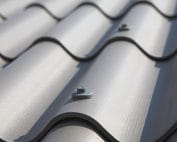
Fibre cement roof coverings
Fibre cement roof ridge. Selection of fittings and ventilation
In brief
The ridge looks like a narrow strip at the top of the roof, but it combines several important functions. It covers the junction between the roof slopes, takes up water driven in by the wind and can provide an outlet for air from beneath the covering. Fibre cement sheets require a compatible set of fittings and fastenings here. Asbestos-free fibre cement does not form a complete roof without the correct termination. Choosing a ridge tile by colour alone overlooks the factors that determine tightness and moisture beneath the covering. The type of ridge element depends on the roof pitch and the way the two sides are joined. Some solutions have a defined adjustment range, others require the correct angle. This range is not, however, the permissible pitch of the covering itself.
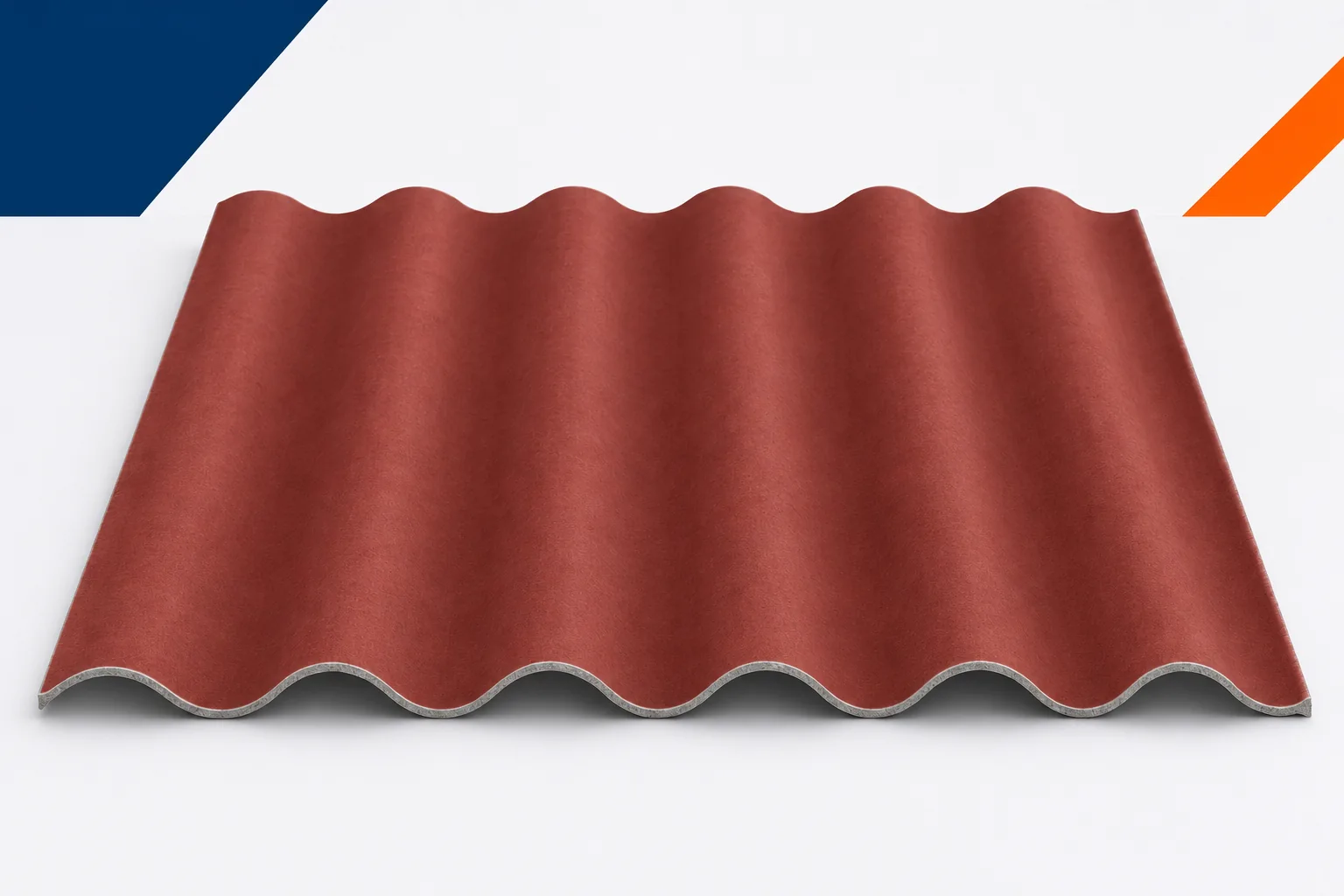
The geometry of the roof slopes determines the required fitting
Each part is selected within the scope of its intended purpose. The width of the sheet coverage, the laps between fittings and the method of terminating the ridge must be checked. A component from another system may appear to cover the gap but not provide the correct detail. The manufacturer’s drawing allows assessment of where the bearing line should run and how the connection with the sheet profile is formed.
The last support does not have an arbitrary position
At the ridge, the distance from the last batten or purlin to the apex is important. It results from the geometry and the chosen finish. Fibre-cement sheets must have proper support after cutting the last row. They should not end in a long, unsupported section hidden under the ridge cap. Covering alone does not increase the load-bearing capacity of the sheet. During planning, the length of the last strip and the position of its fixings must be determined. The variant with factory edge treatment cannot always be used at every edge location. Therefore the ridge is drawn up before ordering, rather than only once installation reaches the end of the roof slope.
Rain shield and air outlet
In a ventilated roof, the air needs a continuous path from inlet to outlet. The ridge is often its end, but not every ridge capping provides ventilation. A tight filling of the space under the fitting can close off the intended flow. Fibre-cement sheets will not dry the roof automatically if warm, moist air has no outlet. The design should specify the required outlet solution and its arrangement. Protection against wind-driven precipitation must work together with ventilation. It is not a matter of leaving an arbitrary open gap. A detail is needed that fulfils both functions under the intended conditions.
Profiled seals have a defined purpose
A component matched to the corrugation can close the space under the finish. It should not be equated with a tape whose purpose is to enable controlled airflow. Asbestos-free fibre cement requires accessories to be selected according to the function of the given location. Using ordinary foam instead of the intended solution can restrict ventilation, impair durability or hinder drainage. The shape of the seal must also match the profile. A similar corrugation spacing does not guarantee contact across the full width. When ordering, it is worth specifying the exact sheet variant and ridge type to avoid mixing accessories from different sets.
Fixing the fittings is a separate detail
The ridge capping should not be screwed at random to the nearest surface. The instructions specify how the component is supported and fixed. Fibre-cement sheets and their fittings may require holes with appropriate clearance and controlled pressure. Over-tightening will not correct a poorly matched angle. It can cause cracks in a place that is later difficult to inspect. The sequence of laying and the lap of successive ridge sections are also important. The wind acts on this strip differently than on a sheltered section of the slope. Therefore the number of fixings, their position and corrosion resistance should follow the specification, not the habits of the crew.
Penetrations and terminations change the local arrangement
A chimney, fan or other device near the apex can interrupt the continuity of the finish. This should not be solved by randomly cutting out a section of the ridge capping and filling it with sealant. Fibre-cement sheets around such locations require a separate drawing. The path of water, the support of the cut parts and the functioning of the air outlet must be checked. The ends of the ridge at the building gables are executed just as carefully. A poorly matched termination can let precipitation in under the entire fitting. The finished detail should be possible to inspect and repair. Permanently sealing everything makes later identification of a leak more difficult.
The first season shows the quality of the connection
Once construction is complete, keep the ridge documentation and photographs taken before it was closed. During inspections, check for displacement of the fittings, cracks, the condition of the fixings and whether the ventilation is clear. Fibre-cement sheets require safe service access; do not stand on the sheets to reach the ridge tile. Signs of moisture near the apex do not always indicate a leak from outside. The cause may be condensation linked to interrupted airflow. The assessment should be related to the weather and conditions inside the building. This makes it possible to distinguish a rain-screen fault from a ventilation problem, which requires a different correction.
When planning asbestos-free fibre cement, also choose how the ridge is to be constructed. The set of sheets, fittings and ventilation should correspond to one clear roof concept.
7 branches. Materials closer to your project.