XPS insulation
XPS on the plinth under render. Why does the board surface matter?
At a glance
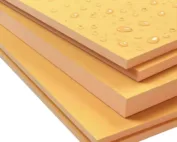
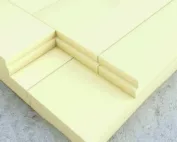
The plinth of a house must withstand rain, dirt and accidental impacts. If it is to be rendered, the insulation board becomes the substrate for the subsequent layers. XPS is then selected differently than for loosely laid floor insulation. Extruded polystyrene should have a surface suited to the intended finish. A smooth board with a good lambda value is not automatically the right substrate for mortar. What matters is the whole set of materials and the way it is installed. XPS can have a smooth surface layer created during production. It is useful in many applications, but adequate adhesion is needed when bonding and rendering. That is why rough, treated or structured boards are also available.
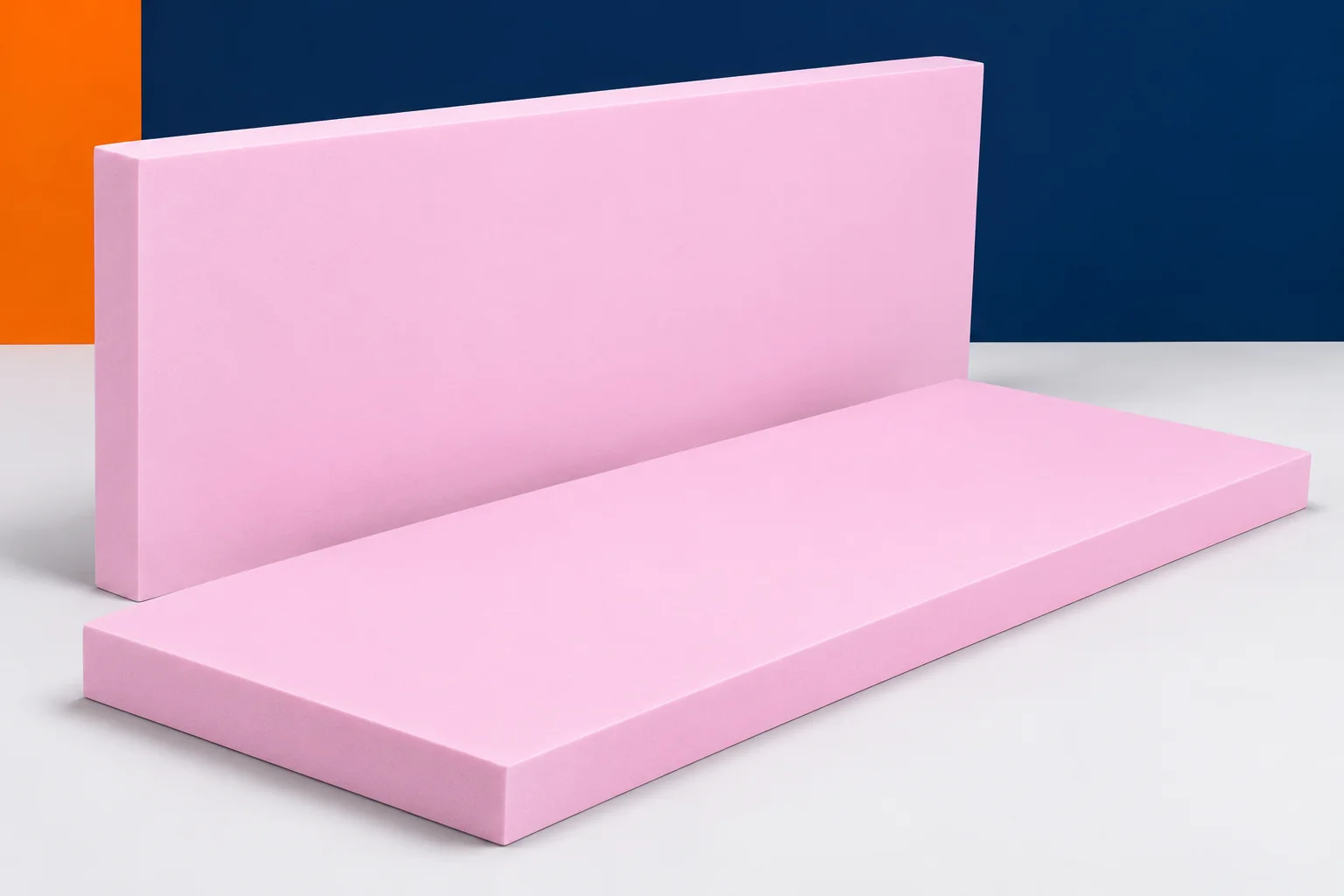
A smooth surface serves a different purpose
Its texture is not decorative. It is intended to facilitate bonding with the material applied to the surface in the intended solution.
XPS for render should not be selected solely by colour or edge shape. A board with a rebated edge can have a smooth surface, and a board with a square edge can have a suitable texture. Extruded polystyrene must be assessed on the basis of the product documents. If the instructions permit surface preparation on site, the method of treatment and its inspection should also follow from those instructions.
Adhesion does not depend on the board alone
The bond is affected by the mortar, the condition of the substrate, the temperature and the quality of workmanship. Even correctly selected XPS will not deliver a good result if it is covered with dust or dirt. Before work, its condition should be checked and the cause of the problem removed. It is not worth applying another layer to a damaged surface simply because the schedule says rendering should begin.
Extruded polystyrene should be bonded with materials approved for the given application. A random adhesive may have inadequate adhesion or a composition incompatible with polystyrene. XPS also requires compatibility to be checked with the layer on the wall side. Different types of substrate often meet at the plinth, which is why experience with bonding boards on the upper part of the façade alone may not be enough.
The reinforced layer distributes stresses
Render should not be treated as a standalone covering applied directly to any XPS. In the intended system there is a reinforced layer and a suitable finish. The mesh and mortar must be laid in accordance with the requirements of the solution. Corners and joints require particular attention. That is where stresses can concentrate and damage can occur if workmanship is imprecise.
It is not worth determining the thicknesses of the individual layers by eye. Too little material does not reliably cover the reinforcement, while too much does not repair faulty adhesion to the XPS. Extruded polystyrene works together with the entire finish. Movement joints and the conditions for carrying out the works must be maintained. Applying the final render quickly may conceal the problem, but it does not remove its cause.
Water at ground level requires a proper termination
The plinth zone is exposed to water splashed back from the ground surface. It must be connected with the protection of the underground part and with drainage of water away from the building. The low water absorption of XPS does not mean that the finished render can be sunk into the ground without checking. Each layer has a specific purpose, and the point at which it ends should correspond to the target ground level.
The steps between the plinth and the façade are also important. Water should not run down behind the XPS or remain on the unprotected top edge. The appropriate termination results from the geometry of the building and the finish system. Extruded polystyrene helps to maintain thermal continuity, but it does not itself shape the drainage path. This detail must be agreed before installing trims, flashings or other closing elements.
Resistance to pressure is not resistance to impact
The compression parameter of XPS does not directly describe the resistance of the entire plinth to a kick, an impact with a tool or contact with a lawnmower. The behaviour of the finish is determined by the entire system. In particularly exposed places, a solution with greater mechanical resistance may be needed. Such a conclusion should not be drawn solely from a high number visible in the name of the insulation board.
After completing the plinth, it is worth avoiding fixing elements by accidentally drilling through the layers. XPS is not a load-bearing substrate for heavy objects. Every fixing should transfer the force to a suitable substrate and maintain the required protection against water. Planning the mounting points in advance is simpler than later repairing the render and the waterproofing around a poorly executed hole.
What to check before starting plastering
XPS is offered by HOCH, Synthos and Finnfoam, among others. It is worth choosing a product intended for use with the given finish and keeping its documentation. The colloquial name styrodur does not determine whether the surface is suitable for mortar. On the label and in the instructions, check the correct variant, thickness and the required method of preparation, instead of going by the appearance of the board alone.
The acceptance inspection should cover the condition of the XPS, the quality of the joints and the terminations at ground level. Then the reinforced layer is checked before the render is applied. Extruded polystyrene proves suitable on the plinth if it remains part of a compliant system. Care for the surface and details reduces the risk of detachment and later repairs. The most important result is continuous insulation with a durable finish, not merely evenly glued boards.
7 branches. Materials closer to your project.