Steel profiles and structures
Identifying cold-formed Z, C, sigma and omega sections before ordering
In brief
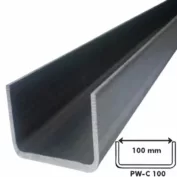
The names of steel profiles primarily describe the shape of their cross-section. They do not yet indicate how much load a given element will carry or where it can be installed. The same zed profile comes in many heights and thicknesses. The same applies to channels, sigma profiles and omegas. Recognising the family is the first step. The next involves reading the dimensions, material and conditions of use. From the side, many sections look like a strip of sheet metal with a few bends. Only the view from the front reveals their construction. In a zed profile the flanges are on opposite sides of the web. In a channel they run in the same direction. The edges may have additional stiffening lips. Their presence should be checked on the drawing for the specific product.
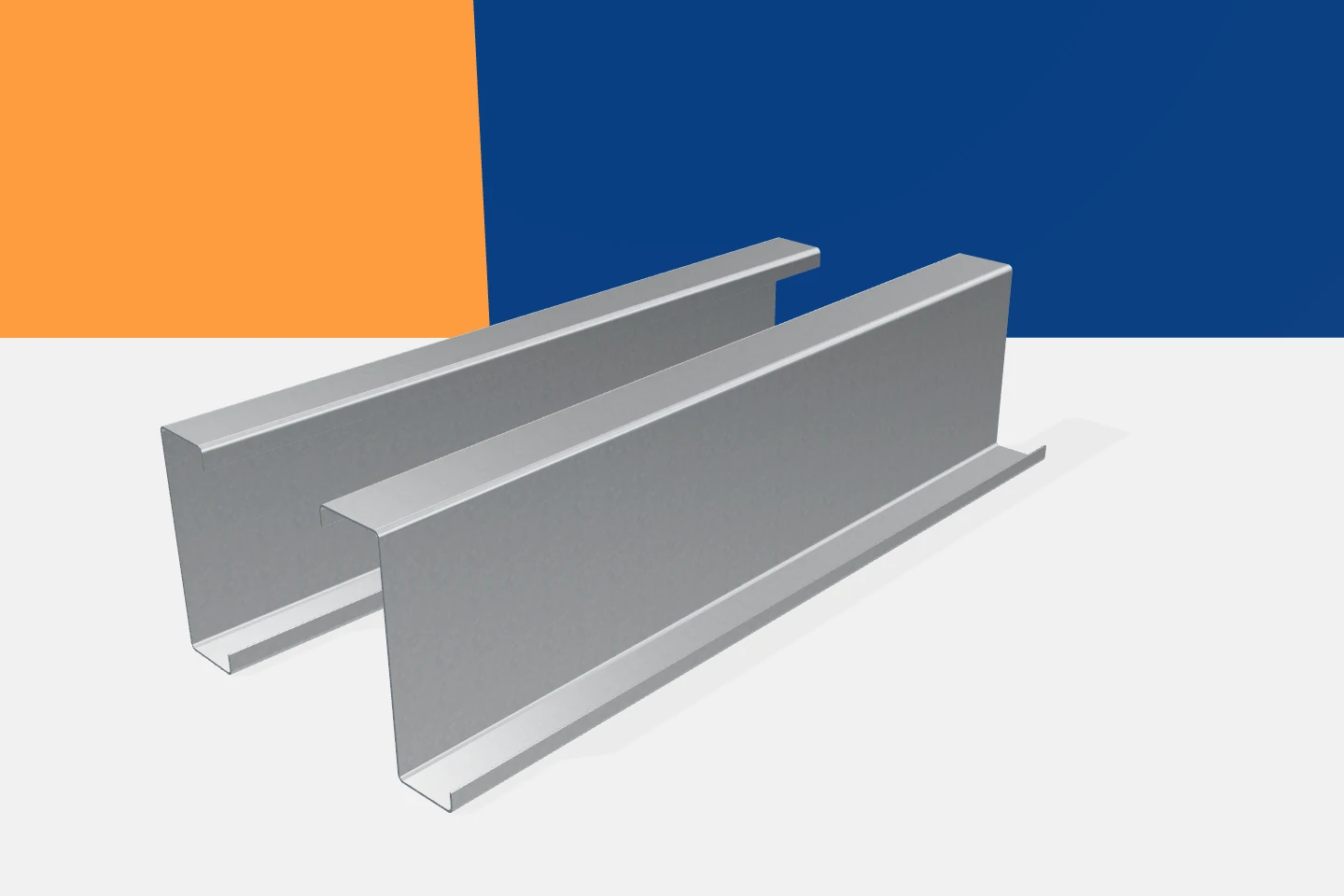
Look at the cross-section, not the long side of the profile
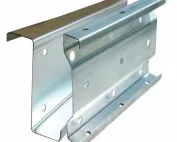
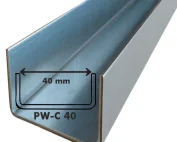
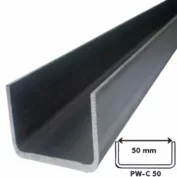
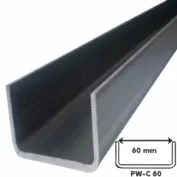
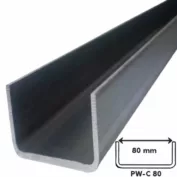
Sigma has a formed web with additional bends. Omega resembles a hat with side flanges. However, there is no single geometry common to all products in a given family. Differences in angles, widths and bend radii can affect installation. An illustrative photo helps identify the type, but does not replace a dimensioned cross-section.
Height is only one of the dimensions
Requests often state only the profile height. That is not enough to specify an equivalent product. The widths of both flanges, the lip lengths and the sheet thickness are needed. For more complex cross-sections, additional bends must also be described. The most reliable basis is a full drawing or an unambiguous symbol from the documentation.
Pay attention to the dimensioning method. An external value is not always the same as a dimension referenced to the sheet centreline. The difference matters for elements that are inserted or joined with an overlap. Missing data should not be matched independently by measuring an indistinct photo. The supplier should confirm the actual geometry of the offered cross-section.
Why are thickness and grade specified separately?
Thickness determines the amount of material and influences the properties of the walls. The steel grade describes other requirements, including strength parameters. These are not interchangeable pieces of information. A thinner profile with a higher grade designation does not automatically become equivalent to a thicker element. All service conditions must be checked.
In a cold-formed profile, the stability of thin sheet sections is important, among other things. Connections and deflections also matter. Replacing a material therefore requires a design assessment. For the buyer, the practical conclusion is simple. The request should state both thickness and grade, rather than leaving one of these parameters to guesswork.
Galvanising describes protection, not shape
Galvanised profiles may have a Z, C, sigma or omega cross-section. The coating designation therefore does not determine the product family. Moreover, cold-formed profiles are also made from other materials and steels with different protection. The words “cold-formed” and “galvanised” should not be used as full synonyms.
The specification needs the coating designation and the conditions of use. A dry warehouse requires different identification from an environment with permanent moisture. It is also worth establishing the protection technology. A profile formed from coated strip and an element galvanised after fabrication are different solutions. A silver appearance alone does not describe these differences.

Match the family to the task
Z-sections often serve as roof purlins. C-sections are found in rails, frames and surrounds. Sigma profiles are also used in beam elements. Omegas are popular in façade substructures. These are typical examples that help start a conversation about requirements, but they do not replace the selection of a specific element.
The final choice depends on loads, spans and supports. Connections and interaction with the enclosure are also important. Load-bearing capacity cannot be determined from the letter in the name alone. The most commonly used profile in one hall need not be the best solution in another. It is worth comparing variants for the same structural task.
What should a request include?
In addition to the cross-section, the length of each segment and the number of pieces are needed. Hole patterns, required tolerances and the method of marking parts must be described. If elements are to be installed in specific zones, it is good to link the numbers to the plan. This will facilitate completing the delivery and later issuing of material.
For a non-standard profile, it is worth attaching a cross-section drawing and a view of the entire element. The file should have a legible version. It should be noted whether the supplier is quoting only for fabrication or also for preparing the documentation. This avoids a situation in which each party assumes a different scope of service. A complete set of data provides a basis for comparing actual offers.
How to assess a proposed substitute?
First compare the geometry, material and coating. Then check whether the connections, hole spacing and bearing surfaces match. The mass per metre alone does not confirm equivalence. Two cross-sections of similar mass may react differently to bending, torsion and local loading.
Any substitution should be approved by the designer of the relevant system. Stock availability is important organisationally but does not determine technical correctness. Well-identified cold-formed profiles are easier to order without mistakes. The buyer then knows which parameters are necessary and which may be the subject of an informed comparison.
7 branches. Materials closer to your project.