Choosing sandwich panels
What does the Polish term “płyta obornicka” mean?
In brief
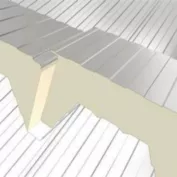
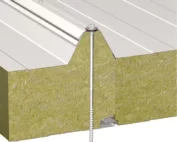
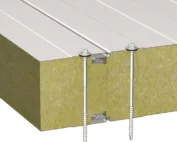
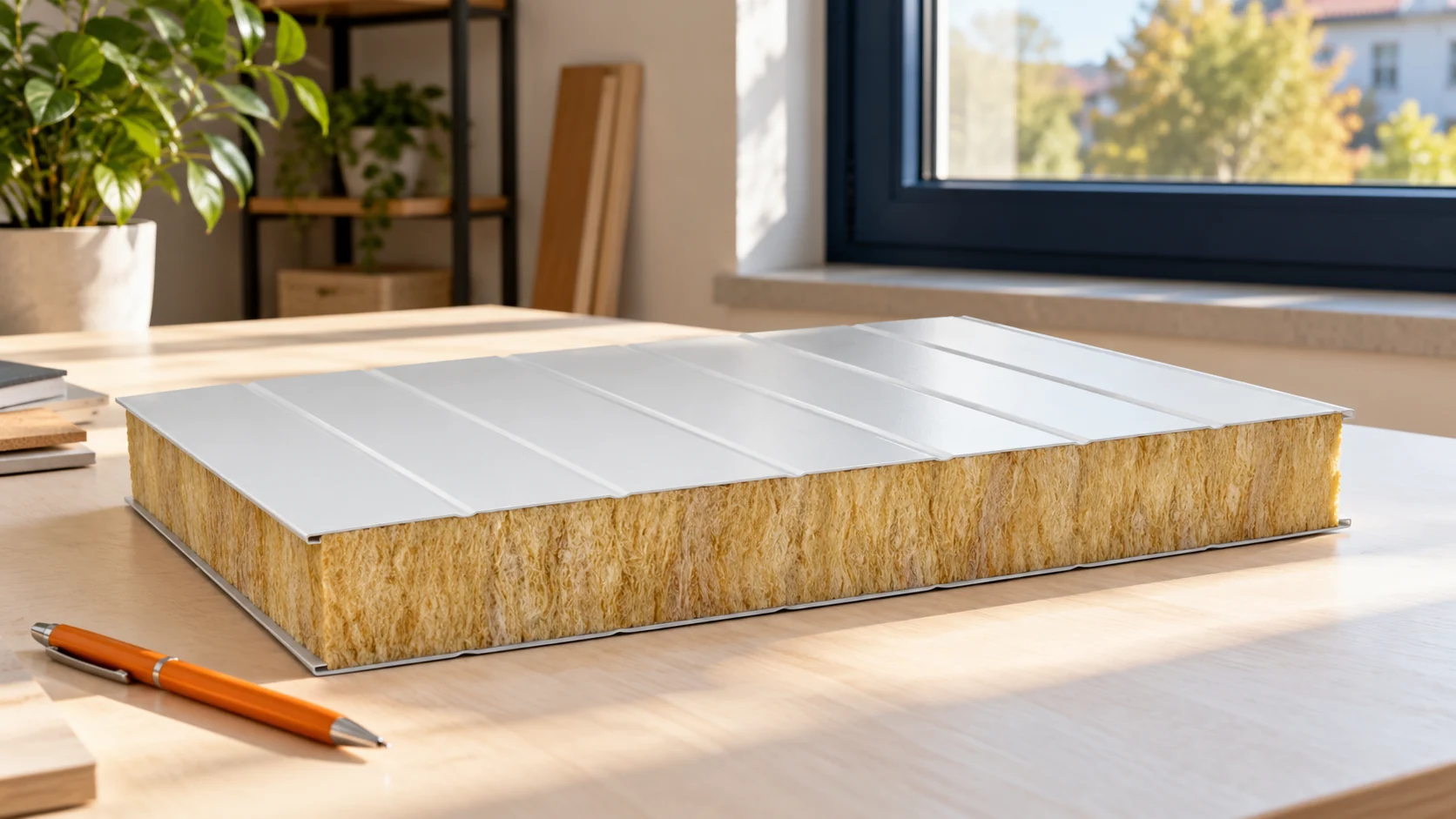
Płyta obornicka is the colloquial name for an insulated sandwich panel. It does not denote a single thickness or a single type of insulation. Such a panel combines facings with a core that contributes to its properties. Before purchase, the intended use, cross-section and method of joining must be identified. A familiar name alone is not enough to select the material. A typical insulated sandwich panel for building enclosure has two facings and an insulating core bonded to them. In many variants the facings are made of protected steel. The core may be mineral wool, foam or polystyrene. The individual layers work together. It is not simply loose insulation inserted between two sheets.
What parts does the panel consist of?
This bond matters when loads are transferred. That is why debonding of the facing from the core is not merely a visual defect. Panels are selected as specific elements with defined dimensions and parameters. There are also products with different facings and purposes. Not every panel with foam should be equated with the same family of wall panels.
How to recognise a wall panel and a roof panel?
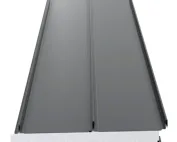
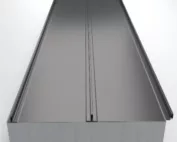
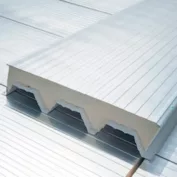
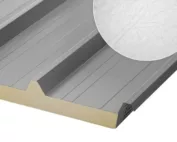
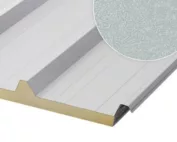
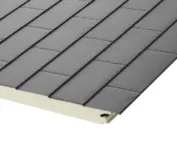
In a typical roof panel, the upper steel sheet has a pronounced profile that helps stiffen the element and channel water. A wall panel often has a smooth or lightly profiled surface. Differences also include joints, fixings and end details. Appearance can be a clue, but the intended use is determined by identifying the specific variant.
A wall panel does not become a roof panel by being laid at an angle. Suitable parameters and sealing details are required. A roof panel, in turn, must be matched to the pitch, supports and loads. When ordering, the name “obornicka for the garage” is not enough. Walls and roof must be described separately, even if they have the same colour and a similar core thickness.
What does the core material change?
The type of core affects thermal insulation, mass and behaviour under fire conditions. Acoustic properties also depend on the entire system. The fire reaction class of the insulation material alone should not be attributed to the complete panel. The fire resistance of the building envelope is another separate issue, related to the specific solution and its installation conditions.
When comparing two cores, use the design objective, not solely the same thickness. If specific thermal parameters are required, compare the variants that achieve them. If fire resistance is important, check the complete wall system and its limitations. There is no single core that is best in every building and across all criteria at once.
What dimensions are needed for an order?
Record the nominal thickness, cover width and length. The overall width may differ from the width increment after two adjacent panels are joined. It is the cover dimension that helps calculate the number of elements per wall. The length is selected according to the installation direction, the spacing of the structure and the agreed end details.
For example, a wall 9.4 m wide requires ten covering modules of 1 m each if the layout provides for full vertical strips. This does not automatically mean ten identical elements without cutting. Doors, corners and the last strip require separate detailing. The area of the opening is not always deducted directly from the area of purchased panels. The material must be matched in specific pieces.

Why is the joint just as important as the core?
At the joints, continuity of insulation and adequate tightness must be maintained. The geometry of the edges and the required seals are important. Panels of the same thickness from different families do not necessarily fit together. This cannot be confirmed solely from the front surface. A cross-section or unambiguous identification is required.
The joints work together with the corner, base and opening details. If executed incorrectly, draughts and local cooling can occur. A large core thickness alone does not remedy such a defect. The flashings are selected for the entire solution, not just the façade colour. The bill of materials should include them from the outset, together with fasteners and tapes.
How to discuss the material without misunderstandings?
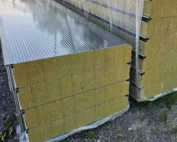
In the enquiry, expand the colloquial name into a specification. State the application, core, thickness, facing profile, colour and number of pieces. Include dimensions and requirements arising from the project. If you are buying a stock or used batch, additionally request identification of the variant and a description of the condition. Do not match technical data on the basis of similarity alone.
Compare the cost of the panels with the full scope of the enclosure: fasteners, flashings, seals and logistics. Pay attention to the method of area settlement. Then the name “płyta obornicka” remains a convenient term in conversation, while the order document states the specific. This avoids a situation where material arrives in the right colour but with the wrong joint or purpose.
Questions before ordering
Does a płyta obornicka always have polystyrene in the middle?
No. The colloquial name covers various solutions. The type of core must be determined for the specific panel, as must its properties.
Is a sandwich panel a finished wall without a structure?
Not in every system. The panel requires adequate support and fixing. The load-bearing capacity is verified for the designed structure.
7 branches. Materials closer to your project.