Sheet metal and roofing
When is second-quality trapezoidal steel sheet worth buying?
In brief
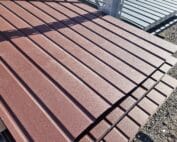
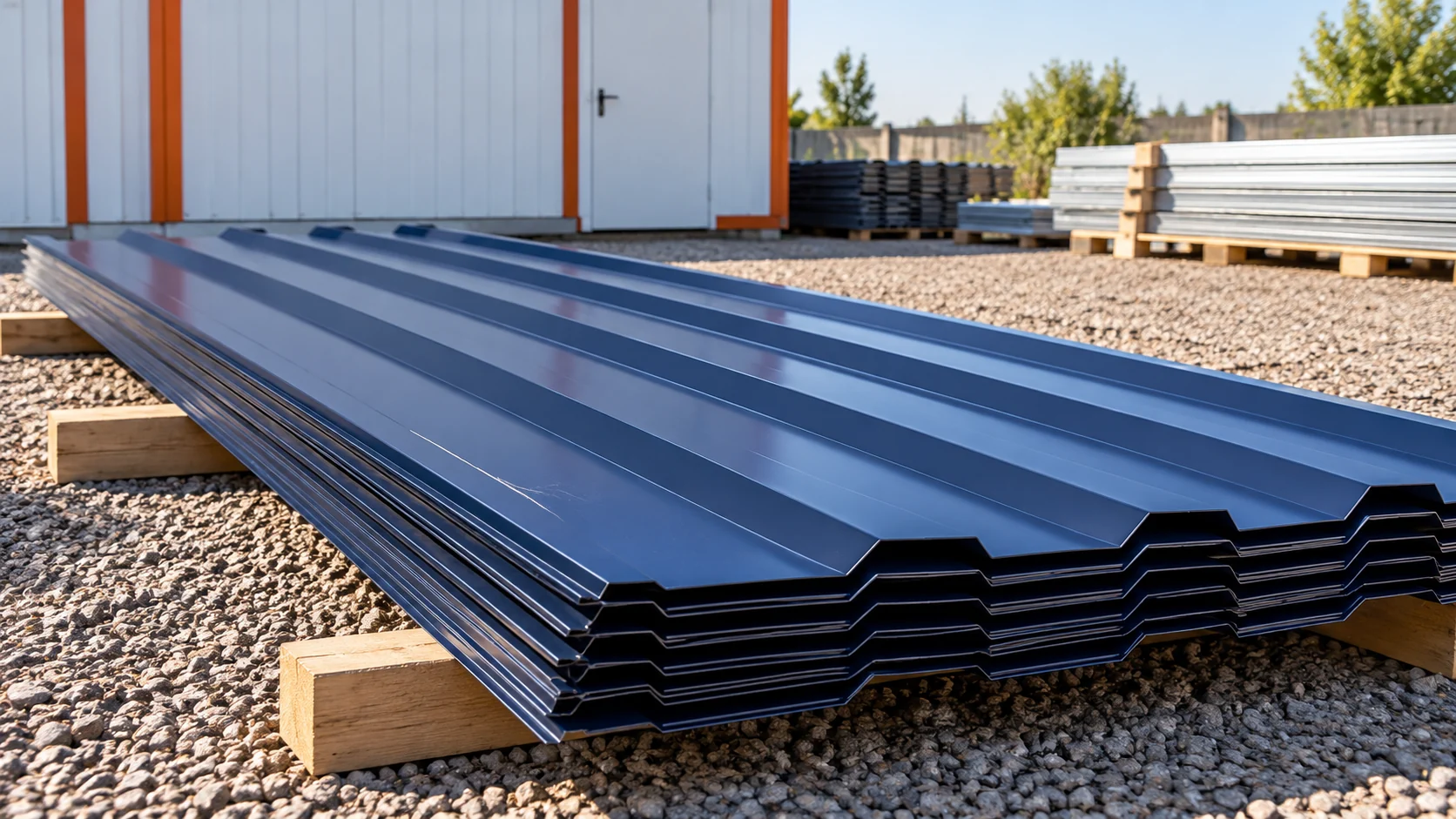
Second-grade trapezoidal steel sheet can lower the cost of a small covering if it has identified defects and matches in dimensions. When buying, also inspect the edges, the underside and the overlap areas. What matters most is the cost of the sheets you will actually use. A discounted batch in random lengths will not always work out cheaper. A slight difference in shade means something different from a broken coating, a deep bend or a deformed edge. Ask for the reason for the markdown. Examine the sheet in light falling along the profile. This angle helps to spot waviness and dents. Also check the surface of the underside, especially if it will be visible inside.
How do you distinguish a blemish from service damage?
Do not assume that all defects can be repaired on site. Straightening the sheet may leave a mark, and a local paint touch-up may differ from the factory coating. Damage in the water runoff path requires assessment for tightness and durability. If the extent of the defect is not clear, comparing the discount percentage alone does not yet provide a basis for a decision.
Will the sheets join into a single surface?
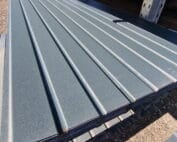
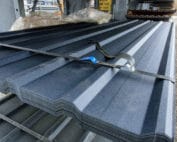
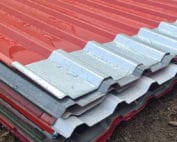
Verify the profile height and spacing, the shape of the side lap and the cover width. The designation T18 or T35 does not guarantee that components from different families are compatible. Compare the cross-sections and the intended use of the variant. Swapping the top side with the underside is not neutral. The coatings and the geometry of application may differ.
On a sample layout, check whether the edges meet without forcing. Do not try to pull together a sheet with an incompatible profile using fasteners. Such a measure can distort the covering and the joints. For a mixed batch, plan groups of material separately for each plane. Separating them at a corner is often simpler than an unforeseen joint in the middle of the roof.
How do you lay out the usable sections?
Mark the location of the defects on the sheet or its sketch. Then apply the required lengths from the project. See whether the damaged section actually falls outside the area of use. Do not shift the laps or flashings solely to hide it. Permissible joints have their own requirements independent of the commercial value of the material.
In a model order, 9 sheets of 3.2 m are needed. A batch consisting of 9 pieces of 3.5 m gives 31.5 linear metres purchased and 28.8 linear metres of length used. A total of 2.7 linear metres is cut off before you account for other losses. This is only an example calculation. The actual cutting plan depends on the defect, the installation direction and the edge detail. A section with a damaged edge may yield considerably less usable material.
How do you compare the price with new sheet?
The price unit and the scope of the order must be standardised. A linear metre of sheet is not a square metre of covering. With a fixed cover width, the conversion results from the product of length and that width. However, the commercial price may be based on the total area, so the billing method must be agreed before comparison.
Add transport, cutting, additional fabrications and sorting time. Compare both options with the same steel thickness and an appropriate coating. A cheaper sheet with different parameters is not an equivalent alternative. Do not count the value of all offcuts as future income. If you have no defined use for them, they remain a cost of the order.

Can more be accepted on a wall?
On a less visible elevation, a slight colour difference may be easier to accept than on the front of the building. This does not mean any condition of the material is acceptable. The wall also carries wind load, and the joints and fixings must perform correctly. Damaged areas of the anti-corrosion protection still require assessment.
For internal cladding, check the service environment and the cleaning method. A material for a dry space need not be suitable for a humid technical room. On the roof, water drainage, slope and joint tightness are added. Whether a given defect is acceptable depends on the function of the specific section, not on a general belief that an outbuilding will ‘forgive everything’.
How to receive and store a batch?
Record the number of pieces and the lengths. On delivery, compare the actual condition with the agreed description. Document visible damage and check whether there is moisture under the packaging. Do not slide the sheets over one another during inspection. Friction may add new scratches to defects that were already the basis for the price reduction.
Store the material in accordance with the conditions appropriate for the given covering. Ensure support, protection from water and the ability to ventilate the pack. Cut using the permitted method and remove swarf promptly. A cutting plan prepared in advance shortens the time the material remains on site. It also makes it easier to check whether every piece has reached the intended section of the building.
Questions before ordering
Can a sheet with holes from previous screws be used?
This requires an assessment of the hole positions and an agreed repair solution. It should not be assumed that incidental sealing will restore the properties of new sheet metal.
Can two different profiles be joined with a standard lap?
This should not be assumed. Incompatible cross-sections require a separate transition detail. The side joint should match the geometry of the sheets.
7 branches. Materials closer to your project.