Profiles and steel structures
Ordering galvanised Z-sections takes more than a height measurement
In brief
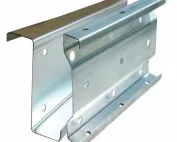
“I need a Z-section of a given height” is a common way to start an enquiry. But further information should follow. Z-sections with a similar external dimension can differ in flange width, thickness and lips. The hole layout may also be different. If the profile is to work with an existing element or fit into a lap, these details become decisive. A good order describes the entire cross-section and its function. The opposing arrangement of the flanges creates the characteristic Z shape. In many systems their widths are deliberately different. This allows suitably matched sections to be joined by sliding the narrower part into the wider one. This detail must be taken from the documentation for the specific solution. Not every Z-profile has identical proportions.
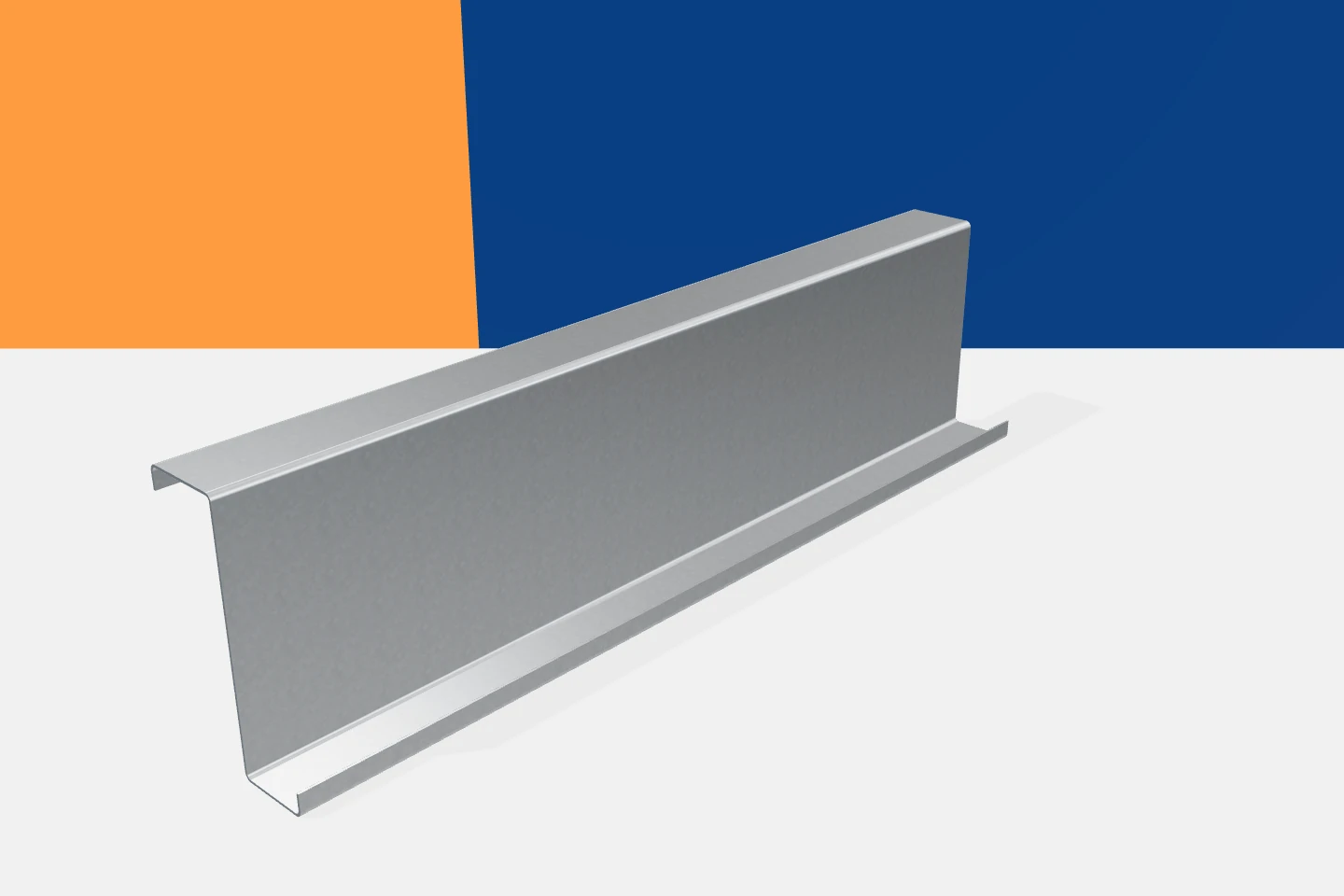
Flanges can have different widths
It is worth giving both widths separately in the enquiry. The designations on the drawing should clarify which flange is which. This also helps when determining the orientation of the hole pattern. Ordering a mirrored part or one with swapped dimensions can make installing the whole purlin run more difficult. Checking the cross-section before production is simpler than correcting a finished delivery.
Z-sections from one product range may retain specific flange proportions at different heights. However, this does not describe the entire market. When looking for a replacement, the relevant drawings must be compared. Matching the height alone does not confirm suitability for the designed lap.
Lips are not an insignificant addition
The final edge bends affect the behaviour of thin walls. Their length and angle are part of the profile geometry. They must not be omitted from the specification or straightened merely to make something fit more easily. Damage to the lip may require the element to be assessed before use in the structure.
Bending radii and the actual sheet thickness are equally important. Cold-formed profiles do not consist of perfectly sharp corners. The drawing should show a solution that can be produced from the selected material. If a non-standard cross-section is required, its feasibility must be agreed with the plant producing the elements.
The length of the purlin depends on the beam layout
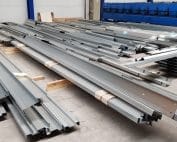
In a lapped arrangement, the profile length covers more than a single distance between frames. Sections over the support or cantilevers may be added. Material should not be ordered by simply multiplying the number of bays by the centre-to-centre spacing. A fabrication schedule with the lengths of the individual parts is required.
The production length does not, however, determine the permissible span. The ability to supply a long section indicates only production and transport capacity. Load-bearing capacity depends on the structural system, the load and stabilisation. This distinction protects against incorrect selection based on catalogue information about maximum length alone.
A lap requires a complete detail
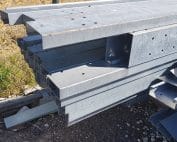
When joining purlins, not only the overlap length of the elements matters. Screws, holes, the connection to the support and the installation direction are also important. All these parts affect the behaviour of the system. A ready-made solution for one system should not be transferred to another Z-section without verification.
When requesting a quote, it is therefore worth asking about the complete set. An offer covering only galvanised profiles may not include the accessories needed for installation. The cost of cover plates, supports and connectors should be considered together. Only then can variants with a similar function and degree of preparation be compared.

The material must be identifiable
The steel grade, thickness and coating should be clearly stated. They must not be assumed on the basis of colour or stiffness felt when handling. The delivery documents and part markings must allow the product to be related to the specification. This is particularly important when similar cross-sections from different batches arrive on site.
Galvanised profiles are not equally resistant to all conditions. The choice of coating depends on the environment and the way the building is used. If the use of the hall changes, the protective requirements should also be checked. The mere use of zinc does not guarantee unlimited durability without inspection and proper maintenance.
Alternatives must be compared within the same task
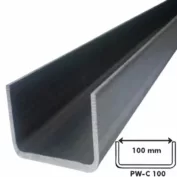
In certain solutions, C-sections and sigma profiles can serve as roof elements. This does not mean replacing one cross-section with another without further changes. The connections and stabilisation conditions may differ. Omega profiles used as a façade substructure are, in turn, not a simple replacement for Z-sections.
The comparison should cover the calculated system, material consumption and installation. It is not enough to compare the price of one metre. A different cross-section may require different supports or accessories. The choice makes sense only when both variants meet the same requirements and cover the same scope of supply.
For elements intended for different spans, it is worth separating the items even when they differ only in the holes. The markings on the packages should correspond to the numbers on the plan. This prevents a visually similar profile from being accidentally issued to the wrong place. This is particularly helpful during deliveries split into stages.
Check the details before confirming production
It is worth comparing the drawing number, lengths, quantities and holes once more. It should be specified how the packages and individual parts will be described. For longer elements, the access and unloading conditions must be confirmed. Not every site has room to manoeuvre freely with a long delivery.
Prepared in this way, the Z-sections arrive on site as specific structural parts. This reduces the number of improvised cuts and modifications. Cold-formed profiles then use their organisational advantage: repeatability and the possibility of preparation for installation at the factory.
7 branches. Materials closer to your project.