Gutters and drainage
How concealed gutters work and where they make sense
In brief
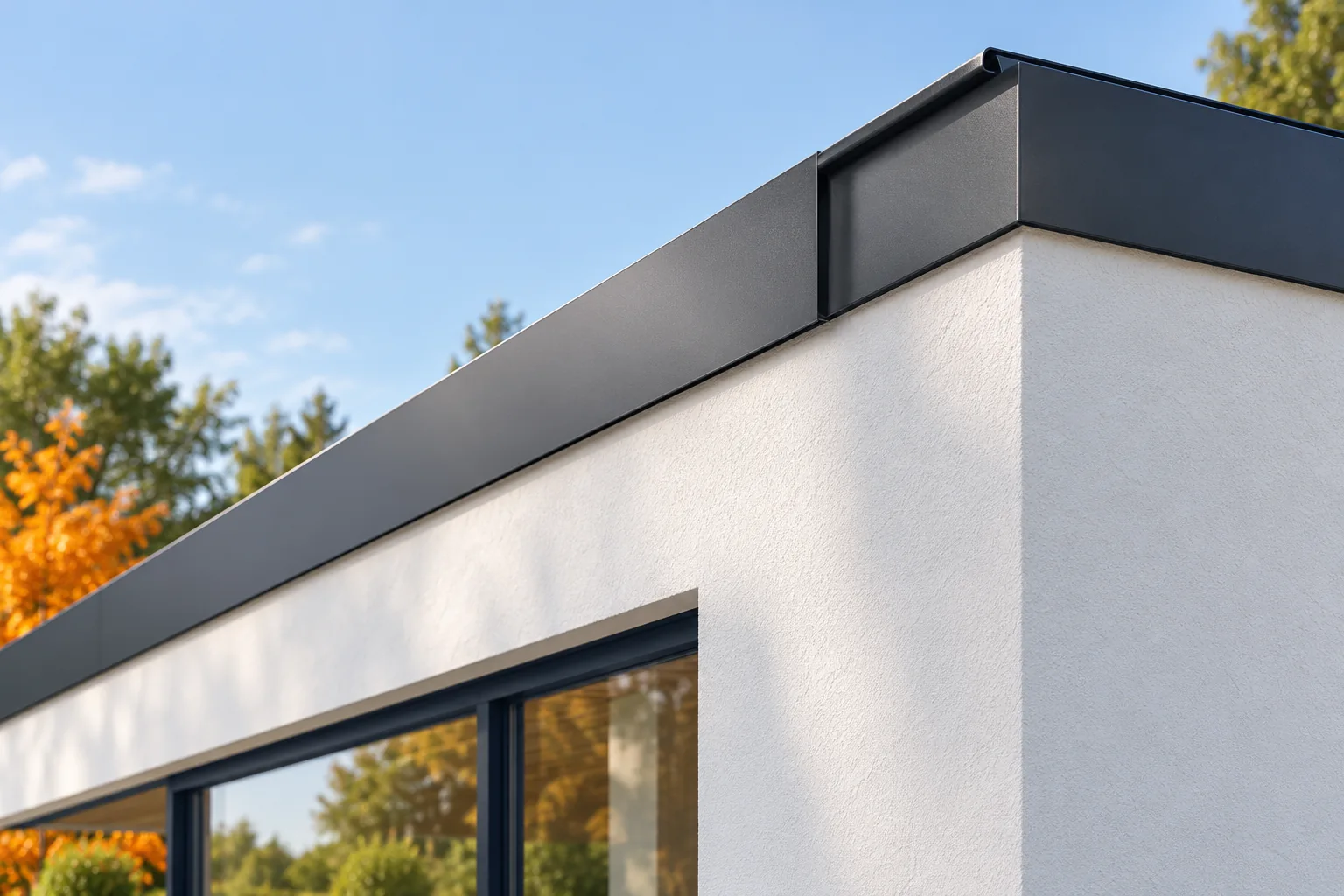
A hidden gutter system works like any roof drainage, but some components are concealed by a cover or cladding. Check whether the path from the roof slope to the outlet is clear, the connections are tight, and service access remains realistic once the façade is finished. It offers the most benefit where the detail can be designed together with the roof and wall, rather than adapted afterwards. Also consider how water behaves if the outlet becomes blocked. The concealed installation still needs inspection and cleaning, so the ability to open access components is essential.
Where does water flow in such a system?
Water reaches the gutter from the roofing through a correctly executed eaves detail. It then flows to the outlet and downpipe, and onward to the designed discharge point. The cover conceals the components but does not change their basic function. If the detail directs part of the water behind the gutter, the cover can only make it harder to notice the problem quickly.
The variant with a concealed gutter does not always have a concealed pipe. Sometimes the downpipe remains on the outside of the façade. In another solution it runs within a specially prepared zone of the wall. Before the quote, it must be established which arrangement is involved. The differences concern not only appearance but also access, connections and the method of assessing any leakage.
Where does a hidden system offer the most benefits?
It is easiest to apply in a new building with a previously developed eaves section. The structure, insulation thickness and façade finish can then be coordinated. The straight line of the cover helps achieve a clean detail. In a building without a clearly projecting eaves, the correct connection between the roof and the wall is particularly important.
During renovation, the available space must first be checked. Concealing a standard gutter behind improvised flashing can restrict its cleaning. It should also be assessed whether the supports need rebuilding or the outlets need changing. It is worth comparing the effect and cost with a well-chosen visible system. Not every existing building form justifies extensive cladding of the drainage system.
What protects the wall when the outlet is blocked?
The design should account for a situation in which water cannot drain by the normal route. Leaves, sediment or ice can reduce capacity. In a concealed system it is particularly important that overflow does not direct water into the insulation and the interior. The required method of emergency drainage depends on the construction of the system and the roof.
Additional holes should not be drilled in the cover without assessing the detail. Such a measure may not solve the problem and may damage the coating or direct the flow to the wrong place. If overflow recurs, it must be established whether the cause is contamination, insufficient capacity, incorrect outlet position or incorrect installation.

How do you combine tightness with cleanability?
Access components should remain openable after the façade is completed. It must be known how to remove the cover and reach the outlet. Where connected to an underground installation, access to the inspection chamber or silt trap is required. Covering them with permanent cladding can make removing a simple blockage considerably more difficult.
A leaf guard requires emptying. It is not a way to achieve a maintenance-free roof. At a house under trees, the amount of debris can be greater than in open terrain. The frequency of checks must be adapted to the conditions and the system’s recommendations. It is also worth inspecting the area around the outlet, as a trace of dampness may indicate a leaking joint.
Photographs taken before the structure is closed help to locate fixings and pipe routes later. It is good to include the system type and a parts list in the documentation. When repairing, a seal or connector should not be selected solely on the basis of an approximate dimension. A small difference in geometry can change the tightness of the assembly.
What mistakes occur at the eaves?
One problem is the blocking of the ventilation inlet under the covering. The desire for a completely smooth line does not justify closing the required gap. In a ventilated roof, the air should have a designated path. At the same time, proper drainage of moisture from the underlay must be ensured. It must not reach the timber or insulation.
A second problem is assuming a universal slope and hook spacing. Different systems have their own instructions, and some systems with a cover allow a horizontal gutter. This assumption should not be changed independently. Joints must also allow for movement resulting from temperature changes. Accidental rigid screwing of components can be harmful.
What should be checked at handover and during use?
Acceptance should cover flow, joints, fixings and service access. A straight cover line alone does not confirm that drainage works. It must be checked that no swarf or cuttings remain after installation. It is also worth agreeing who will carry out the inspection of places inaccessible from a safe level. Cleaning should not require an improvised entry onto the roof.
During use, react to unusual dripping, dampness on the façade and overflowing water. First, the cause must be found. A concealed system is practical when its simple appearance does not hinder inspection. A well-developed detail combines drainage, ventilation and maintenance, and the owner knows where to look and how to commission cleaning.
7 branches. Materials closer to your project.