Installation and workmanship
Choosing a practical roofing course
In brief
Good roofing training should let you carry out and check important details yourself. A display of a finished roof is not enough. Before signing up, establish which system the course covers, how much time is set aside for practical work and whether mistakes are discussed. Exercises linked to the current instructions, real material and safe working conditions provide the greatest value. First determine what you want to learn. Installing modular tile-effect metal roofing requires different exercises than building a hall cladding from insulated sandwich panels. The details of low trapezoidal steel sheet and high structural sheet also differ. General training can organise the basics, but it does not replace learning the seams, fasteners and installation sequence of a specific system.
How to match the topic to the jobs you carry out?
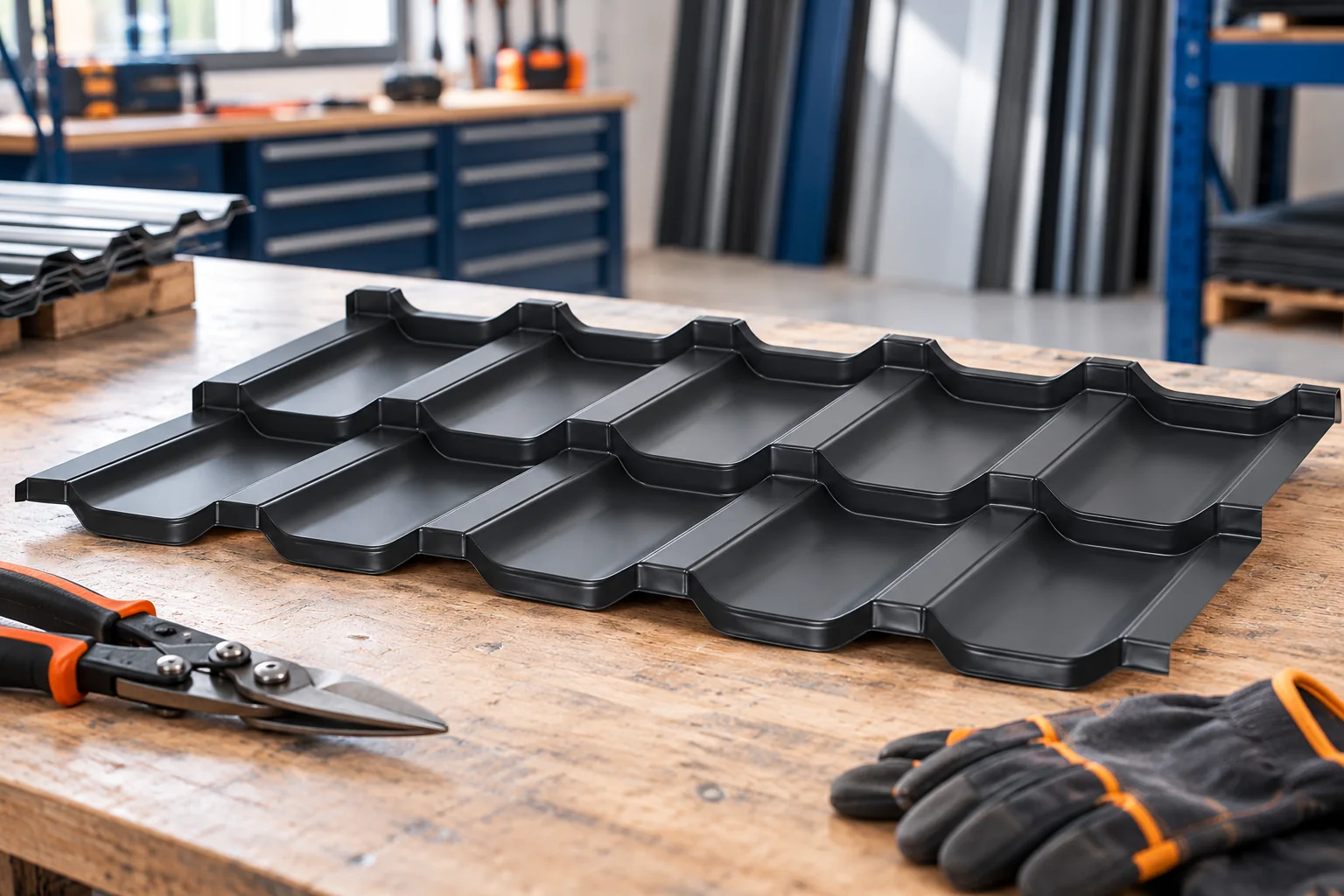
First, determine what you want to learn. Installing modular tile-effect metal roofing requires different exercises than constructing a hall enclosure from insulated sandwich panels. Similarly, the details for low trapezoidal steel sheet and high structural sheet differ. General training can organise the basics, but it does not replace learning the seams, fasteners and installation sequence of a specific system.
Present typical orders and problems you encounter to the organiser. This may concern the eaves, roof valley, chimney or the airtightness of insulation joints. This makes it easier to assess the programme. Sessions devoted solely to the appearance of a new product will give less to someone who needs to practise repairing a difficult detail. The training objective should be verifiable after its completion.
What should the practical part include?
The participant should have access to a workstation and make a connection with their own hands. For modular covering, exercises on the first row, folding sheets and fastening are useful. It is also worth going through flashings and the areas at the end of the roof slope. Simply screwing a few elements in the middle of a flat model does not show all the difficulties encountered on site.
Good practice includes identifying substrate defects and checking dimensions before installation. The instructor should explain which corrections can be made and which require agreement with the designer. For sandwich panels, exercises in safe lifting and sealing joints are also needed. Successful installation is often determined by preparation, not by the speed of screwing.
How to assess the documentation and tools?
Ask which version of the instructions the training is based on. A system may change details, and old training material does not always correspond to the current product. The participant should learn to find the correct data instead of memorising a single number of screws or support spacing. The instructions and the design documentation have different tasks and you must be able to use them together.
During the exercises, it is worth comparing the tools approved for cutting sheet metal and the method of removing swarf. The selection of screws for the substrate and checking the seal compression are also important. The ability to recognise incorrect fastening will be useful more often than knowing the name of the most expensive screwdriver. The tool should help to execute the required detail, not replace understanding of it.

Why must mistakes also be shown?
On a well-prepared model, many operations look simple. On site, there are uneven roof slopes, lack of space, incorrectly measured sheets and collisions with installations. The training should show how to recognise such situations before covering the layers. An analysis of an incorrect overlap, damaged coating and blocked ventilation is useful.
It is important that the instructor explains the cause of the error. A leak may result from the geometry of the flashing rather than from a lack of additional sealant. Stains may be the result of condensation and not solely rain. Understanding these differences helps to choose the right repair. Without it, the installer can easily perpetuate the problem by adding further layers of material in the wrong place.
What is the importance of safety during the training?
The exercises should not teach shortcuts that will later be repeated at height. What is needed are rules for lifting materials, protecting sharp edges and organising the workstation. When working on a roof, collective protection, a proper personal protection system and the ability to provide assistance all matter. Simply putting on a harness does not mean that the work has been organised safely.
Ask whether the programme includes stopping work in unsuitable weather. A long sheet or panel can behave dangerously in the wind. It is worth practising team communication and the order in which material is set down. These skills affect both the protection of people and the avoidance of dents, scratches and damage to the seams.
What should you do with the knowledge after the training?
Keep the materials and draw up a short checklist for the first job in a given system. You can divide it into substrate acceptance, installation, details and final cleaning. Write down the questions that arise on site and clarify them before executing a disputed joint. A certificate of participation does not replace experience, but well-conducted exercises help to gain it consciously.
When choosing further training, assess what has actually changed in your work. Do you read the instructions more easily, recognise an error earlier and can you justify the installation method? This is a better measure than the number of sessions attended. In roofing, knowledge must be updated together with products and documentation, especially when the scope of the jobs you carry out changes.
7 branches. Materials closer to your project.