XPS insulation
XPS under underfloor heating. What is worth planning?
At a glance
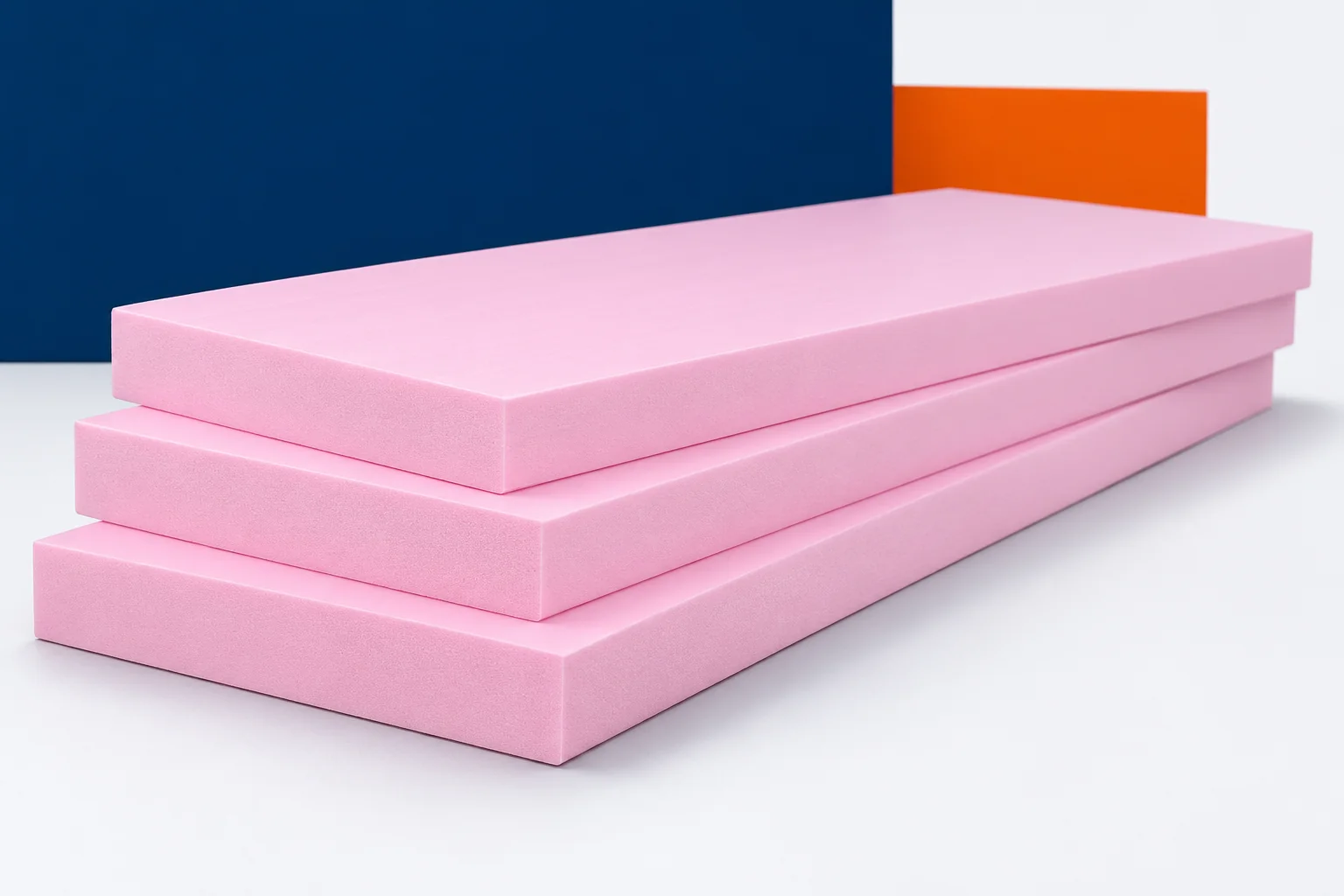
Underfloor heating should deliver heat into the room, while the insulation beneath it limits losses in the opposite direction. XPS can form part of such a floor if it meets the requirements of the whole system. Extruded polystyrene combines thermal properties with a rigid board form. This makes it easier to prepare a level layer for the subsequent components. However, selection involves more than just the lambda value. The substrate, loads, fixing of the installation and the available build-up heights must be taken into account. The heating pipe or cable releases energy to the surrounding layers. The greater the thermal resistance below the installation, the harder it is for heat to flow downwards. XPS can increase this resistance in line with its thickness and lambda value.
Insulation helps to control the heat flow
Correct selection helps to limit unwanted losses. However, it does not mean that the insulation alone determines the heating output or the temperature of the finished floor surface.
Extruded polystyrene must be considered together with the screed material and the finish. Their properties affect the transfer of heat into the interior. XPS does not replace the calculation of the system, the pipe spacing and the operating parameters. In a house on the ground, the entire floor construction must also be assessed. The choice of the layer beneath the underfloor heating should therefore result from coordinating the thermal, structural and services design.
The thickness is determined before the door threshold level
Beneath the underfloor heating, space is needed for the insulation, the installation and a screed of adequate thickness. The finish is added on top. XPS should be included in the height budget before thresholds are installed and joinery is ordered. This means the thermal layer does not later have to be reduced in order to fit all the elements in. The cross-section should be checked separately in rooms with different floor coverings.
Extruded polystyrene is available in various thicknesses, which makes it easier to match the design. However, the lambda value for the board being ordered must be checked in the documentation. XPS that looks similar does not always have the same thermal resistance. The comparison should relate to a specific variant. If several layers are planned, their arrangement must comply with the design and with the permitted use of the material.
The substrate transfers the load to the boards
A floor with underfloor heating remains a loaded floor. Furniture, users and heavier items of equipment matter. XPS is selected together with the layer that distributes the forces. The compressive stress at a specified deformation is helpful, but it is not a ready-made permissible load. Depending on the application, deformation under long-term load must also be checked.
The rigid form of the boards helps to create an even layer if the substrate has been prepared correctly. Extruded polystyrene should not bridge over voids or rest on individual high spots. XPS is laid precisely against walls and installation routes. Good support helps to preserve the intended behaviour of the screed. However, it does not replace its correct thickness, reinforcement or other requirements arising from the technology.
Pipe fixing must match the system
A smooth XPS board is not automatically a ready-made system board for fixing pipes. The method of keeping the installation in the correct position must be selected in accordance with the heating solution. Separate fixing elements and separating layers may be present. Their compatibility must be checked before installation begins. This ensures that the pipes remain at the planned height also during the execution of the screed.
Extruded polystyrene is easy to cut around conduits, but a predictable supporting layer must be maintained. Deep, accidental grooves in the XPS can reduce its thickness or leave voids. Penetrations through movement joints and zones at the manifold require their own solution. It is worth marking them on the plan so that the concentration of installations in one place does not force an uncontrolled change in floor level.
Temperature and moisture remain part of the selection
The range of service temperatures must be checked for the specific XPS. The temperature of the board in the designed floor depends on the position of the layers and the operation of the installation. It should not automatically be equated with the flow water temperature. The system should comply with the requirements of the materials and the heating system. This also applies to adhesives, films and the other components present in the cross-section.
Low water absorption is a beneficial property of XPS, but it does not replace waterproofing where waterproofing is required. A floor on the ground requires protection against moisture in accordance with the design. In a bathroom, sealing measures related to the use of the room are also required. These layers have different tasks from thermal insulation. Combining them correctly makes it possible to use the advantages of the material without mixing up the functions of the individual elements.
Joint acceptance before the screed is installed
Well-known manufacturers of XPS include Austrotherm, Synthos and swisspor. The material is selected according to the required thickness, mechanical properties and conditions of use. The name styrodur is a colloquial term that does not describe compatibility with the heating installation. It is worth approving the specific product before delivery and passing its requirements on to the team carrying out the heating work, and not only when the pipes are being laid.
Before covering, the XPS, the fixing of the installation, the levels and the planned expansion joints are checked. Inspection of the heating system itself is carried out in accordance with its technology. Extruded polystyrene can create an effective layer that limits heat losses beneath the heating. It delivers the most benefit when it works together with a correctly executed base and finish. Planning these elements together makes for easier, efficient installation and subsequent use of the floor.
7 branches. Materials closer to your project.