Maintenance and safety
How to refresh the appearance of a metal roof
In brief
Begin by establishing whether the deterioration in appearance affects the entire roof slope or only the areas around the chimney, branches or installations. A recurring run-off mark often points to the source of soiling higher up, so cleaning alone will give a short-lived effect if the cause is not corrected. Before commissioning a renovation, look at close-ups of different sections of the roof to distinguish deposits from damaged coating and to check tightness. Choose the scope of work after inspection, taking the type of steel finish into account.
What causes a poorer appearance of the roof area?
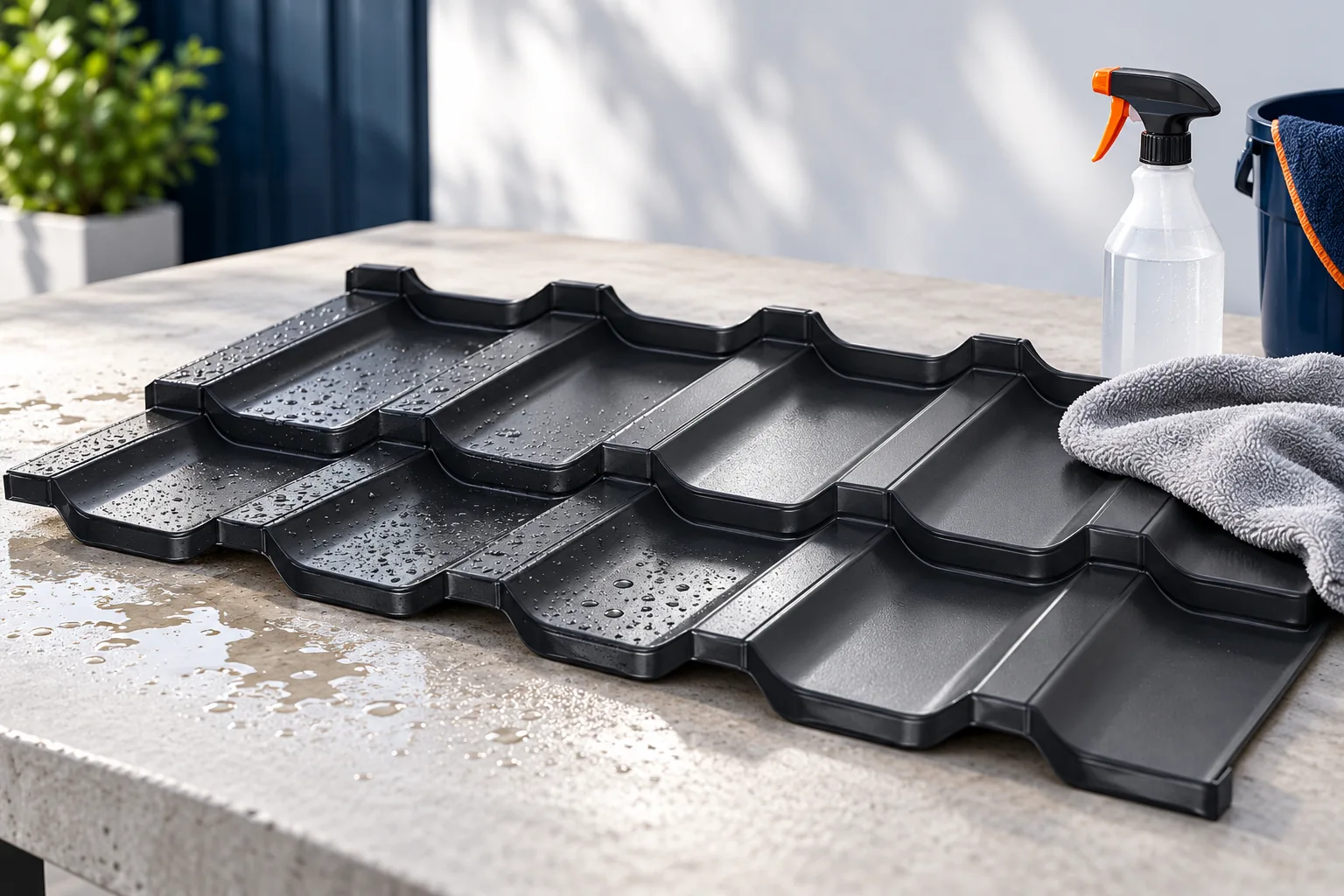
Dust, leaves and streaks can weaken the uniform appearance even of a sound covering. In shaded areas, dirt tends to persist longer. Scratches, chipping and corrosion are another problem. Before ordering renovation, it is worth looking at close-ups of different parts of the roof. A single photograph taken from the street usually does not allow the cause to be identified.
Check whether the change affects the entire roof slope or only areas under the chimney, branches or installations. A repeating run-off trace may indicate the source of soiling higher up on the roof. If the problem stems from faulty drainage, cleaning alone will give only a short-lived effect. The cause should be corrected first, and only then should the surface appearance be evened out.
When is gentle cleaning sufficient?
If the coating remains continuous and well adhered, removing deposits can significantly refresh the roof. The method must be matched to the finish. Soft tools and products in line with the recommendations are used. An overly strong preparation or aggressive rubbing can create a matt patch that is harder to repair than the original film.
It is worth carrying out a test on a small area. After cleaning, the surface should be rinsed thoroughly. The water jet should not be directed under the laps or into the seals. Work at height requires proper access and safeguards. Do not step onto wet sheet metal just to check by hand whether the dirt can be wiped off.
What should be done about a local scratch or chip?
The damage must be assessed for depth and the presence of corrosion. A minor repair requires a compatible touch-up system and preparation of the substrate. An incidental paint in a similar colour may adhere poorly or stand out by its gloss. The aim is to protect the specific area, not to spread a large patch over the undamaged coating.
For deep or extensive damage, spot painting alone may not be sufficient. The condition of the steel and the surroundings of the fasteners should be checked. Sometimes replacing the element is more sensible. Do not assume that a fresh coat of paint restores the original load-bearing capacity or tightness of a sheet that has losses and performs incorrectly.

How can the appearance of flashings and accessories be improved?
An uneven barge board, a dirty gutter or a poorly fitted chimney flashing can worsen the perception of the entire roof. It is worth checking their line, fixings and connections. A small scope of work in visible areas is sometimes more effective than changing the colour of the whole roof slope. However, aesthetic repair should preserve proper drainage and ventilation.
If you are replacing an accessory, compare a physical sample with the existing covering. The same colour code does not guarantee an identical shade after years of exposure. Gloss level can also create a difference. Sometimes a deliberately chosen, subdued contrast gives a better result than an inaccurate attempt to recreate the old colour on one large element.
When should you consider repainting the whole roof?
Such a scope requires identifying the old coating, its adhesion and the condition of the substrate. The appropriate preparation and painting system must be selected. Washing and applying any metal paint is not enough. If flaking lacquer remains under the new layer, the fresh finish may come away with it.
The quote should cover cleaning, removal of inconsistent layers, corrosion protection and areas requiring repair. Weather conditions and drying time are also important. Before changing the colour, check any restrictions arising from the local development plan or building protection, if applicable. Not every aesthetic decision is independent of such provisions.
How do you maintain the refreshed look?
After the work is completed, remove material residues, swarf and dirt from the gutters. Record the products used and the repair locations. This makes it easier to assess at the next inspection whether the problem is returning. Also check shaded roof valleys and the area around the chimney. Accumulated deposits retain moisture and can change the operating conditions of the coating over time.
A well-refreshed roof should look consistent with the façade but remain easy to maintain. There is no need to cover every minor sign of wear with a thick layer of paint. The best scope of renovation follows from the condition of the material. Cleaning, proper repair of details and regular inspection give a more durable result than superficially masking the causes of soiling.
Check the colour choice on a physical sample and in daylight. A photo on a screen does not faithfully show the shade or the degree of gloss.
7 branches. Materials closer to your project.