Insulation and PIR
When should you choose PIR 120 × 60 cm and when a 120 × 240 cm board?
In brief
A large board reduces the number of joints, while a small one makes work easier in tight spaces. The choice of PIR format should be determined by the dimensions of the building element and the transport route. A distinction must also be made between the external dimension and the coverage area after the edges are joined. Simply dividing the number of metres of wall by the board area can result in too small an order. The 120 × 60 cm format is nominally 0.72 m². The 120 × 240 cm format gives 2.88 m², i.e. four times more. These figures describe rectangles with the given dimensions. If the edges overlap, the actual coverage may be smaller. Dimensions specific to the selected product are required.
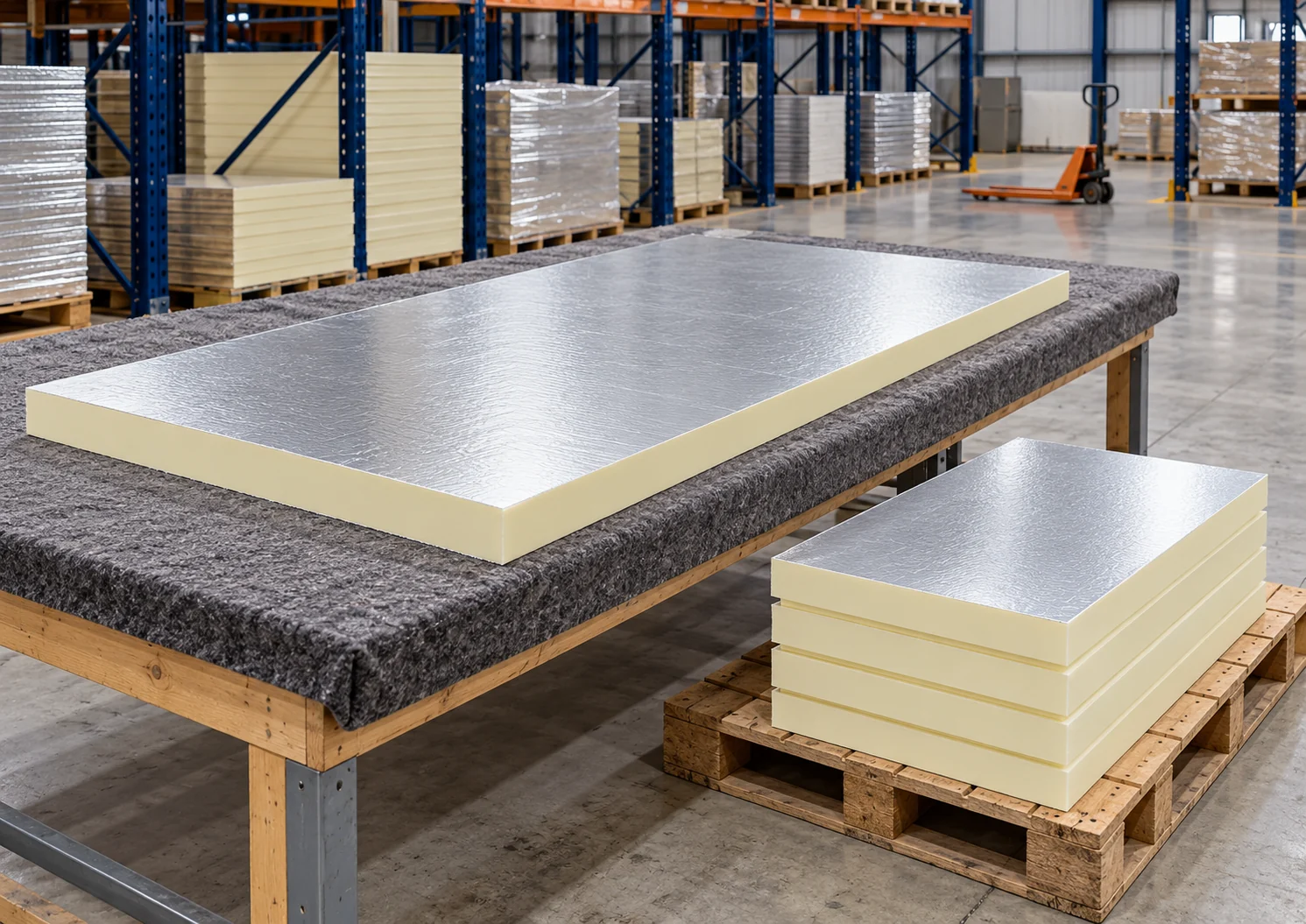
How do you compare the nominal area of both formats?
Not all types of facing are available in both formats. Plasterboard, a composite element with plasterboard and aluminium-faced insulation may have different dimensions. First the solution suitable for the building element is chosen, and only then the available format. Transport convenience should not force a non-compliant material.
When does a larger board simplify the work?
On a large, regular surface, the larger format reduces the number of joints to be made. It can facilitate efficient covering of long runs. However, it requires space for handling, positioning and cutting. The number of people and the method of safe manoeuvring must be planned.
A large element does not solve substrate unevenness. If the wall requires preparation, it must be carried out regardless of the format. Otherwise the board may not perform in the intended fixing arrangement. Fewer joints is only an advantage when the other installation conditions are met.
Where does the small format prove more practical?
Narrow stairs, a low basement and a small room can restrict the turning of a 2.4 m element. The 1.2 × 0.6 m format is easier to carry into a garage located behind the house. It may also fit better into short fields between windows. However, a larger number of joints must be counted.
In a sample renovation in Mogilno, the route to the room may lead through a bend in the corridor. This is a model situation showing the importance of measurement. Before ordering, it is worth checking not only the door width but also the space needed to turn a large rectangle.
How do you draw out a wall with openings?
Draw the wall area and insert the actual dimensions of windows and doors. Lay out the format grid in accordance with the system requirements. Check the position of joints at the corners of openings. Do not plan the layout solely to use up the most small offcuts.
Assess which cut-off parts are suitable for reuse. A fragment without the required edge or too narrow for correct fixing is not a full-value module. In the schedule, mark the location of each cut. This allows you to distinguish real savings from material that will simply remain on site.

Why doesn’t the number of boards follow from the area alone?
For 24 m² of area, a simple division by 0.72 gives 33.33. Therefore at least 34 nominal small boards are needed, even before analysing overlaps and cutting. With the large format, 24/2.88 gives 8.33, i.e. at least 9 pieces. This is only the lower limit resulting from the area.
The actual layout may require more. Losses depend on the shape of the surface, edges and openings. Do not use a single percentage allowance as a substitute for a drawing. With a small number of boards, even one additional piece significantly changes the purchase area.
How should joints and airtightness be planned?
The method of connection depends on the edge and the system. A groove does not automatically replace all tapes or seals. With insulation from the interior, the continuity of the appropriate layer is important also at the perimeter. The large format reduces the number of connections in the field, but does not eliminate joints at windows.
Before installation, prepare the correct accessories and the sequence of work. Some connections must be made before the next element is pushed into place or covered by the finish. The choice of format should support this plan. Later searching for access to a closed joint may mean dismantling.
How to order and store boards without losses?
In the order, specify the facing, thickness, format and type of edge. Determine the number of pieces per pack and the area adopted for settlement. Two offers described as per square metre may account differently for nominal dimensions and coverage. It is worth clarifying this before purchase.
Prepare a dry, level place and protect the corners during transport. A crushed edge can hinder correct connection. Do not lean large boards in a way that leads to their deformation. Acceptance should also cover the condition of the facings, not only the number of packs delivered.
Questions before ordering
Do four small boards always replace one large one?
They have the same nominal area at the given formats. However, the actual coverage, number of joints and the possibility of using offcuts may differ.
Does a large format mean a lower cost for the finished insulation?
It may reduce the number of joints, but requires checking the cutting plan and transport. The price of the entire job also depends on fixing and finishing.
7 branches. Materials closer to your project.