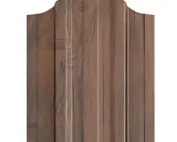
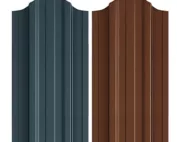
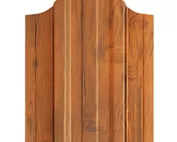
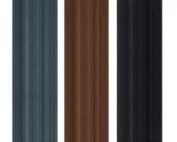
Metal pickets and fences
Fence picket width: calculating spacing and material quantities
In brief
Picket width affects the rhythm of the bay, the number of elements and how the gaps are distributed. However, it cannot be assessed without the gap. A wide profile set more loosely can give a different impression than a narrow picket laid very densely. In offers, several different widths describing the same product are also found. Therefore, before calculating the order, it is necessary to establish which value refers to the finished infill. This is a simple step that protects against a serious quantitative error. The blank is the strip of sheet metal that goes for profiling. Part of it is allocated to bends and pressings. The finished picket is therefore narrower than the flat strip before processing. In one real configuration, a strip of width 156 mm yields a profile of width 115 mm. Therefore, pickets should not be counted according to the value describing the raw material.
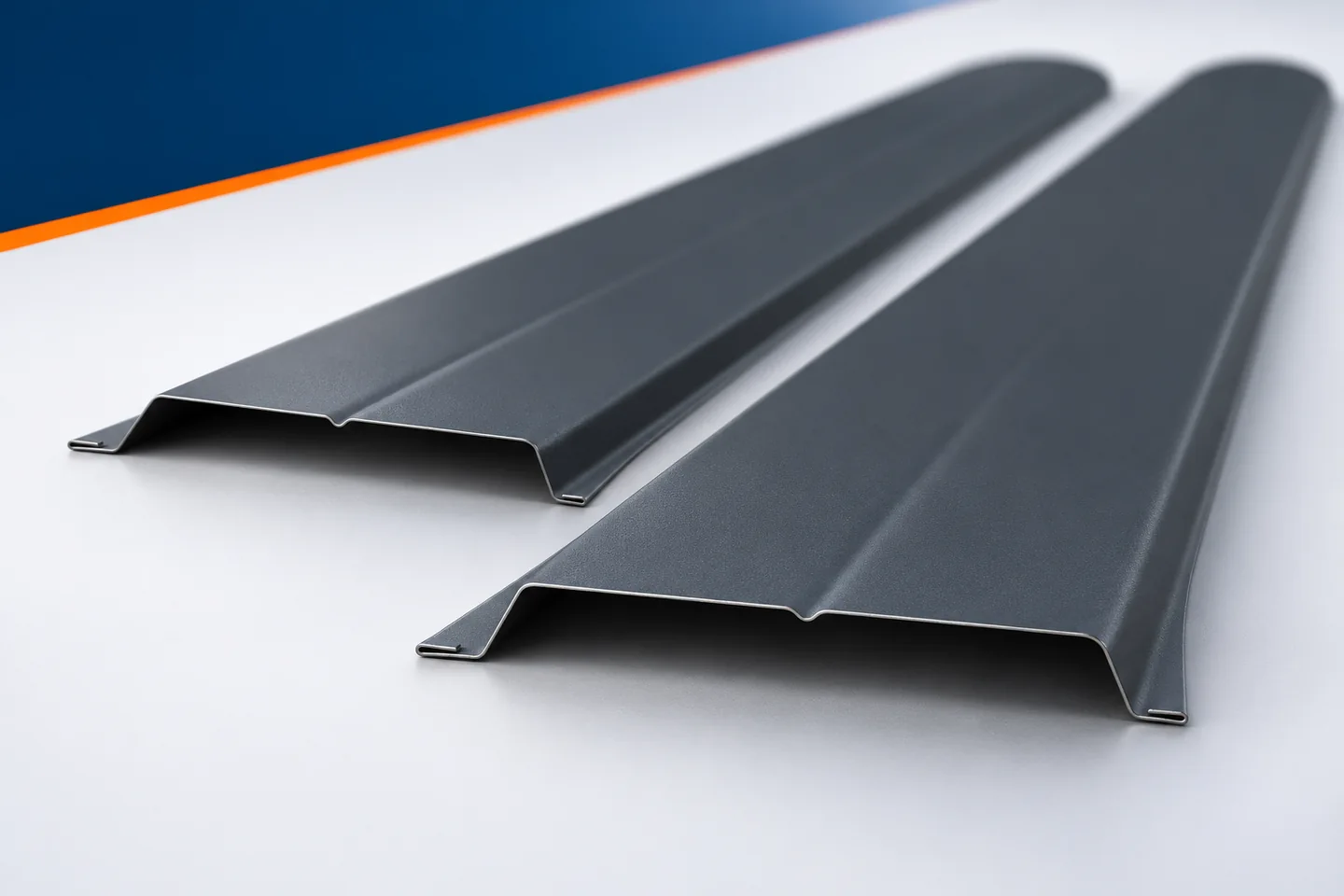
The blank width is not the width on the fence
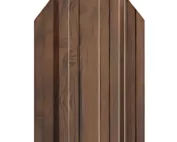
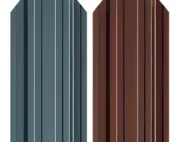
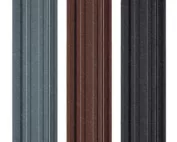
In the documentation, look for the width of the finished element, total or usable, as described for the given product. For many pickets these two values are the same, but it is not worth assuming this without checking. Metal pickets can have different edge shapes. A cross-section drawing with a clearly marked dimension is helpful. If two documents give different values, pause the final calculation until the variant is clarified. Even a small difference repeated across many elements changes the width of the entire field.
Compare the module composed of picket and gap
The rhythm of a long section is roughly described by the sum of the picket width and the gap. With a 100 mm picket and a 25 mm gap, the module is 125 mm. With a 115 mm picket and the same gap, it increases to 140 mm. The number of repetitions over the same length therefore changes. This is a simple geometric calculation that helps compare variants.
For the exact quantity, add the edge gaps at the posts. Therefore, the result from the total fence length is only indicative. The number of pickets should be determined for each field. A narrow gate and a long span may need a different distribution of edges. Without this correction, the last gap often turns out accidentally wide or too small.
The sheet metal share can be estimated geometrically
For a repetitive single row, the share of picket width in the front view can be approximated by b divided by the sum of b and s. The symbol b denotes the picket width, and s the gap. With 100 mm and 25 mm, the result is 0.8, i.e. 80%. This calculation describes only the rhythm, excluding posts and edge fields. It is not an assessment of privacy or wind load.
The profile has depth, and the observer looks from various angles. Visibility through the fence therefore does not result solely from the percentage of occupied width. This simple share should also not be used as a coefficient for structural design. Proper data are needed for selecting posts and fastenings. The calculation only helps to consciously compare the visual density of layouts.

A wide picket does not always mean lower cost
A wider profile may require fewer pieces. At the same time, an individual element may have a different price, weight and fastening requirements. Therefore, comparing the prices of a single picket alone does not give the full picture. Its length, spacing method and number of connectors must be taken into account. It is also important whether the price refers to a piece or a linear metre of material.
For a preliminary comparison, assume the same fence length and a similar intended effect. Then calculate the full spans for both variants. Metal pickets of a different width may require adjusting the number of elements at each post. The result should therefore be compared only after the layout has been worked out. There is no universal rule that a wide profile is always more economical.
Match the scale to the span length
In a short run, a wide picket width means few repetitions. Each end gap then becomes a strong visual element. In a long span, narrow metal pickets create a denser rhythm. Both solutions can look good, but they need different proportions. It is worth viewing the whole layout rather than choosing a product from a close-up photo of a single picket.
When comparing samples, keep the same scale. A photo of a wide profile taken from a greater distance can appear similar to a narrower one. Use actual dimensions on a simple sketch. Pay attention to the top finishes, the base and the background colour. These help you assess whether the rhythm will be calm or too fragmented for a specific location.
Choose the width before the final order
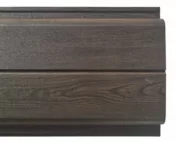
Changing the profile at the end of preparations requires recalculating quantities. It is not worth assuming that the new width will automatically fit the old plan. Also check the compatibility of accessories and the fixing method. Particularly in a horizontal layout, the cross-section dimension affects the relationship to the battens and covers provided in the system.
Metal pickets offer great freedom in composing a fence, but width is both a technical and an aesthetic decision. Choose it together with the gap, span length and structure. A well-calculated variant helps avoid shortages and random end pieces. It also makes it easier to compare material quantities without confusing the input width with the dimension of the finished picket.
7 branches. Materials closer to your project.