Steel profiles and structures
Sigma or channel sections? Comparing cold-formed steel profiles
In brief
A more complex cross-section is not necessarily the best in every structure. Sigma profiles have additional web bends, while C-sections have a simpler geometry. Both solutions can be useful if they match the working conditions. However, a reliable comparison requires a common task. You need to know the span, loads, support method and expected use. Only then do mass and price start to say something about cost-effectiveness. Roof purlins should be compared with purlins of the same required function. A wall rail working in a different arrangement is not a good reference point. The spacing of elements is also important. A lighter single profile does not have to mean a lower mass for the whole structure if more of them have to be used.
Determine what you are actually comparing
When comparing, it is worth keeping the same requirements for deflection and durability. Both directions of wind load should also be considered where relevant. Without such assumptions, you get a comparison of different solutions with different tasks. A low price for one item then does not determine the outcome of the investment.
Additional bends have a specific role
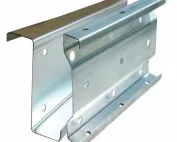
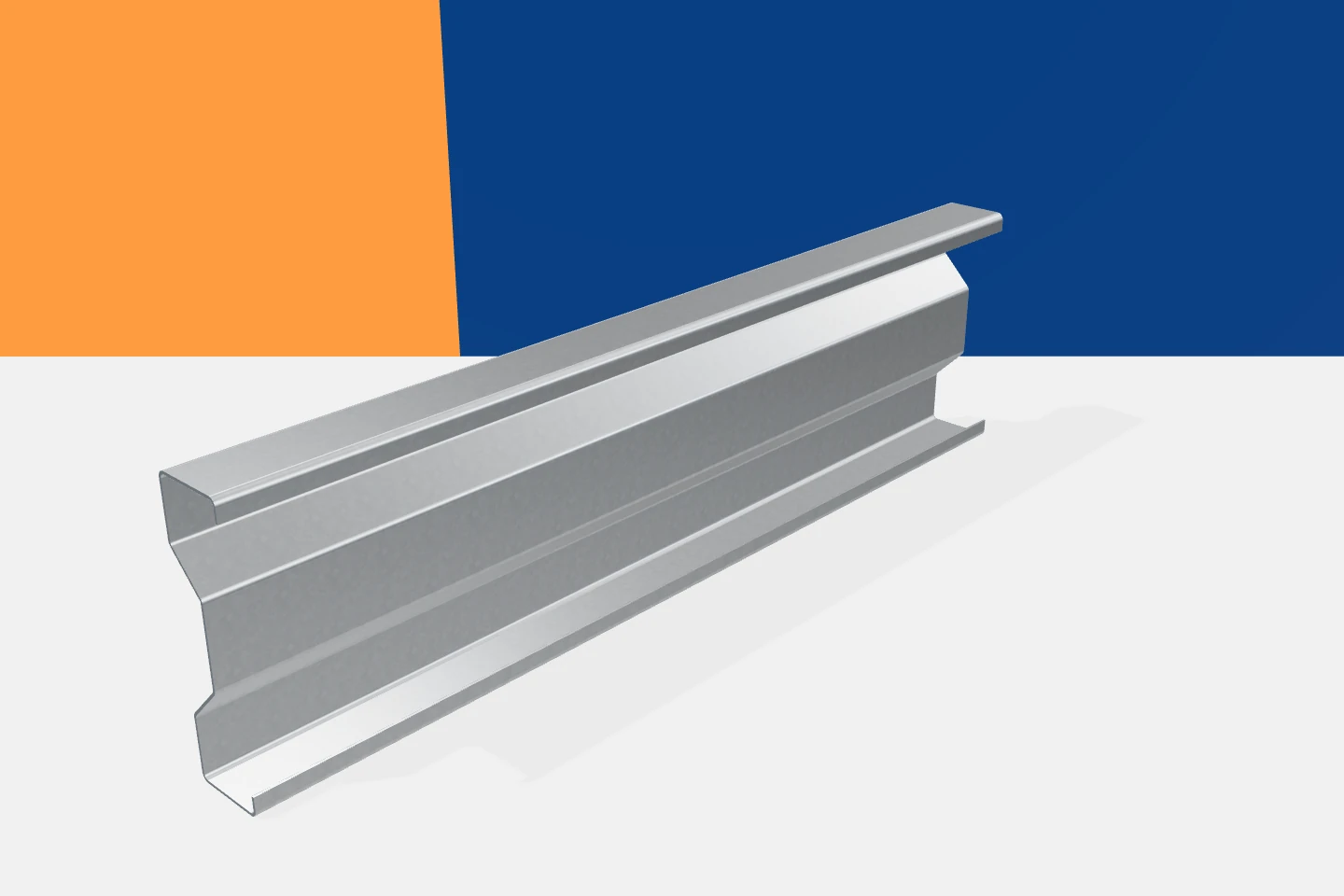
In a sigma profile, the web is divided into smaller segments with a different relative position. This shape allows the behaviour of thin walls to be influenced. It can be advantageous for a selected structural task. However, it does not give an automatic advantage in all directions and under all support conditions.
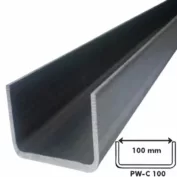
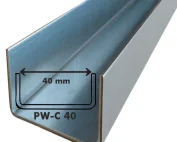
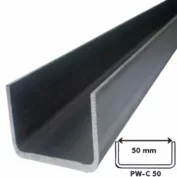
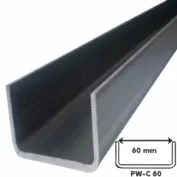
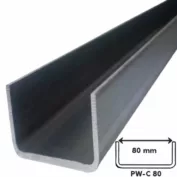
A channel section can also have stiffening lips. Its simpler profile can be convenient for certain connections. Instead of assessing the shape intuitively, the parameters of the specific cross-section must be checked. The general name “sigma” covers various geometries, so one set of properties must not be attributed to the whole family.
Catalogue parameters require interpretation
The cross-sectional area and moments of inertia help to describe the element. However, they are not the ready load-bearing capacity of a beam in any building. The behaviour of thin parts and possible loss of stability must be taken into account. Holes, points of load introduction and supports also matter. This requires a proper calculation model.
When using load-bearing tables, all assumptions must be read. These concern, among other things, the static system, spacing and stabilisation by the sheeting. A value taken from a table without this information can be misleading. Cold-formed profiles should be assessed under conditions corresponding to the actual structure.
Connections can change the cost result
Sigma may require different cover plates or support elements than a channel section. The holes, number of screws and assembly work will then differ. Tool access and the method of lifting the parts must also be checked. These issues have a real impact on the execution cost, although they are not visible in the price per kilogram of steel.
Z-sections also create their own node solutions, often with overlaps of appropriately selected cross-sections. Omegas, in turn, are used in other types of substructure. When comparing families, their accessories should not be mixed without verification. The completeness of the solution is more important than the similarity of a single dimension.

Material and protection must be equivalent
If one offer includes a different steel grade or coating, this must be taken into account in the assessment. Galvanised profiles are not a single unchanging quality category. The correct designations and documentation are important. When comparing prices, therefore, the same requirements must be matched, not just a similar appearance.
The coating is responsible for protection in a specific environment. It does not replace the selection of load-bearing capacity or the required fire protection. Changing the coating or material may be sensible, but should result from the needs. It should not be treated as an invisible item to be removed at will from a cheaper offer.
Prefabrication can matter more than the weight difference
Exact lengths and hole patterns limit the work carried out on site. It is worth assessing how many elements will arrive ready for installation. The marking of items and the complete set of accessories are important. Even a good cross-section can prove inconvenient if the delivery does not match the organisation of the works.
On the other hand, not every unusual geometry brings a benefit. In a small series, the cost of preparing production may be significant. A repeatable catalogue solution often facilitates communication and control. The best choice results from a combination of calculations, feasibility and the conditions of the specific order.
When changing the variant, the points of contact with the enclosure must be checked again. A different flange width may affect the fixing of the panel, and a different height the level of the finished roof. Such consequences should be included in the comparison. A variant favourable for the beam alone may require additional changes in adjacent elements.
Ask for the result for the whole solution
For the comparison, it is worth collecting the weight of all profiles, the number of fasteners and the scope of additional parts. Then check the cost of production, transport and installation. The offer should clearly indicate what it covers and on what data it is based. Only then can the alternatives be assessed consciously.
Sigma profiles, channels and Z-sections can lead to correct solutions for the same function. The choice depends on the details, not on a ranking of letters. Well-selected cold-formed profiles use material where it is needed and allow the system to be assembled in accordance with the design.
7 branches. Materials closer to your project.