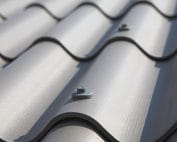
Fibre cement roofing
Why two similar corrugated profiles do not necessarily fit together
In brief
Two grey sheets can look almost identical and yet fail to form a correct joint. When buying for a roof repair, this difference matters a great deal. Fibre cement sheets must be compared by section, working dimensions and fixing rules. Asbestos-free eternit is a general name. It does not mean a single edge standard or a common set of accessories. Compatibility is determined by details that are easy to overlook in a photo. The most misleading factors are similar colour and a similar number of ridges. The perspective of the photograph further changes the proportions. A narrow corrugation photographed from the side can resemble a wider one. That is why a discussion of interchangeability should begin with the designation and drawing, not with a photo taken from the yard.
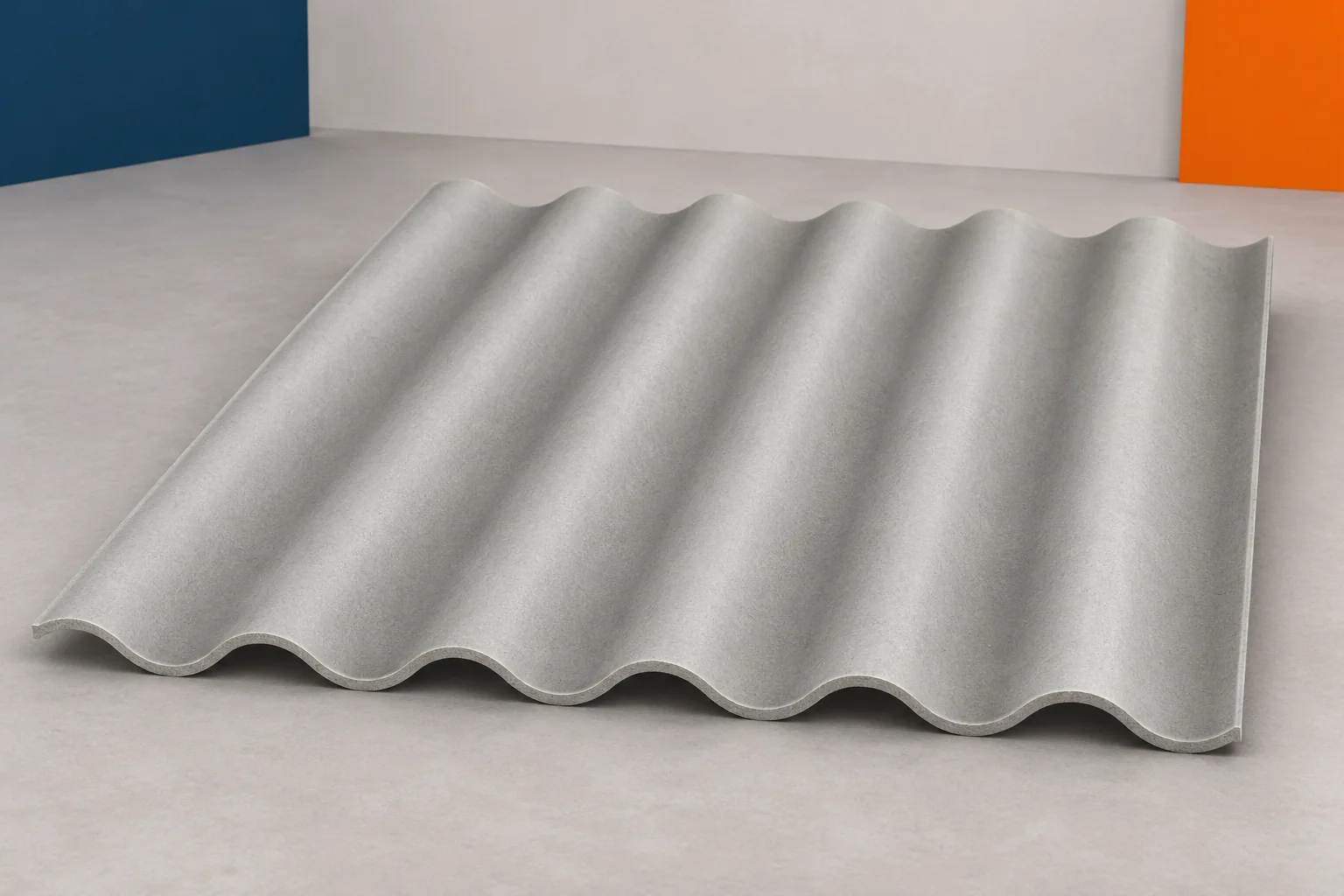
Similarity begins and ends with appearance
You need to read the pitch, profile height, thickness and sheet width. The side terminations also matter. Even agreement on several dimensions does not guarantee full interchangeability. Different batches may have different requirements for supports, preparation of corners and openings. Comparing the data allows you to separate visual similarity from technical compatibility.
The lap must fit without forcing
Fibre cement sheets are joined with an overlap. Its shape must allow the intended laying of one sheet on another. When the edges do not fit, a gap or point load appears. The installer should not remove this problem by over-tightening the screw. Cementitious material does not behave like thin, flexible sheet metal. The joint may crack during installation or during subsequent roof movement. Conversely, randomly filling the gap with sealant does not create a proven detail. First the compatibility of the profiles is established, only then the sealing method intended for the specific arrangement.
The offset grows across the width
A small difference in wave pitch produces a clear effect when many crests are aligned. The first may come out correctly, while the next is already offset. For this reason, a short section of seal or skylight should not be treated as sufficient confirmation. The full cross-section of the element is compared. Fibre cement sheets must also match the planned fixing position. The wrong crest may fall outside the line of prepared holes or outside the support. Trying to correct the position by turning the sheet over can be equally wrong. The variant with prepared corners may have a defined laying direction that must not be arbitrarily reversed.
The fitting and the rooflight have their own requirements
A ridge, verge flashing or daylighting element is not an accessory chosen solely by colour. What matters is the accessory’s working range, its overlap and its compatibility with the roof. A translucent sheet may imitate the wave, but it is made of a different material. It has its own rules for support, fixing and expansion. Asbestos-free fibre cement does not automatically give it the same properties. If the old skylight is to remain when adjacent sheets are replaced, both products must be checked together. Without such a check, a leak may occur precisely at the junction of materials, even though the new sheets remain undamaged. This detail is worth drawing before ordering.
One family’s document does not cover every sheet
A shared material name is not a shared installation instruction. Fibre cement sheets come in many variants. A document may cover a specific profile, market and product version. An older data sheet for a found sheet need not describe its current equivalent. The document date, variant designation and scope of application must be checked. Parameters copied from a foreign offer require particular caution. A different minimum pitch or support spacing is not permission for the same practice in any system. For the planned connection, confirmation is needed that can be linked to the material actually supplied.
Repairing a single piece requires a broader view
In a damaged roof, you should assess not only the point of cracking. Adjacent sheets may have stressed fixings, worn washers or an altered support arrangement. If fibre cement sheets come from different stages of renovation, it must be established which elements have already been mixed. A new piece will not repair a fault across an entire run. In an old covering, the question of material composition also arises. You should not break off a corner or drill a hole to identify a product of unconfirmed origin. First the documentation is checked and a professional inspection arranged. Only then can the scope of replacement and the method of connection be reasonably determined.
How to get an unambiguous answer when buying
A good enquiry includes photos of the available markings, dimensions, a cross-section drawing and information about the purpose of the purchase. It must be clearly stated that the connection is to an older roof. The question ‘do you have this corrugation?’ is too general. It is better to ask for verification of the sheet and all parts that come into contact with it. Fibre-cement sheets should only be ordered once the variant and documents have been established. If full compatibility remains unconfirmed, the repair project may require replacing a larger area or a separate connection. Such a decision before purchase is cheaper than reworking a finished roof.
Send the markings of the existing covering and the repair plan. The selection of asbestos-free fibre cement should cover the actual connection, not just a similar sheet colour.
7 branches. Materials closer to your project.