Maintenance and safety
Specifying snow guards for a sheet metal roof
In brief
The choice of snow guards depends above all on where snow is to be held back, not on the appearance of the lower roof edge alone. Check the roof pitch and slope length, the covering type and the places where lying snow could slide onto a path, terrace or driveway. The load-bearing capacity of the substrate and the way forces are transferred through the brackets also matter. A barrier at the gutter alone will not replace a considered layout, and retained snow still loads the roof.
What are the guards intended to protect against?
Snow sliding off the roof slope can endanger people at the entrance, cars and elements on the façade. Particular attention is required for walkways, terraces and areas of regular passage. The layout of the snow guards should take these zones into account. Their arrangement should not be chosen solely according to where they least disturb the appearance of the roof.
The gutter is not a barrier intended to retain large masses of snow. Likewise, a single flashing or roof installation should not take on such a task. If snow regularly damages the drainage, it is worth assessing the entire eaves and snow guard system. Replacing the gutter alone with a new one may not remove the cause.
What solutions can be found on metal roofs?
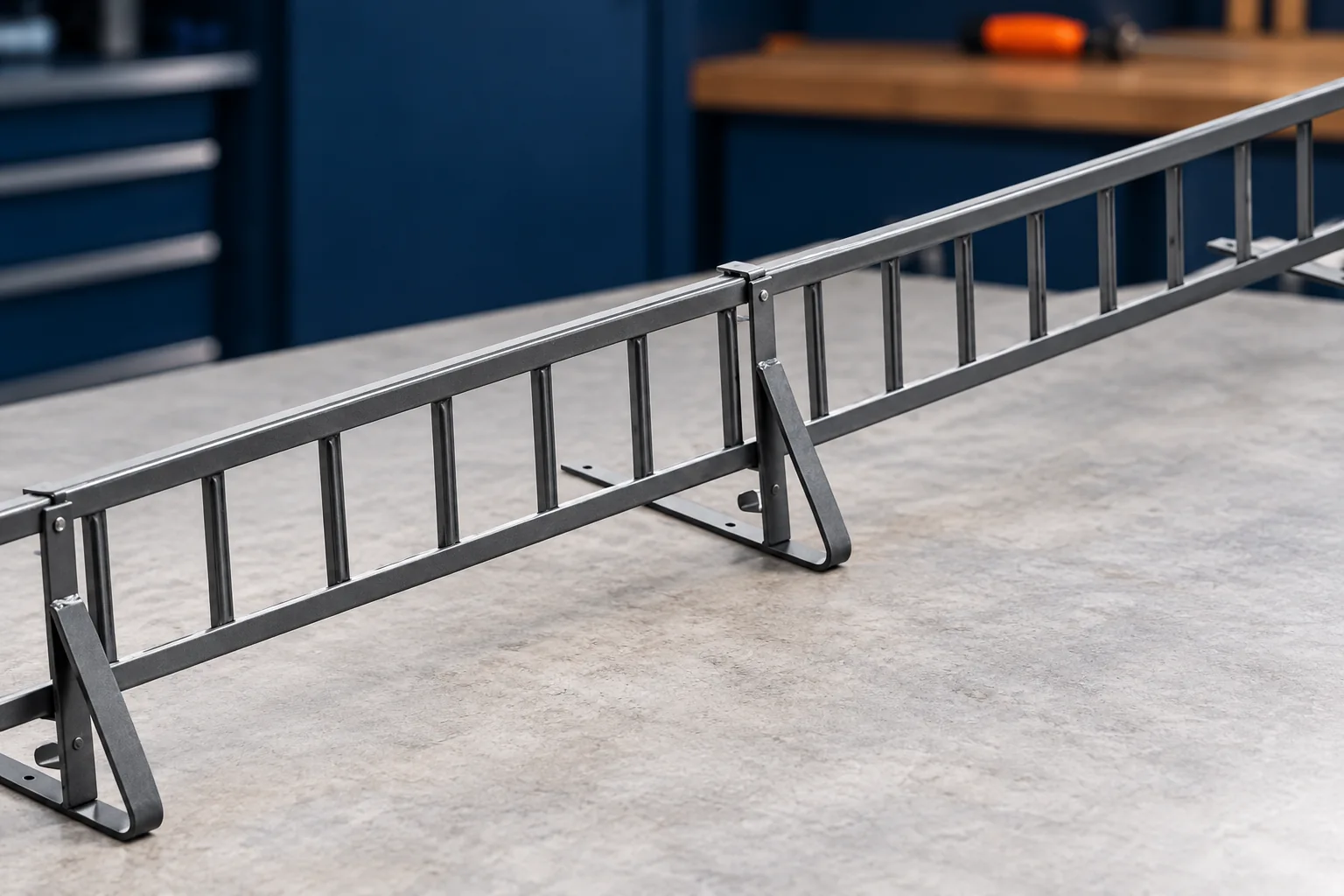
The solutions used include snow fences, tubular barriers and elements that break up or restrict the movement of snow. They have different functions and are not freely interchangeable. The type is selected according to the covering and the loads. A bracket for one tile-effect metal roofing profile does not have to fit another, even if both coverings are modular and have a similar colour.
The interaction of the entire set is important: the barrier, the bracket, the connector and the substrate. Buying a strong snow fence alone does not guarantee safety if the fixing is weak. The resistance of the surface and material compatibility must also be checked. On a roof with sandwich panels, the fixing method may differ from that on tile-effect metal roofing laid on wooden battens.
What determines the number of rows and brackets?
The snow load at the location, the pitch and the length of the roof slope are significant. A long slope can transmit greater forces to the lower row than a short one. Therefore there is no single bracket spacing suitable for every house. The selection should be based on the design or the system manufacturer’s rules, taking into account the actual conditions of the building.
In some layouts, the snow guards need to be distributed over more than one row. This allows the effect of the snow to be divided, but it must not be done according to a random pattern. Chimneys, dormers and installations must be taken into account. In places where drifts form, conditions may differ from the rest of the roof. This difference should be identified by the designer.

Where and how should the fastening be carried out?
The fixing must transmit forces to the intended structural element or to the covering system permitted in the documentation. Thin sheet metal is not automatically a sufficient substrate for every bracket. Installation at a random sheet edge can damage the covering. Therefore the location is best determined before covering, when the necessary support can be prepared.
Penetrations through the roof covering must be executed weathertight. Fasteners and seals are selected in accordance with the detail. They should not be replaced with any screws that happen to fit the hole. When retrofitting an existing roof, the arrangement of battens or purlins must be checked. Drilling without establishing the substrate can result in both a weak fixing and a new point of leakage.
Does a snow guard exempt you from checking snow depth?
No. The barrier limits sliding, but retained snow still loads the roof. The safety of the structure depends on the design loads and current conditions. The weight of snow varies with its density and moisture content. No single safe layer height can be given for all buildings. Looking at the thickness alone is often insufficient.
If snow clearing is required, it should be organised in accordance with the structural assessment and the rules for working at height. The position of rooflights must be known and the area below must be secured. It must not be assumed that the snow fence serves as an anchor point for a person. Such use requires separate approval, which a standard snow guard may not have.
What should be checked during inspections?
The condition of the brackets, fasteners and barrier is checked, particularly after a period of high loads. Bending, looseness or damage to the coating requires clarification. The component should not be forced straight and the matter considered closed. The substrate must also be checked, because visible deformation may be the result of overloading of the entire connection.
It is worth keeping the layout plan and system data in the house documentation. This makes it easier to replace parts and plan service work. A well-selected snow guard is part of the organisation of safe use of the building. Its effectiveness results from proper design and fixing, not from the mere presence of a metal barrier at the lower edge of the roof slope.
7 branches. Materials closer to your project.