Maintenance and safety
Replacing a roof covering: how to plan the work safely
In brief
The key is an early decision on the scope of inspection and repairs, not the replacement date itself. Before removing the covering, assess the condition of the structure, accessible roof truss sections, flashings and supports, and check for damp, wood damage and visible deformation. Establish whether old sheets contain asbestos, and prepare a plan for roof access, fall protection and material transport. Lighter new sheeting does not remove the problem of weakened support, so determine the repair scope before ordering material. Final design decisions remain with the designer.
Assess the condition of the roof and the scope of replacement
The inspection should cover the covering, flashings, supports and accessible parts of the roof structure. Check for dampness, damage to the timber and visible deformation. If in doubt, a structural assessment is needed. Lighter new steel sheeting does not remove the problem of weakened support. It is worth establishing the scope of repairs before ordering material.
Not everything will be visible before dismantling. That is why provision must be made for what happens once further layers are exposed. The contractor should document unexpected damage and agree how it is to be repaired. A problem should not be covered up just to keep to schedule. Rectification after the roof slope has been closed will be more difficult and may require dismantling new elements.
Establish formalities and the type of old material
Replacing the covering may be a renovation, but a change of structure or geometry may be classified differently. The correct formal procedure depends on this and on the type of building. It cannot be assumed that every roof replacement requires a permit or that it is always carried out without notification. Any heritage protection must also be taken into account.
With old corrugated sheets, it must be established whether they contain asbestos. The material must not be identified by breaking or abrading it. If asbestos is present, the work requires a specialist contractor and legal waste management. An ordinary roofing crew should not treat such material like any worn covering.
Plan access and fall protection
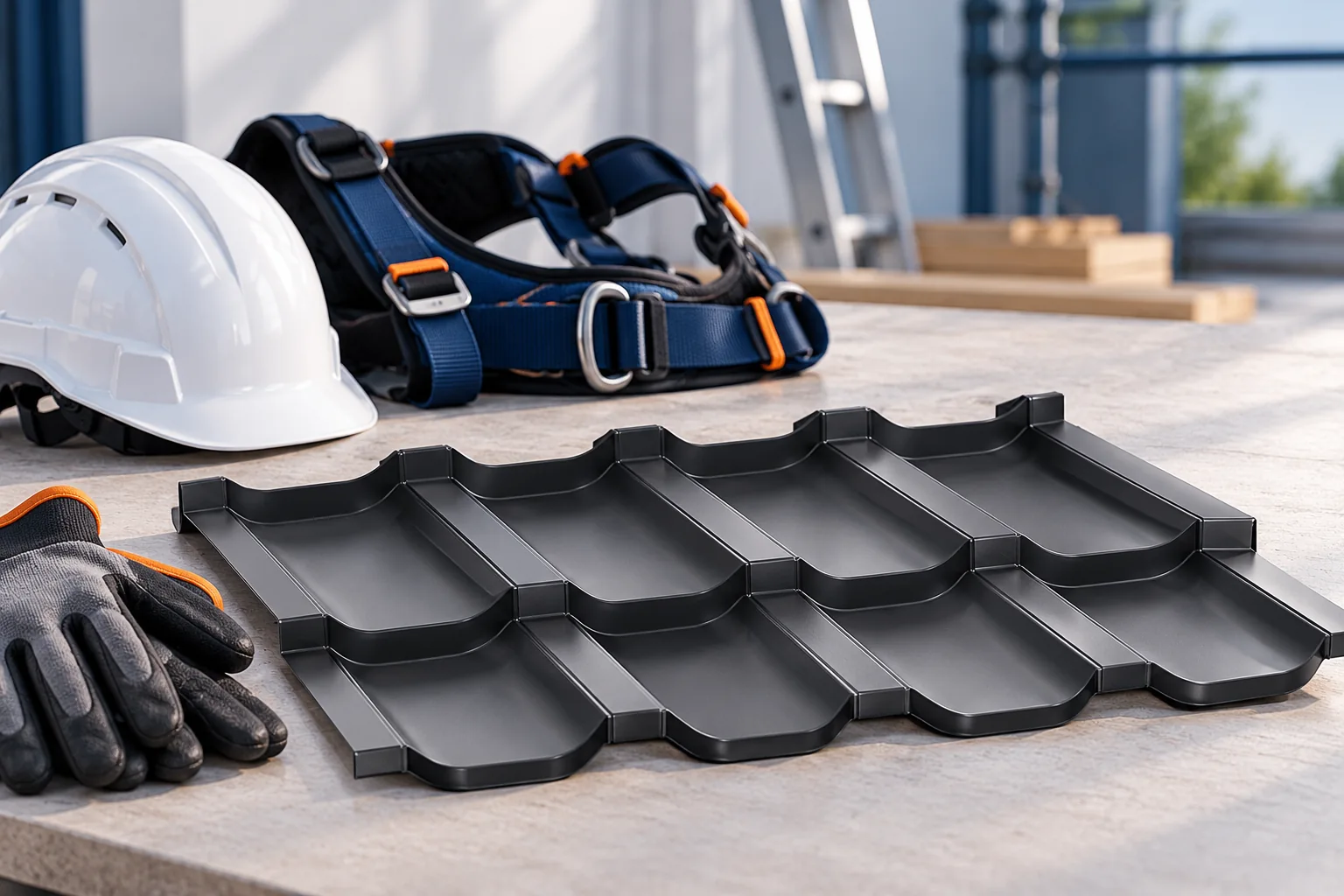
A safe access route, workstations and a method of moving across the roof slope are needed. Edges, openings and areas of uncertain load-bearing capacity must be taken into account. Appropriate collective protection measures take priority. If personal protection is necessary, the complete system must be selected together with the correct anchoring.
A harness clipped to a random element does not constitute a safe solution. The ability to provide assistance after an incident is also important. The organisation of the works should be prepared by the contractor responsible for them. It should not be assumed that workers will move across old sheets as if on a reliable platform. Their condition may be difficult to assess in advance.

Secure the area and the material route
The zone below the work area should protect residents, passers-by and vehicles from falling objects. The waste storage location and tool transport route must be established. Components should not be thrown down in an uncontrolled manner. Steel sheet has sharp edges and can be caught by the wind even when an individual piece is light.
New sheets require prepared unloading and support. Long components must be carried in accordance with their dimensions and recommendations. Packs must not be placed on the roof without assessing the load. Deliveries should be scheduled so that material does not block the entry and exit routes or the space needed to quickly secure an open roof slope.
Match the staging to the weather
The size of the exposed area should correspond to the capacity to protect it. Provision must be made for protecting the interior and layers that must not get wet. The forecast helps with planning but does not replace readiness for changing conditions. Wind, rain and a slippery roof surface are particularly important.
Larger dismantling should not begin merely because the new material is already on site. The necessary supports, flashings and protections must be ready first. With long sheets, gusts of wind can prevent safe handing up. Interrupting work in unsuitable conditions is part of proper organisation, not evidence of a lack of crew efficiency.
Check the substrate and new layers
After the old covering has been removed, the structure can be assessed more accurately. The spacing of battens or purlins must be checked for compatibility with the selected material. The new profile may have different requirements from the previous one. Not every element of the substructure should automatically be reused. A level plane and proper support affect the durability and appearance of the new roof.
The underlay, insulation and internal airtightness should correspond to the design. When the use of the attic changes, the scope may be greater than just replacing the steel sheet. Details at the chimney, windows and eaves should be inspected before they are covered. Documentation of these locations makes it easier to later determine the cause of any moisture.
Finish with inspection and tidying up
Before acceptance, swarf, cuttings and residues must be removed from the gutters. Fixings, flashings and coating damage must be checked. Waste should be handed over according to its type. In the case of asbestos, the appropriate documents are also required. The area around the house should be tidied before normal use is restored.
The owner should receive the material specification, maintenance instructions and arrangements for reporting defects. Repairs carried out to the structure and deviations from the plan should be recorded. Safe replacement is not only the absence of incidents during installation. It is also a roof that can later be inspected and maintained without improvised solutions.
7 branches. Materials closer to your project.