Planning and costs
How to keep roofing costs down for a house, garage, patio or gazebo
In brief
Keeping the roof shape simple and avoiding waste can save more than omitting layers the building needs. An open shelter, a heated garage and a house with a loft make different demands on a roof. Set those requirements before you price the covering. A cheap profile may cost more overall if the slope, loads or support spacing call for extra battens or a revised design. Compare quotes on the area actually covered and ask for the total including flashings, fixings, delivery and the full scope of work.
Where should you start looking for savings?
First, define the building’s function and the conditions the roof must meet. An open carport has different requirements from a heated workshop, and a house with a loft has yet others. The material should suit the pitch, supports and loads. Choosing the cheapest profile without this information may later force closer batten spacing or a design change. The saving on the sheet then disappears in other items.
Geometry has a major influence on cost. A simple roof slope requires less complicated flashings and easier cutting than a roof with many dormers. For a new building, some savings can therefore be found before choosing the covering. For a renovation, it is important to limit unplanned changes after ordering the sheets. An accurate measurement costs less than correcting wrong lengths on site.
When is it worth comparing T18 and T35?
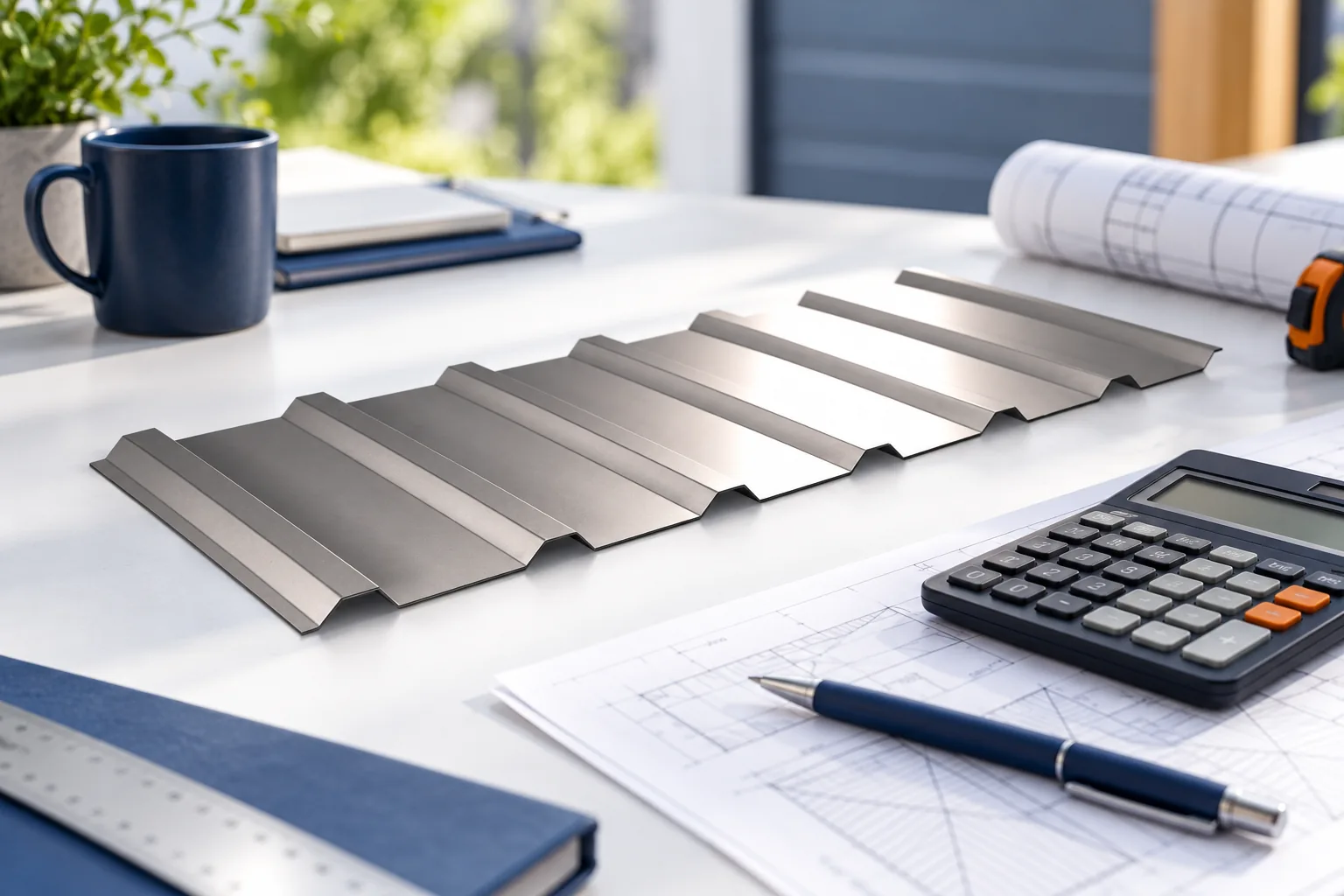
Trapezoidal steel sheet allows a simple covering for a garage, gazebo or carport. T18 is a low profile, while T35 has higher ribs. The choice depends on the structure and the documentation for the given product. One should not assume that a lower price for T18 always means a cheaper roof overall. A different support spacing, sheet thickness and number of fastenings can change the comparison result.
The price list effective from 28 October 2026 gives an example of trapezoidal roof sheeting with an 18 mm profile, 0.50 mm steel and a 25 µm polyester coating. The price per m² of effective cover is €8.41 excluding VAT or €10.34 including VAT. This catalogue figure applies to a single specification. It is neither a current shop offer nor the price of a finished roof. A different thickness, coating or order quantity requires a separate quotation.
How do you compare prices in different units?
In the same example the price per m² of overall sheet area is €8.10 excluding VAT. The difference from the net price of €8.41 per m² of effective cover comes from the overlaps. The material itself has not been discounted. If one quote uses overall sheet area and the other uses effective cover, the unit prices cannot be compared directly. Ask for the total for all the sheets required for your particular roof.
Add the cost of flashings, screws, seals and delivery to the summary. Small items spread across several quotes can significantly change the total. Also check whether the amounts are net or gross. When a contractor offers material together with a service, the actual scope and the correct tax rate must be compared. Simply adding installation does not automatically mean a cheaper settlement.

Where does the sheet format provide a benefit?
On a simple roof, long sheets can reduce the number of transverse joints and the laying time. However, transport and safe lifting must be ensured. On a complicated roof slope, tile-effect metal roofing sheets can facilitate cutting. No format guarantees the lowest waste in every situation. What matters is the list of elements with marked slopes and obstacles.
It is worth checking whether the offcuts can actually be used. A piece with the opposite profile direction or the wrong overlap edge may be useless. Savings should not be planned by reversing sheets without confirming that this is possible. The contractor’s labour in fitting many small pieces also has a cost and may increase the number of places requiring sealing.
Where is it not worth cutting costs?
Flashings, necessary ventilation and proper fixings should not be removed. These elements determine how the whole roof behaves in rain and wind. Material that is too thin or an unsuitable coating can also mean greater expense later. A simpler aesthetic while maintaining technical requirements is more sensible than an impressive covering executed with important details omitted.
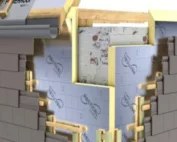
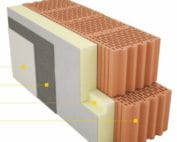
In a heated garage, single steel sheet must be compared with a complete insulation set and an insulated sandwich roof panel. A more expensive square metre of finished panel may replace several separate layers and some of the labour. This does not mean it will always be cheaper. Specific thicknesses, supports, connection details and the scope of finishing are needed. Only then can the cost of achieving a similar functional effect be assessed.
How to prepare a fair comparison of quotes?
Send all contractors the same drawing and description. Specify the chosen material variant, flashings, drainage, unloading and how the old covering is to be disposed of. Ask for additional works that may be revealed after removal to be listed separately. This way a low total will not result from omitting half the work. Responsibility for measurement and ordering is also important.
Prepare a contingency allowance arising from the condition of the building, instead of arbitrarily cutting the required scope. Repairs may appear on an old roof structure that are not visible before it is exposed. On a new simple roof, the material can be estimated more accurately. The most useful savings are less waste, efficient organisation and no rework. They do not require giving up tightness or safety.
7 branches. Materials closer to your project.