

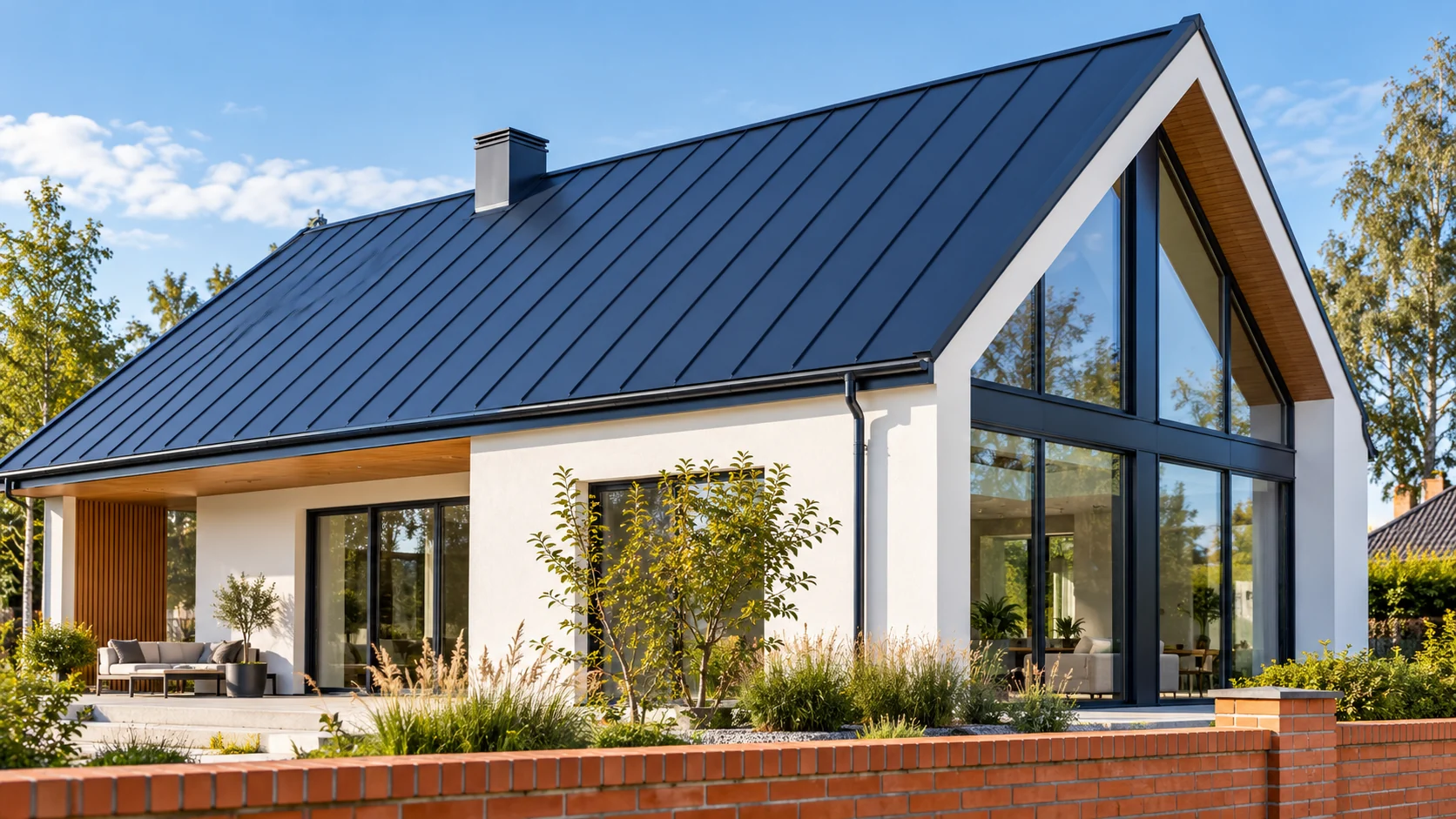
What ensures the watertightness of a standing seam roof?

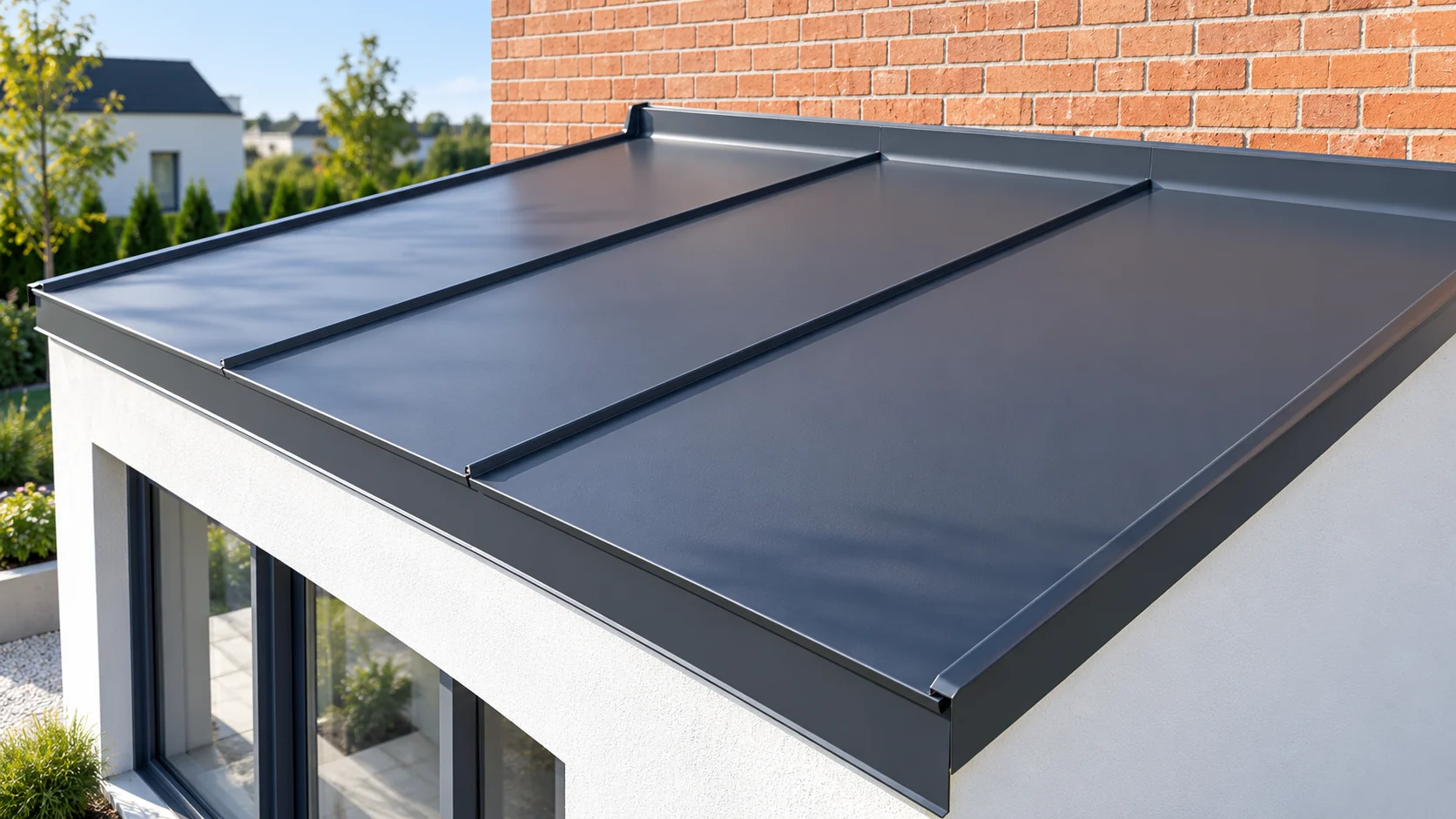
Standing seam joins adjacent sheet metal strips above the main roof slope surface. This arrangement helps to organise water runoff. However, it does not automatically guarantee the watertightness of the entire roof. The outcome is also determined by the pitch, flashings and method of fixing. The areas where the continuity of the covering is interrupted require the most attention. The flat sheet metal fields direct water towards the eaves. The longitudinal joint is located higher than their principal surface. This limits direct contact between the flowing water and part of the seam. Effectiveness depends, however, on its construction and the conditions on the roof.
2026-11-14T09:31:37+01:00

How does single standing seam, double standing seam and snap-lock panel differ?

Similar vertical lines on a roof do not mean the same method of joining. A traditional standing seam is formed by folding the edges of the sheet metal. A snap-lock panel has a factory-prepared lock. These solutions differ in installation, details and substrate requirements. The choice must be linked to the roof geometry, not just the appearance. In traditional covering, adjacent strips of sheet metal are joined by appropriately folding their edges. Depending on the solution, a single or double standing seam is formed. The double closure has a more complex joining path. However, it does not mean unconditional tightness of every roof slope.

2026-11-14T09:31:14+01:00
Back to top