Sheet metal and roofing
How does single standing seam, double standing seam and snap-lock panel differ?
In brief
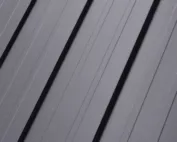
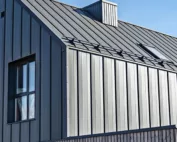
Similar vertical lines on a roof do not mean the same method of joining. A traditional standing seam is formed by folding the edges of the sheet metal. A snap-lock panel has a factory-prepared lock. These solutions differ in installation, details and substrate requirements. The choice must be linked to the roof geometry, not just the appearance. In traditional covering, adjacent strips of sheet metal are joined by appropriately folding their edges. Depending on the solution, a single or double standing seam is formed. The double closure has a more complex joining path. However, it does not mean unconditional tightness of every roof slope.
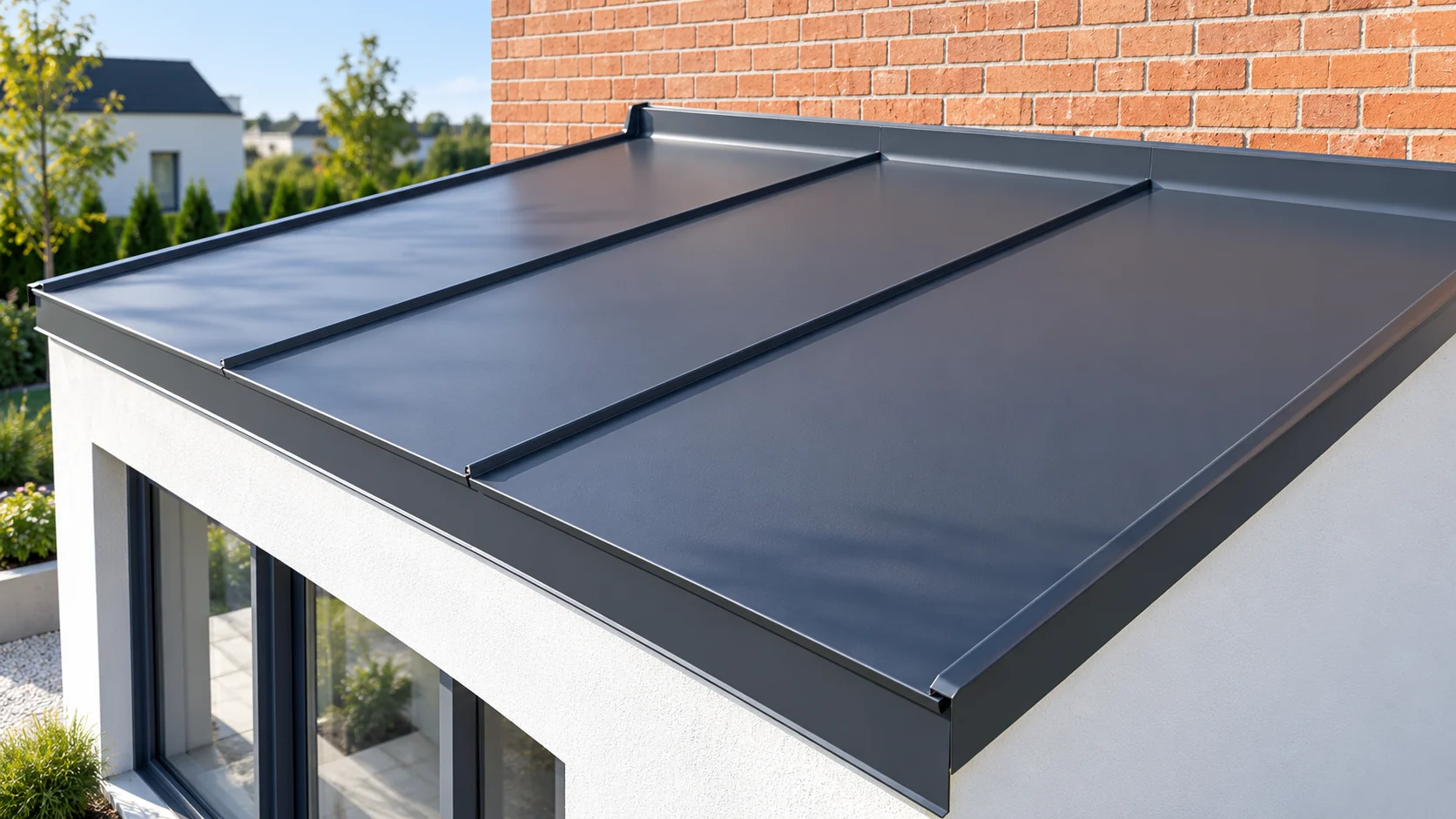
How is a traditional standing seam formed?
Material, strip width, substrate, fixings and flashing details all matter. Thermal expansion of the sheet must be taken into account. Fixings and the division into fixed and sliding zones are selected according to the system. A long strip must not be immobilised with random screws simply because it appears to move too freely.
What is a snap-lock connection?
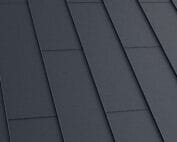
A snap-lock panel has edges formed during production. During installation, adjacent elements are joined in a specified sequence. It is not automatically equivalent to a traditional double standing seam. A similar height of the vertical line does not prove an identical seam construction.
Some panels have their own mounting strip, others require a different solution. The range of movement and the tightening method for fasteners are specified in the instructions for the specific system. Do not copy a detail from another panel. The eaves, ridge, roof valley and termination at the chimney are particularly important. The factory snap-lock facilitates repeatable joining of the sides, but does not execute these locations for the roofer.
How does roof pitch influence the choice?
At a low pitch, water runs off more slowly. Joints and flashings operate under different conditions than on a steep roof slope. Therefore, the minimum pitch cannot be assigned to the entire group of standing seam coverings. The requirements depend on the system and how the details are executed.
Also check the roof slope length and any transverse joints. A roof with one long strip from eaves to ridge differs from a layout with a joint at mid-length. Installation penetrations and roof valleys also change the water drainage conditions. If the project is close to the limit of the permissible pitch, confirmation of the complete solution is required. The name ‘standing seam’ alone is not sufficient.
Why is the substrate so important for the appearance?
Wide flat sheet areas reveal unevenness and changes in light reflection. The substrate must meet the requirements of the selected system. It cannot be assumed that every panel requires identical boarding or batten spacing. Separating layers and ventilation must also be checked.
On a simple roof, the rows of panels should form a well-planned layout at both gables. Assume a slope width of 7.30 m. Dividing this by the cover width of the chosen panel will show the number of runs and the width of the cut pieces. It is worth distributing the edge zones so as to avoid a very narrow strip at one edge. The method of cutting and finishing must remain consistent with the detail.

What changes in terms of costs and installation?
Traditional seam forming requires suitable tools and skills. A snap-lock panel reduces some of the work at the side joints. However, it does not remove the need for accurate measurement and substrate preparation. On a complex roof, flashings can account for a significant proportion of the work.
| For comparison | Question for the quote |
|---|---|
| Material | What thickness, coating and cover width? |
| Substrate | What layers and preparation are required? |
| Details | Does the quote cover all roof valleys and penetrations? |
| Installation | Who is responsible for detailing the terminations? |
Compare complete systems. A lower panel price may not offset the additional work required beneath it.
What should be confirmed before the final order?
Prepare the slope lengths, angles, positions of openings and widths of all sections. Determine the maximum length of the strips and how they will be transported. On a site with narrow access, a long panel may require different lifting arrangements than a small module.
Ask for confirmation that the chosen system covers all roof details. Examine a sample in natural light and check how it joins. Do not judge the lock by the height of the seam alone or by firmly pressing a random piece by hand. The order should include the exact system components, not a general note of ‘click-lock sheet’ without the remaining data.
It is also worth establishing the width of the visible fields on both slopes. A symmetrical roof can look uneven if the panel divisions are laid out independently of the building axis.
Questions before ordering
Is a click-lock panel a traditional double standing seam?
No. It has a factory lock with its own geometry. A traditional double standing seam is formed by a specific folding of the edges. The requirements of these solutions must be checked separately.
Can standing seam roofing eliminate the need for chimney flashings?
No. Every penetration through the roof surface requires a suitable detail. The tight side seam of the panel does not ensure a seal at the junction with a vertical wall.
7 branches. Materials closer to your project.