

Technology and applications
Izoprofil.pl explores how building materials work together. Sandwich panels, PIR insulation and trapezoidal sheets depend on their supports, joints, fixings and drainage. The guides explain how product properties affect use on roofs, walls and insulation assemblies. They help you read the documentation, identify limits and prepare questions for your designer or contractor. You can also look up detailing, common faults and preparing materials for installation. Use the technical issue on your project to choose an article, then check the instructions for your specific product. Similar-looking components may have different requirements.
Renovating walls with IDELCO α-therm WALL: check the existing build-up first
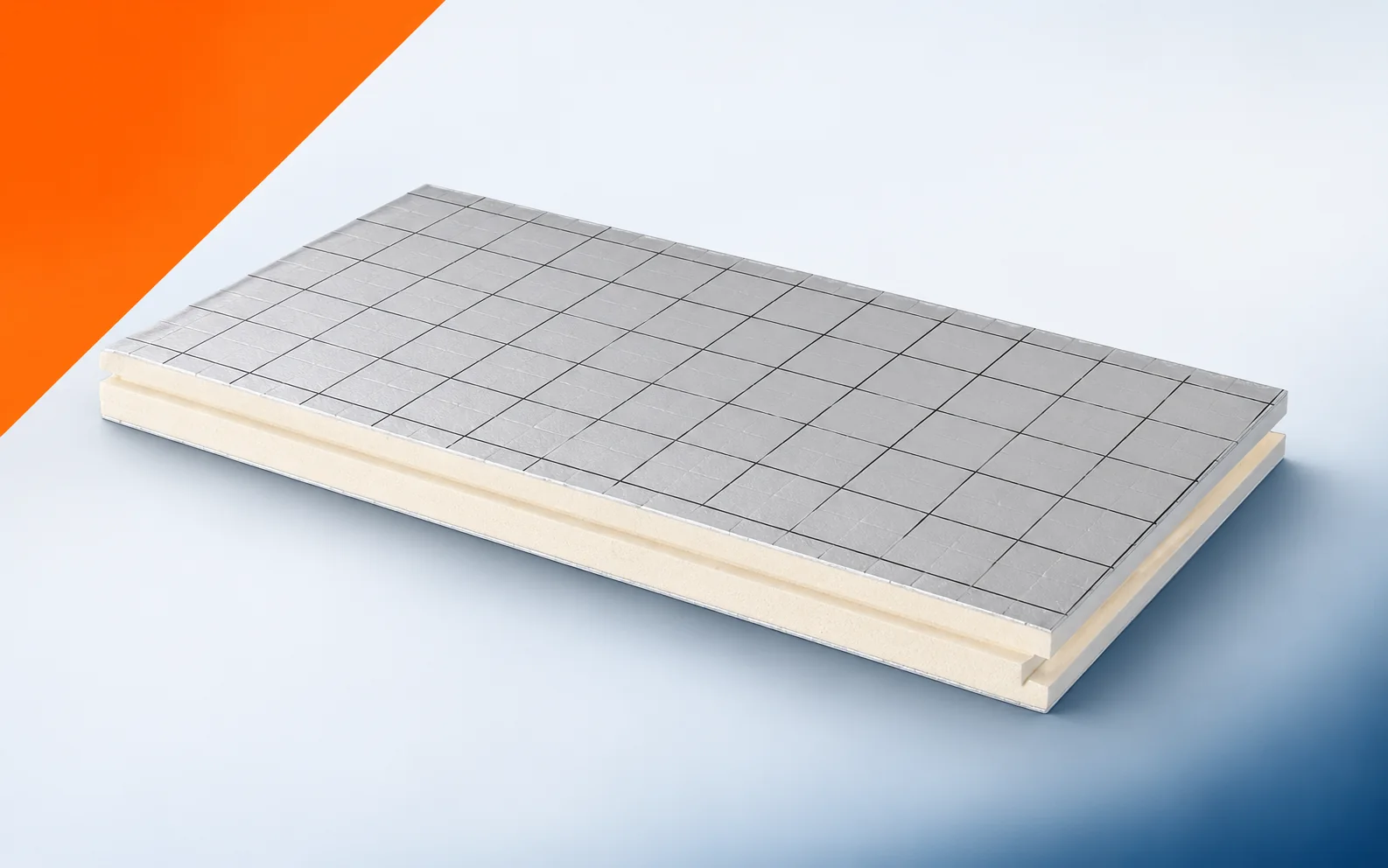
IDELCO α-therm WALL is a PIR board for insulating the cavity between the layers of a cavity wall, faced on both sides with aluminium laminate. When renovating, its use requires an assessment of the existing masonry, the facing layer and the junctions at openings. A space matching the insulation thickness is not enough on its own: the moisture condition of the remaining layers and the feasibility of correctly terminating the insulation must be assessed. The board does not take over the load-bearing function of the masonry or of the anchors. The guide shows how to relate its parameters and edge profile to the geometry of the old wall and to the scope of work before it is covered. The general terms “polyurethane boards” and “polyurethane foam” are broader than the PIR designation, so the renovation documentation must name the specific product and its position in the cross-section.
Renovating ceiling insulation with IDELCO AGRO+: assess the existing conditions
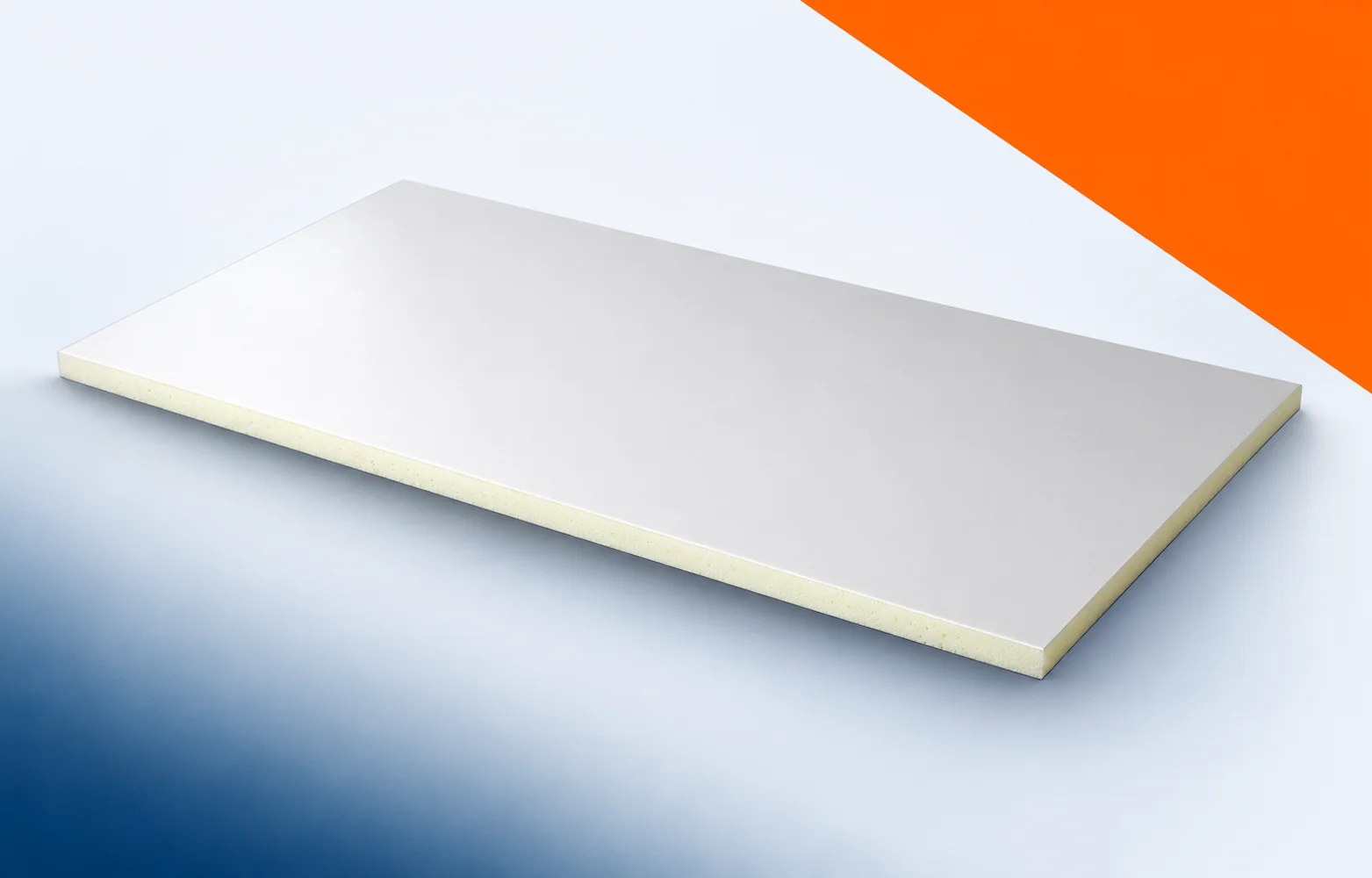
Renovating ceiling insulation with IDELCO AGRO+ begins with an assessment of what is already in place: the supports, the routing of services and the condition of the retained structure, because new boards will not repair it automatically. Only once the terminations and the actual access to the ceiling have been established does measuring the length make sense. IDELCO AGRO+ is a PIR board for insulating ceilings in agricultural buildings, with a facing other than the typical thin roof laminate; the broader terms “polyurethane boards” and “polyurethane foam” do not replace the precise product designation. The inspection covers the visible white facing and the function of the lightly embossed AGRO+ aluminium facing, 50 micrometres thick.
SOPREMA EFYOS BLUE A in renovation: checking beneath the roof covering
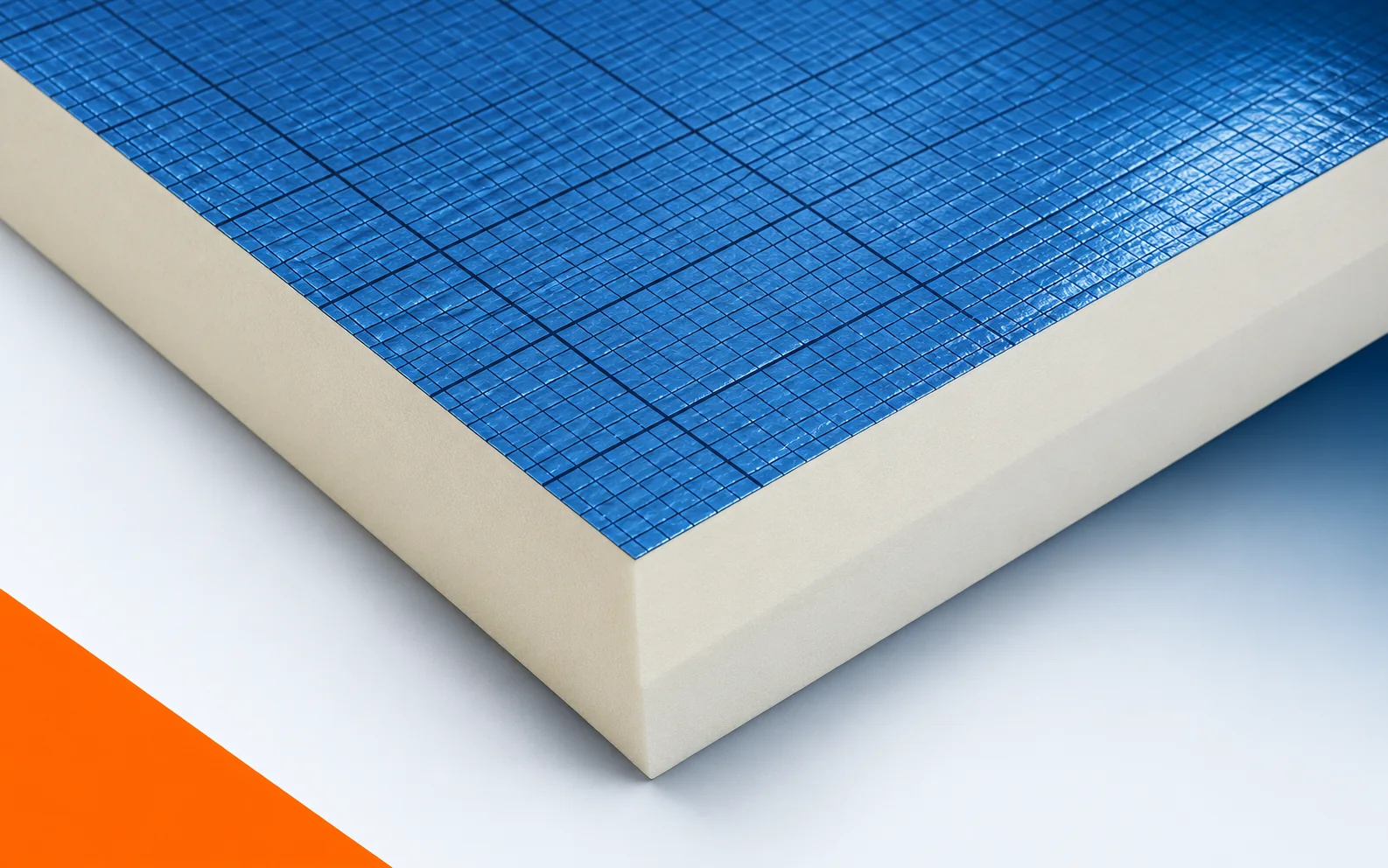
On the roof being renovated, the old flashings were retained, but once the covering was opened up it turned out that the substrate had different levels from those in the documentation. The thickness of BLUE A must therefore be compared again with the height of the parapet. It is not worth cutting the entire delivery according to an outdated assumption. First, a measurement is needed and a decision on how the covering is to be terminated. In a renovation, the scope described as thermal insulation of a flat roof beneath the waterproofing requires an investigation of the old layers. The first difficult place to inspect is the termination of the thermal insulation at the parapet. It is not worth determining the thickness of EFYOS BLUE A solely on the basis of an old drawing. The measurement should cover the height of the parapet above the target covering surface, taking into account changes made during earlier works.