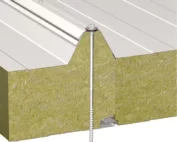
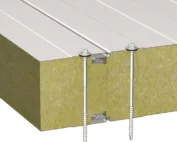
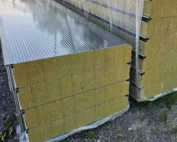
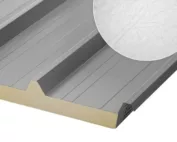
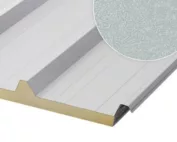
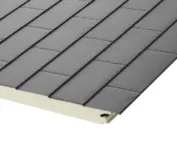
PIR insulation
No label on the old roof insulation: how to handle an unknown conductivity in an audit
At a glance
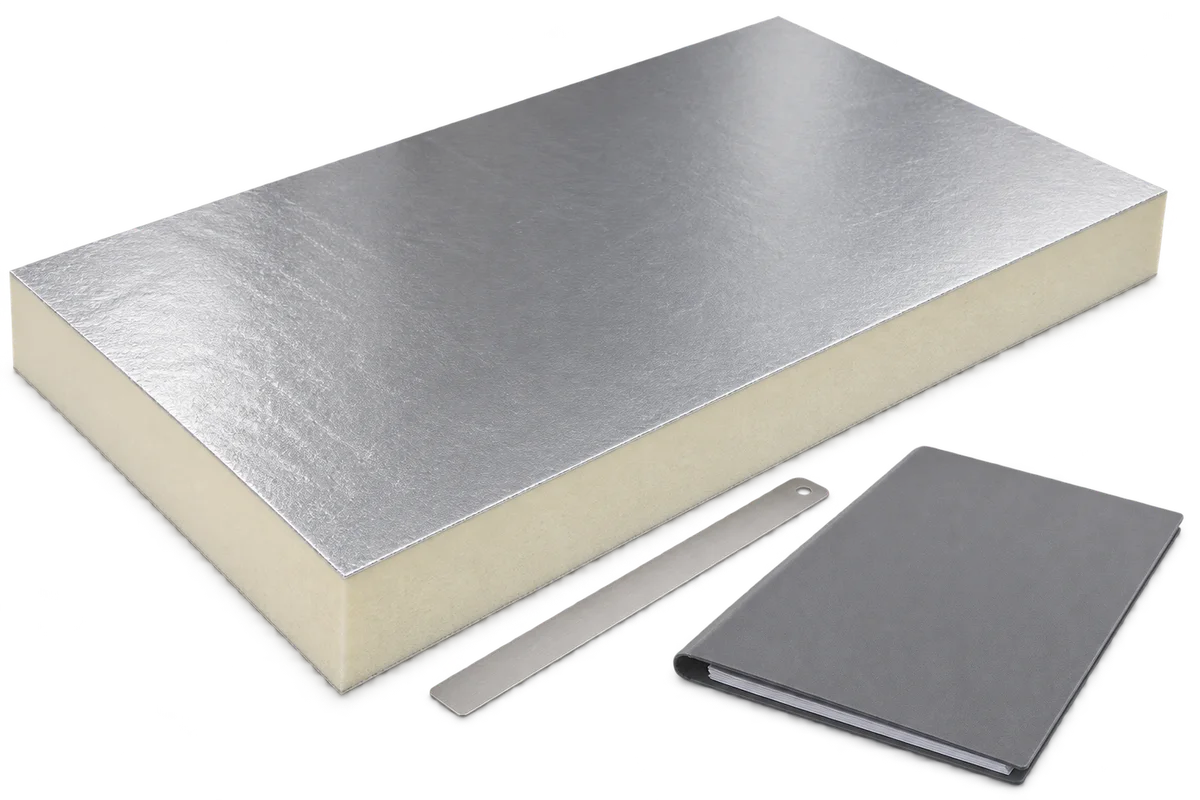
An old roof drawing says “8 cm insulation”. That tells you the intended thickness, but neither identifies the product nor gives its thermal conductivity. In an energy audit it pays to separate confirmed data from assumptions and show how much the missing information affects the result. This guide follows that process from reading the as-built records to comparing two possible values for the layer’s thermal resistance. It also explains why a new PIR board’s data sheet can inform a proposed upgrade without establishing the properties of insulation installed years ago.
What does the drawing actually establish?
Start with the drawing date and its purpose. A pre-construction design records an intention. A later acceptance record may confirm that work was done, but if it only records the area covered, it proves neither the board brand nor its thickness. Note which question each document answers.
Match the evidence to the relevant roof area
Distinguish the original roof, the extension and any later repairs on the plan. If an invoice survives for the extension’s insulation, mark that area against the invoice reference. A continuous roof covering today is no reason to assign the same material properties to the older section.
In the inspection record, identify where the thickness was measured. A reading taken at an exposed edge applies to that location. If no measurement is available, or continuity is unconfirmed, record the gap rather than reporting the planned 8 cm as a verified thickness across the building.
Separate the declared value from the design input
If the product can be identified, look for documentation covering that model at the time of supply. Record the declared λD from the source and the conductivity used in the calculation in separate fields. For the latter, state why it applies to this use rather than copying λD automatically.
If identification fails, do not guess the manufacturer. Instead, test the effect of two explicit assumptions and note what evidence would be needed to confirm each one. The figures below illustrate the method only; they do not identify the material.
Two scenarios for an 80 mm layer
For comparison, assume a homogeneous layer 0.080 m thick. In scenario A the assumed conductivity is 0.025 W/(m·K). Dividing thickness by conductivity gives the resistance of the insulation alone: R = 0.080 / 0.025 = 3.20 m²·K/W.
In scenario B the thickness stays the same, but the assumed conductivity is 0.040 W/(m·K). This gives R = 2.00 m²·K/W, a difference of 1.20 m²·K/W between the scenarios. These are two illustrative results, not guaranteed bounds on the performance of the existing insulation.
What a whole-roof figure cannot tell you
An older audit may list a U-value for the whole roof without a layer schedule. That U-value alone cannot yield a unique conductivity for the insulation: it describes the whole construction. Before reusing the figure, check which roof area it covers and what the calculation assumed about the other layers.
Enter any new board proposed for the refurbishment as a separate layer with its own data source. Changing the proposed board then leaves the evidence about the old insulation intact, and competing refurbishment options can be compared against the same existing-roof assumption.
How to present the findings to the owner
Organise the owner’s summary under three headings: what we know, what we assumed and what could change the result. For example, the measurement location is known, the thickness is assumed for a particular section, and a delivery record could help check the assumed conductivity. This makes a later revision understandable.
Use the comparison to decide whether more evidence is needed. If the proposed extent of the upgrade depends on which scenario is used, flag that before materials are ordered. When new evidence arrives, date the revised calculation, cite the source and keep the earlier assumption in the audit record.
7 branches. Materials closer to your project.