PIR insulation
Comparing PIR board quotes: thickness, conductivity and thermal resistance
At a glance
Before comparing two PIR quotes, establish what the insulation layer needs to achieve. One board may be thinner and another cheaper per square metre, but neither figure tells you whether both meet the design requirement. Put the figures for the two actual products side by side: thickness, declared thermal resistance, facing and coverage per pack. A worked example below shows how to spot a unit error and why a cheaper pack need not mean a cheaper insulated surface.
What does the price per square metre cover?
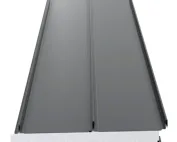
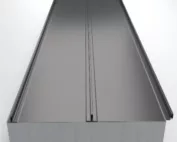
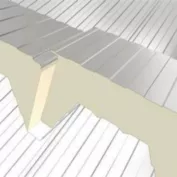
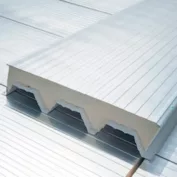
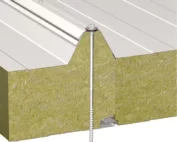
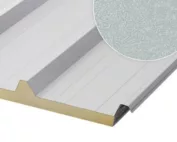
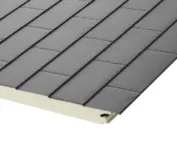
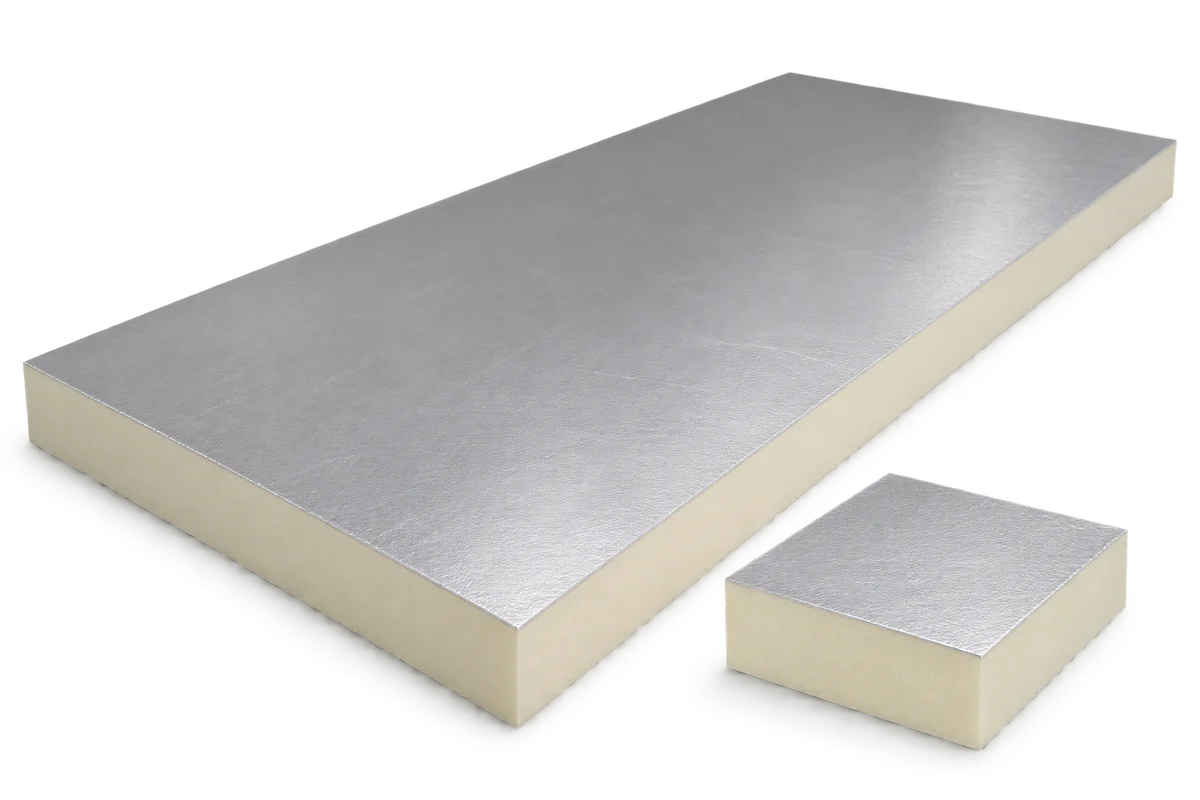
Start with the full product designation. A separate insulation board and a sandwich panel with two metal skins perform different jobs. Even an identical core thickness does not make them interchangeable items in a cost estimate.
A worked example: from millimetres to thermal resistance
For illustration only, take a 100 mm board with thermal conductivity of 0.025 W/(m·K). Enter the thickness as 0.100 m. Dividing thickness by conductivity gives a layer resistance of 4.0 m²·K/W. These are example figures, not a specification for a particular board in the shop.
Entering 100 instead of 0.100 would overstate the result by a factor of one thousand. Keep the units in your spreadsheet headings. Give the resistance of the layer and the U-value of the entire wall or roof separate fields.
Why the calculation is only a first check
For a real order, read the declared resistance for the exact board type and thickness. If the supplier sends a table covering a dozen thicknesses, mark the relevant row instead of copying the largest value in the table.
If a quote gives a value for the whole roof, ask which layers were included. A result calculated with extra insulation between the rafters cannot be credited to the board above them alone.
Similar resistance, different applications
In the application column, name the installation location. Beneath a screed the board must suit the loads; in a bonded assembly its facing must be compatible with the adhesive. Equal thermal resistance answers neither question.
Check whether the quote is for one layer or two. A two-layer build-up may change the fixing schedule or installation work. Check both against the design before simply doubling the board area in the estimate.
Price the same floor or roof area
Use the same area to insulate in both estimates. Sketch a cutting layout for each board format, count the boards and only then round up to whole packs if the supplier sells in packs.
Separate material, delivery and outstanding system components. One quote may include delivery while another is for collection. Work out the cost per finished square metre using matching items and the same tax basis.
How to record an agreed substitution
Record the product code, thickness, edge profile, facing and data sheet revision. When the delivery arrives, these details help distinguish a different variant even if the names on the packs look similar.
Leave any missing figure visibly open. The supplier can provide documentation and the designer can assess the change. A blank field is more useful than a number borrowed from a similar board that is not being ordered.
7 branches. Materials closer to your project.