Sheet metal and roofing
Where does a leak in a metal roof come from and how can you narrow down the location of the fault?
In brief
A wet patch under the roof does not always indicate the location of the leak. Water can travel along the underside of a sheet, a batten or a membrane. It is worth first linking the trace to the weather and the geometry of the roof slope. This order makes it easier to find the cause. It also reduces the risk of accidentally sealing joints that are working properly. Note when you notice the damp. Has it rained? From which direction was the wind blowing? Does the patch grow after prolonged rainfall or after a short downpour? A dated photo and a simple sketch of the room help more than a general statement that the roof sometimes leaks.
Does water appear after rain or without rainfall?
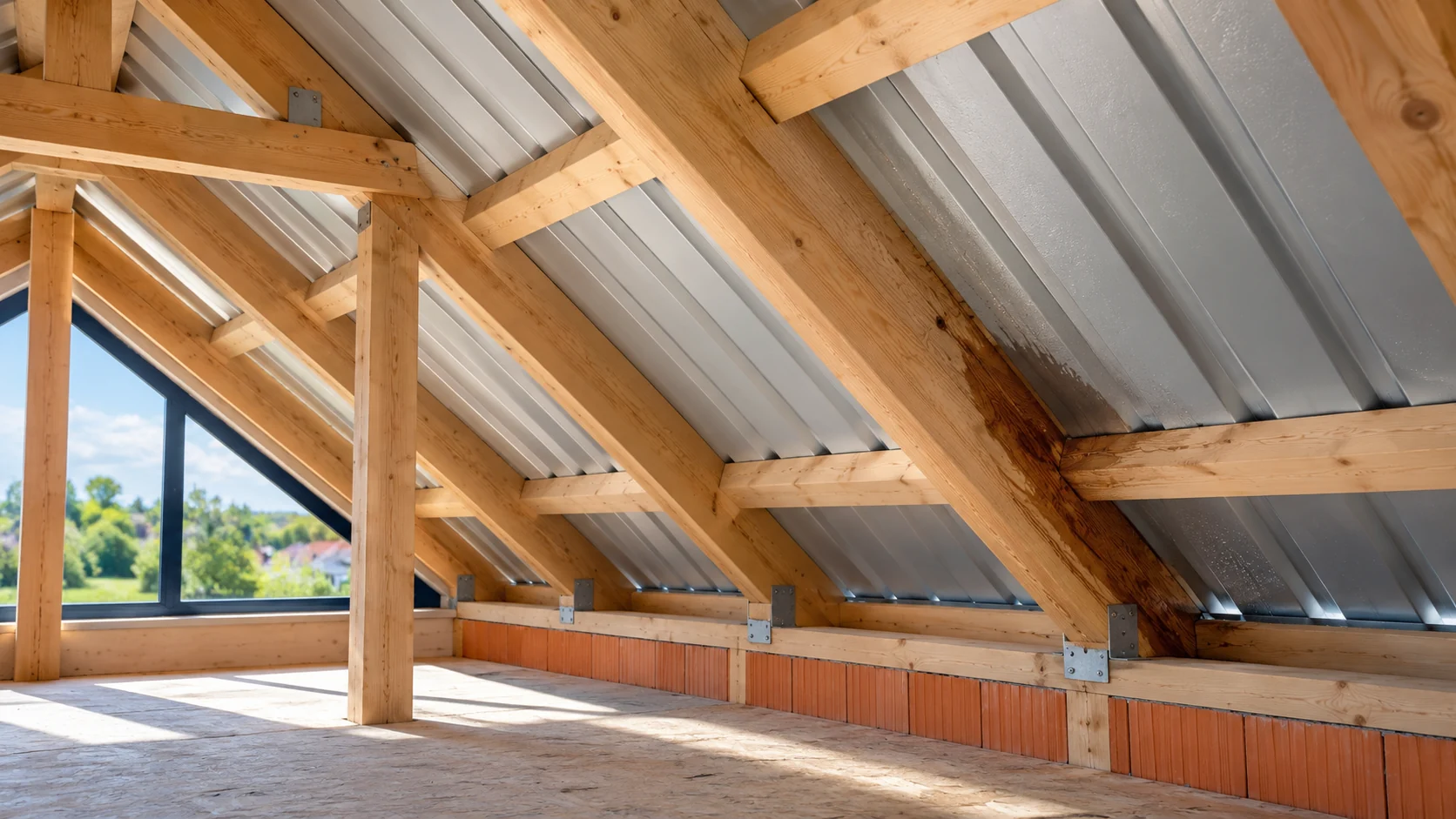
Droplets appearing in the early morning without rain may indicate condensation. Warm, moist air meets a cooler surface and releases water. In that case the problem may lie with the airtightness of the layer on the interior side or with ventilation. Rain and condensation can also occur at the same time. Do not choose a repair solely on the basis of how a single stain looks.
How do you transfer the wet trace onto a roof plan?
Measure the distance of the stain from two walls. Mark its position on the plan and relate it to the chimney, ridge, roof valley and sheet overlaps. Check the area further up the slope. Water may only reach the interior where the membrane is interrupted or at a junction between structural components.
For example, a mark one metre below the chimney does not prove that the sheet metal is damaged at that very point. Moisture may have entered behind the upper chimney flashing. Likewise, a wet beam at the eaves may be collecting water from a larger section of the roof slope. The inspection must follow the path of the water, not the nearest visible screw.
Which eight places should be checked first?
- Screws and washers: skewing, excessive pressure or loosening.
- Side overlaps: correct positioning of the edges and connection of the sheets.
- End overlaps: length, sealing and position relative to the support.
- Chimney flashings: particularly on the water inflow side.
- Roof valleys: clear passage and the way adjoining sheets are finished.
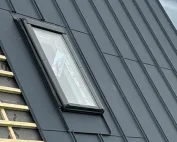
- Service penetrations and roof windows: completeness of the collars.
- Ridge and eaves: arrangement of flashings and required ventilation gaps.
- Damage to the sheet metal: holes, deep scratches and corrosion.
The list defines the inspection area. It does not provide a single repair recipe. Every detail must preserve the direction of water drainage and allow the covering to move.
Why is sealant sometimes an apparent solution?
Applying sealant to a wet or dirty joint may give a short-lived result. It will not correct a badly laid lap. It will not replace a missing flashing. Nor will it repair an incorrect roof slope. An excessively wide sealant bead can hinder water drainage and later assessment of the detail.
First the function of the joint must be established. Some places should be sealed, while others are meant to provide ventilation or drain condensate. Sealing all gaps can make matters worse. The sealant is selected to suit the coating, the substrate and the way the elements work. A label stating outdoor suitability alone does not confirm compatibility with a given roof system.

When does a component need replacing?
A deformed sheet, a torn fixing hole or a heavily corroded edge may require replacement. The extent depends on the location of the damage. A small defect on a wide flat surface does not mean the same as damage at a lap that carries water.
Before dismantling, check access to the fixings of adjacent sheets. Long elements require space to lower the sheet. On a tight site, it may be necessary to prepare a separate transport route. Plan the repair from the inside as well. The damp insulation and the condition of the timber must be assessed, not just the external opening closed. Wet layers require appropriate drying or replacement.
How can you check whether the repair has solved the problem?
After the repair, keep photos of the detail and mark the boundary of the old stain. Observe the area during subsequent rainfall. The assessment should take into account a similar wind direction and rain intensity. A dry day after completion of the works does not confirm tightness.
A controlled water test may be planned by the contractor. A strong jet should not be directed under the laps, as such a test creates conditions different from normal run-off. Roof inspection requires safe access and fall protection. If the cause is still unclear, return to the trace map. Further application of sealant without diagnosis usually makes it harder to find the source of moisture.
Questions before ordering
Is a wet stain always located exactly beneath the leak?
No. Water can migrate along the structure or the underside of the covering. Also look higher up the roof slope and at elements that interrupt its continuity.
Does replacing all screws with larger ones eliminate leaks?
It is not a universal repair. The substrate, the holes and the cause of the leak must first be assessed. A different fastener requires confirmation of suitability for the specific connection.
7 branches. Materials closer to your project.